Month: October 2024

  • Georgia : Tbilisi

    We had put this off a while back because we had heard horror stories of people being sent back despite having an evisa. After that fear passed, we were saving this for a time when we didn’t want to go all the way to Europe, but still wanted the feel of it. The border of Asia and Europe seemed perfect, and we clubbed it with Armenia for a 10 day trip. Where we stayed, what we did, where and what we ate, all below.

    Fun fact to start: Georgians call their country Sakartvelo, and there are many stories on why it’s called Georgia now.

    Stay

    We had split our Georgia stay into three – Tbilisi, Kakheti and then Tbilisi again. In Round 1, we stayed at Tiflis Palace in Old Town. It reminded me of what the Metropol Hotel in A Gentleman in Moscow might have been. We did see an actual Metropol in Yerevan, Armenia! The rooms were old but comfortable, but…
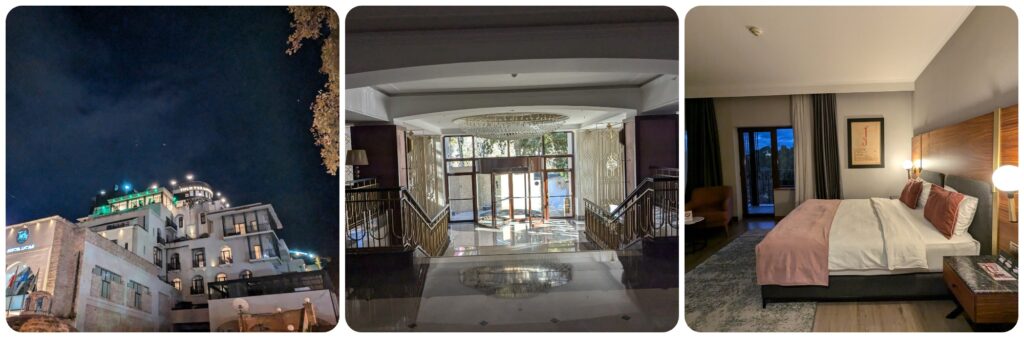
    Tiflis Palace, Tbilsi, Georgia

    … the killer feature was the view. D had asked for a room with a view, and they gave us one that had a 180+ view that was just fantastic. Narikala Fort (which was closed for renovations) and the Metekhi Church were all visible. Just sitting there was therapeutic.
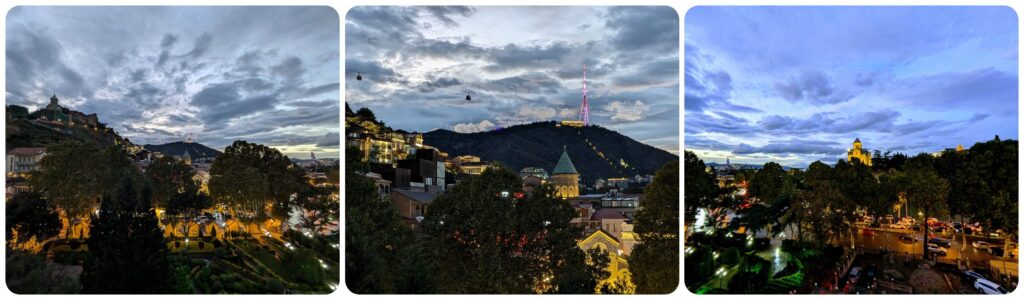
    Tiflis Palace, Tbilsi, Georgia

    We felt the same way the morning after too. Now if only the managerial staff would learn a bit from the housekeeping folk and improve their service levels, this would be an ideal hotel.
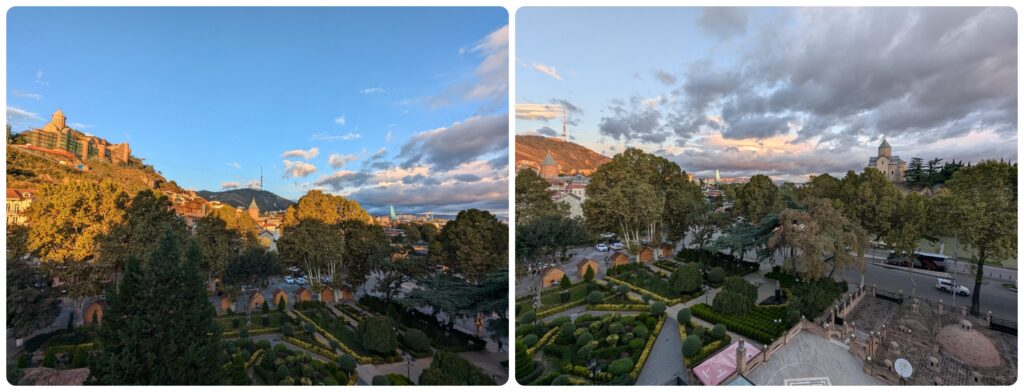
    Tiflis Palace, Tbilsi, Georgia

    In Round 2, we stayed at the Mercure Old Town, which was just 200m from Tiflis Palace. It didn’t have the Tiflis view or the room size, but our agenda was mostly day trips and this room was just the right size. Also, excellent service, and a superb breakfast.
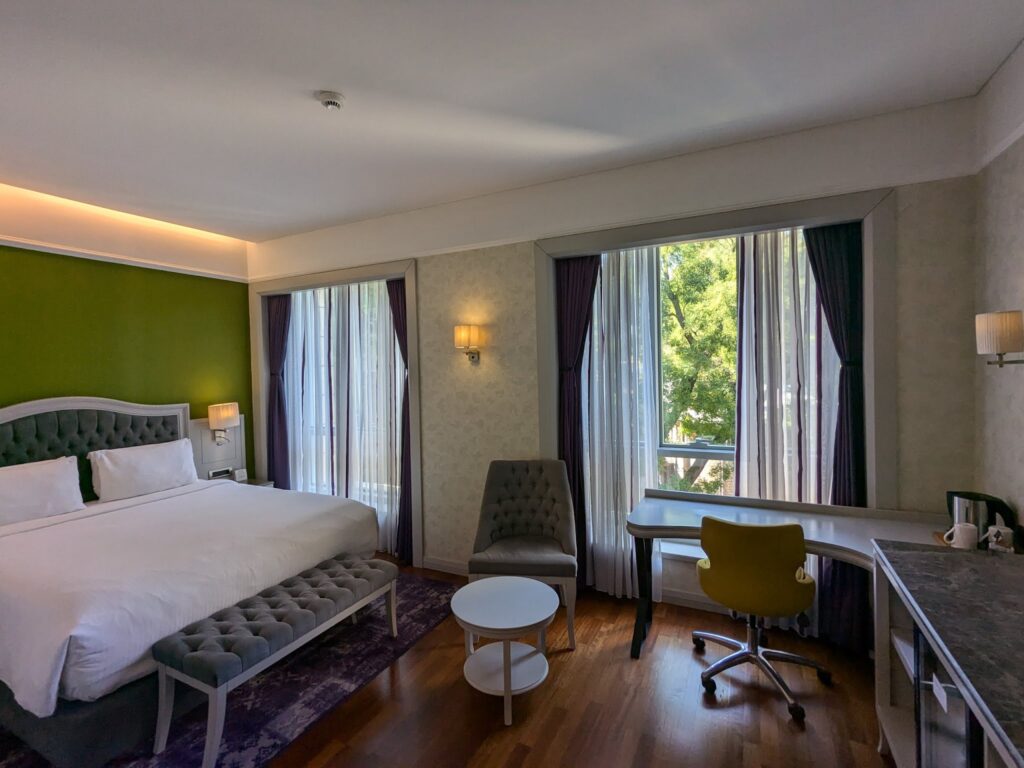
    Mercure Old Town, Tbilisi, Georgia

    See/Do

    We visited Meidan Bazar the evening we arrived, because it was anyway close to Tiflis. Your souvenir needs, including wine and food, will most likely be solved here. Having said that, do spend some time outside, specifically the shops in the streets close to this. Especially if would like some good magnets. 😀
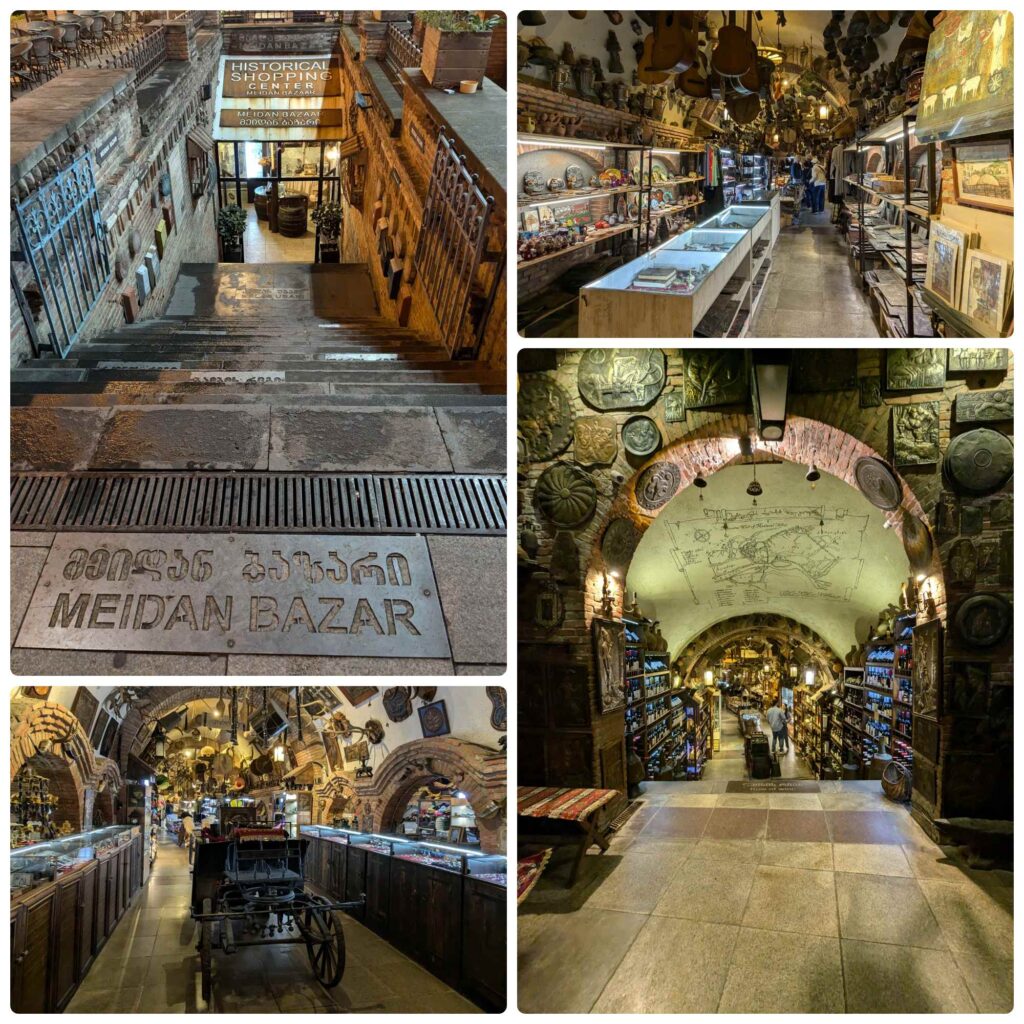
    Meidan Bazar, Tbilisi, Georgia

    Old Tbilisi Balconies are a thing, and you will see them a lot in the Old Town area. We even caught some in Telavi.
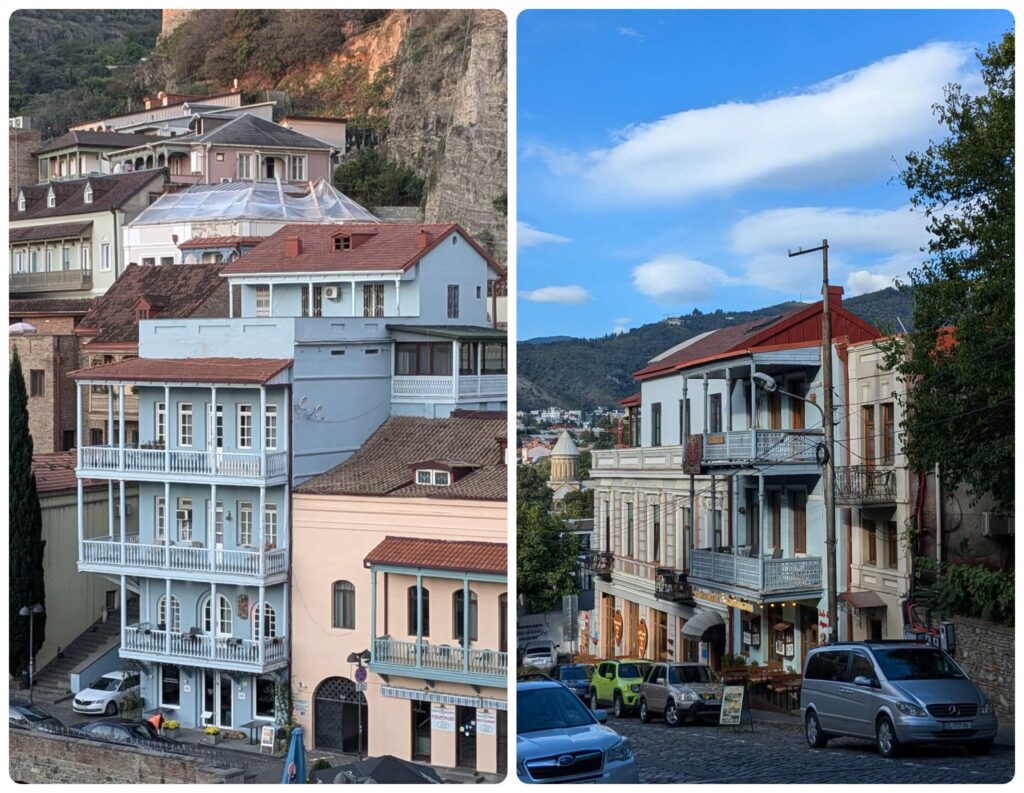
    Old Tbilisi Balconies

    Queen Darejan’s Palace is a larger structure, but this was a pretty part of it
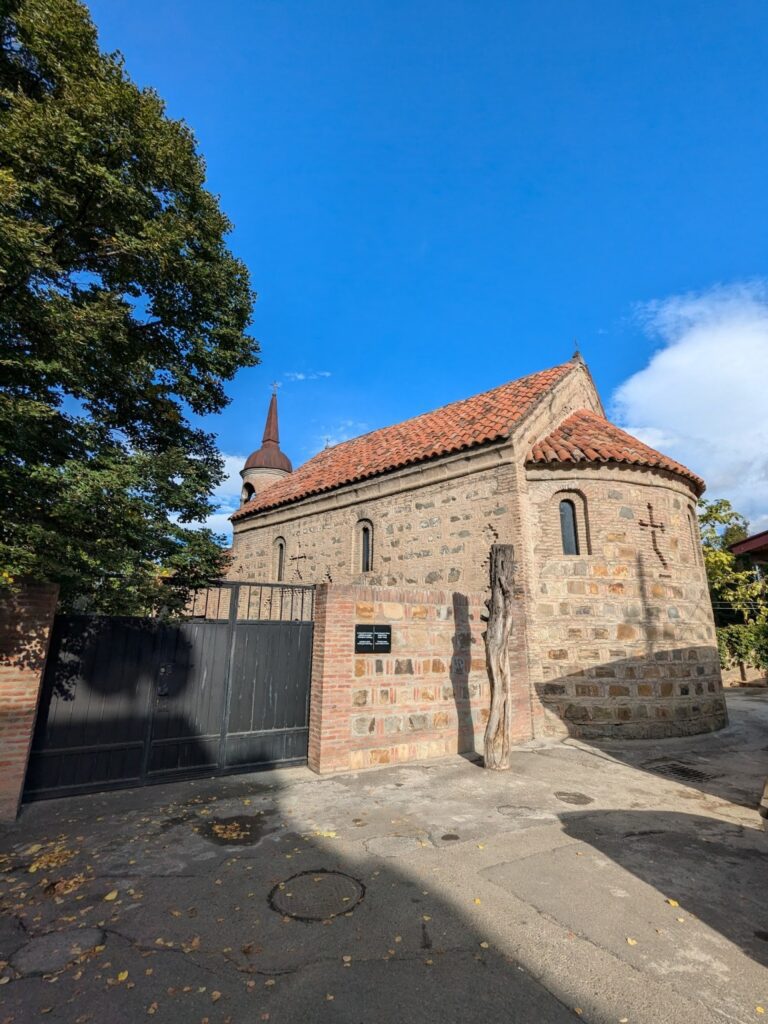
    Tbilisi, Georgia

    For our first full day, we had booked a guided walking tour. I’d recommend this if you don’t mind walking four hours because it gives you a good idea of Old Tbilisi, and covers a bunch of interesting places. The Metekhi Virgin Mary Assumption Church was the first stop. In the same compound is the statue of Vakhtang I Gorgasali, who laid the foundation of Tbilisi as the new capital. Interesting stories on how he decided on the place, and why he named it so. Our guide called him the High Five king thanks to his upraised hand. 😀
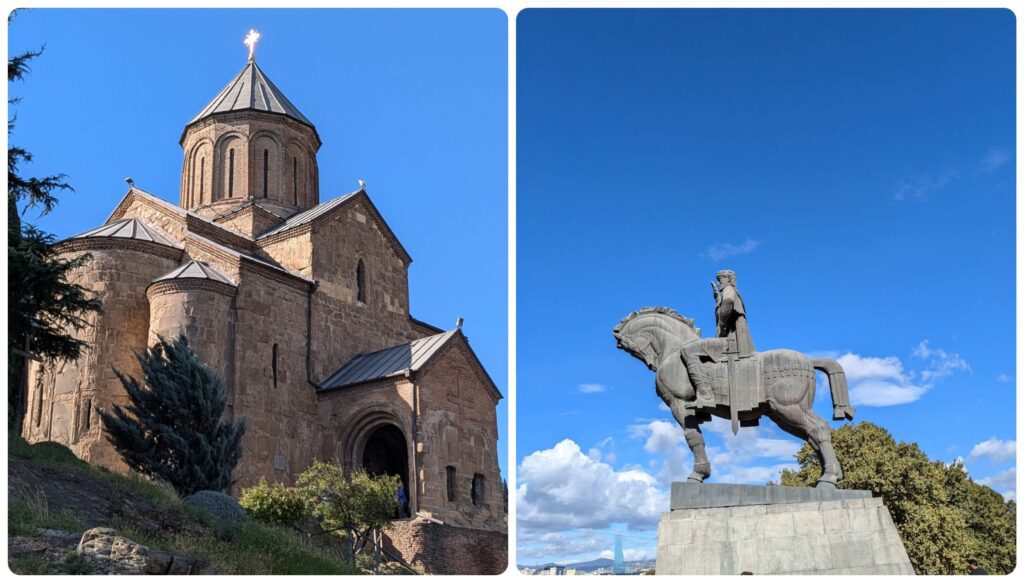
    Metekhi Virgin Mary Assumption Church, Tbilisi, Georgia

    We were also taken on a cable car to get a fantastic view and an up close encounter with the Mother of Georgia monument. A set of interesting stories about her too.
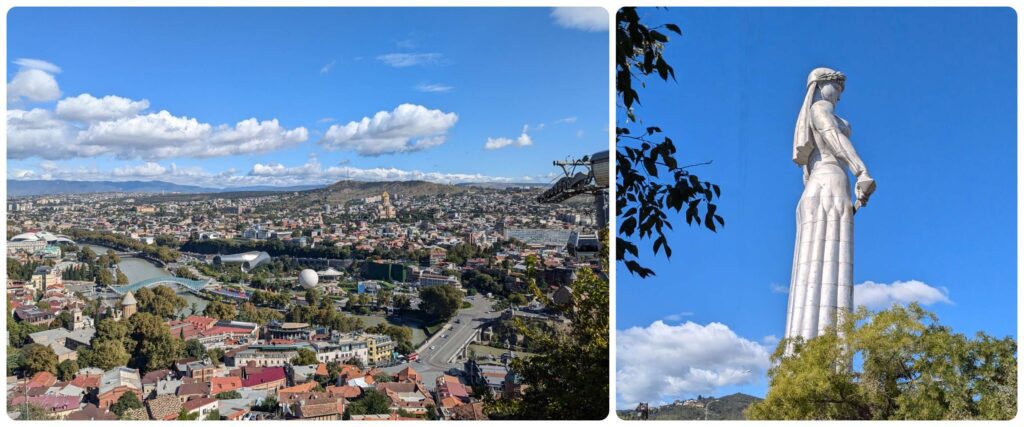
    Cable Car, Mother of Georgia, Tbilisi

    The Bridge of Peace is a popular tourist spot, but the locals aren’t fans. In fact, its design has been heavily criticised and has a nickname “Always Ultra” for its supposed resemblance to a ladies’ maxi-pad. 😀
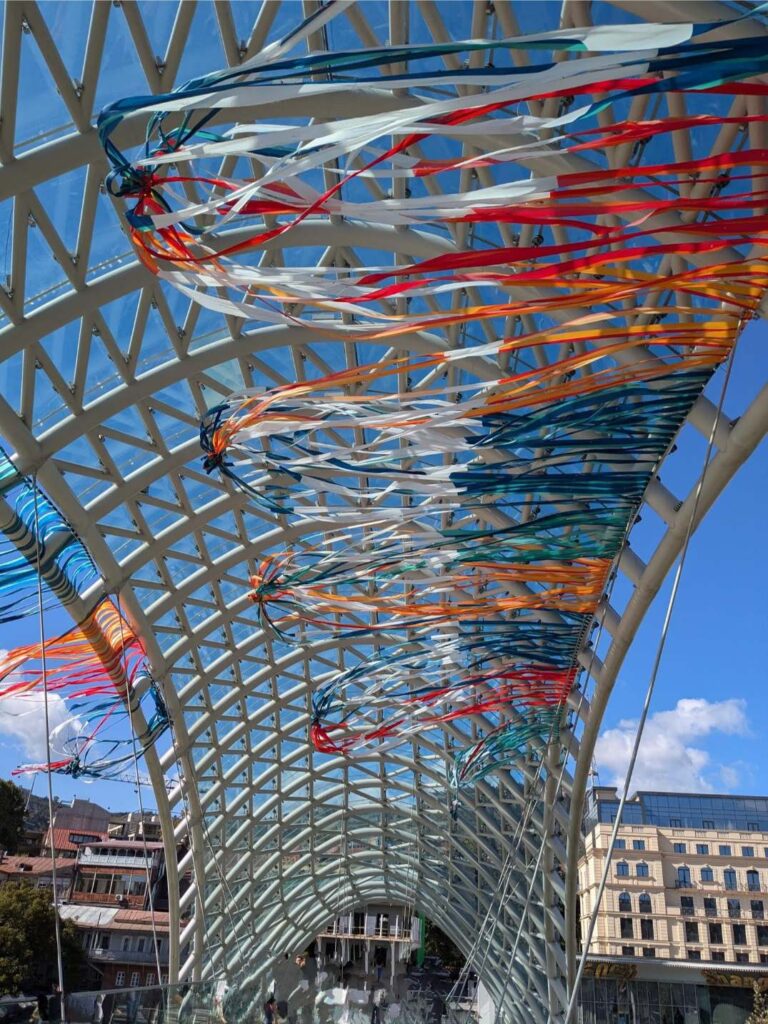
    Bridge of Peace, Tbilisi, Georgia

    The Clock Tower in Tbilisi is fun. It is next to the marionette theatre, and every hour an angel comes out to ring the bell with a small hammer. There is also a small mechanical puppet theatre inside the tower and you can see the show at noon and at 7pm. We unfortunately couldn’t find time for the shows.
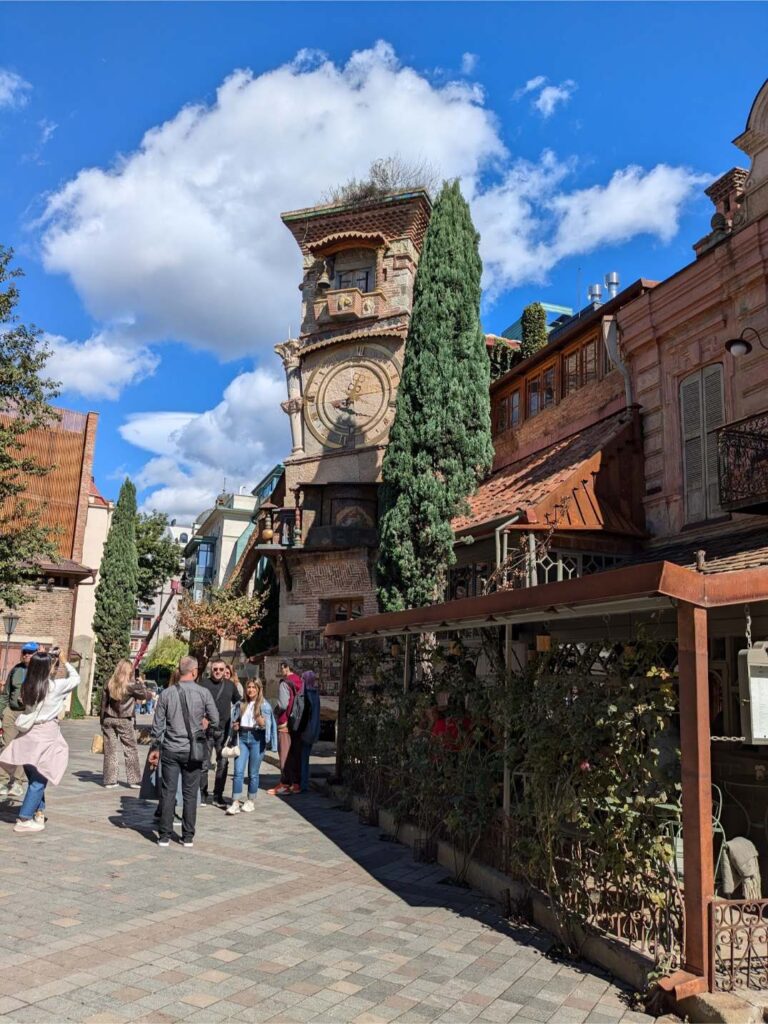
    The Clock Tower, Tbilisi

    The tamada is a Georgian toastmaster at feasts and is supposed to connect the past, present and future. We saw at least a couple in Tbilisi and one in Sighnaghi too.
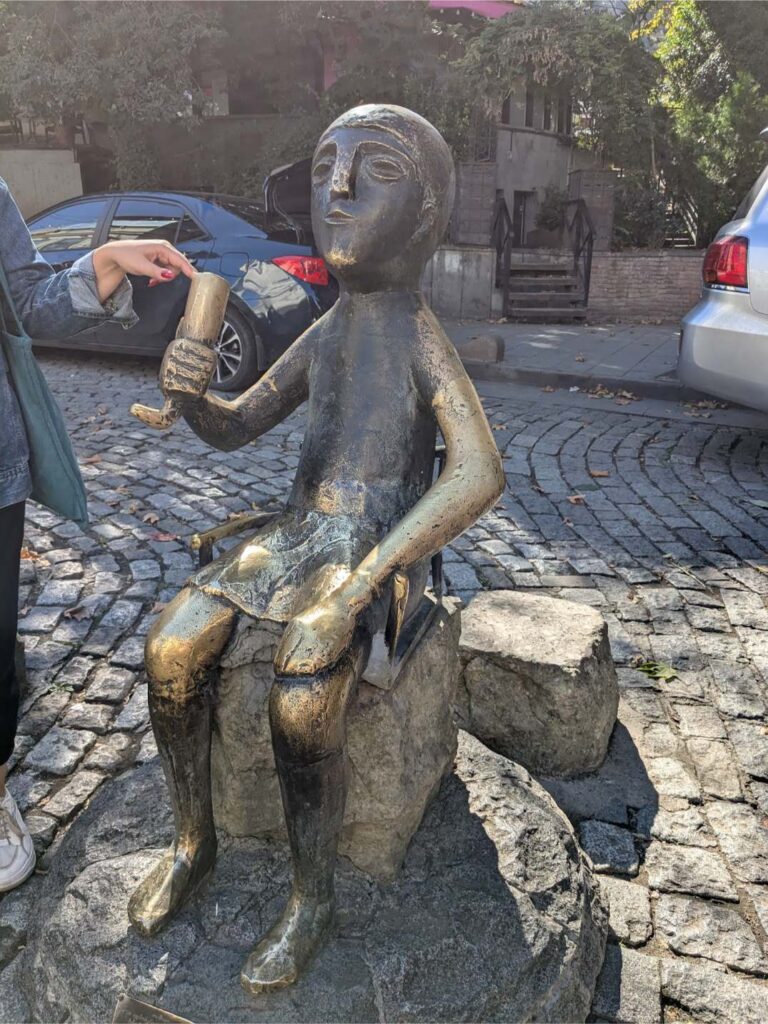
    Tamada (Toastmaster) Statue Tbilisi

    The Sulphur baths and the Juma mosque are in Abanotubani, right next to Tiflis. The smell will lead you there. And yes, you have spas here, though we weren’t too keen.
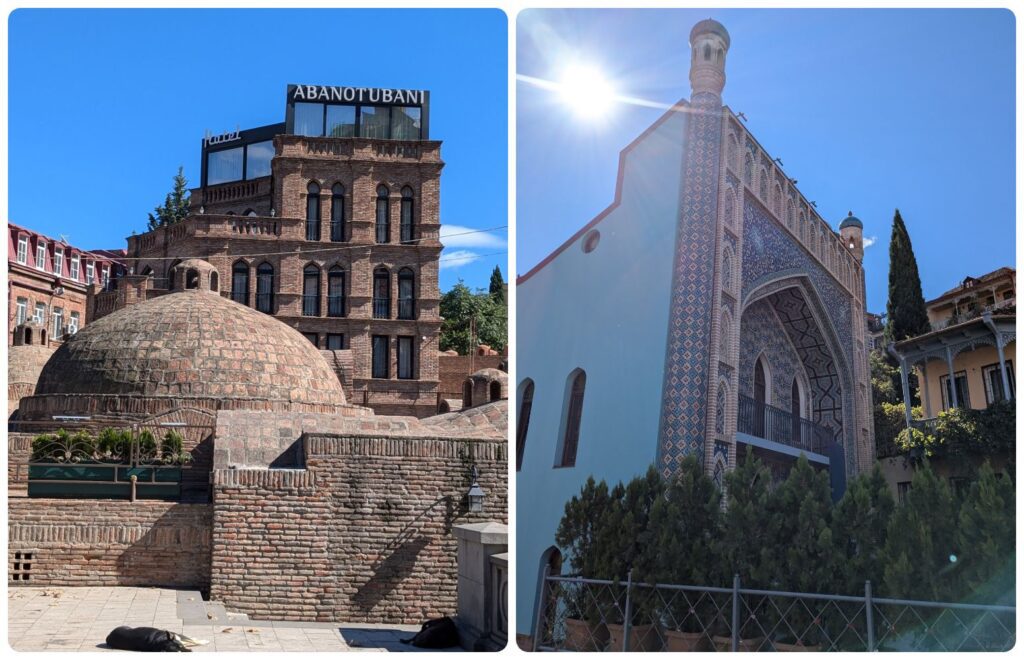
    Sulphur Baths, Abanotubani, Tbilisi

    After the tour, a few drinks at a winery as part of the tour, we had lunch and then walked to Liberty Square. This is also the area where you’ll find the mall. But though we did visit that, our destination was the metro.
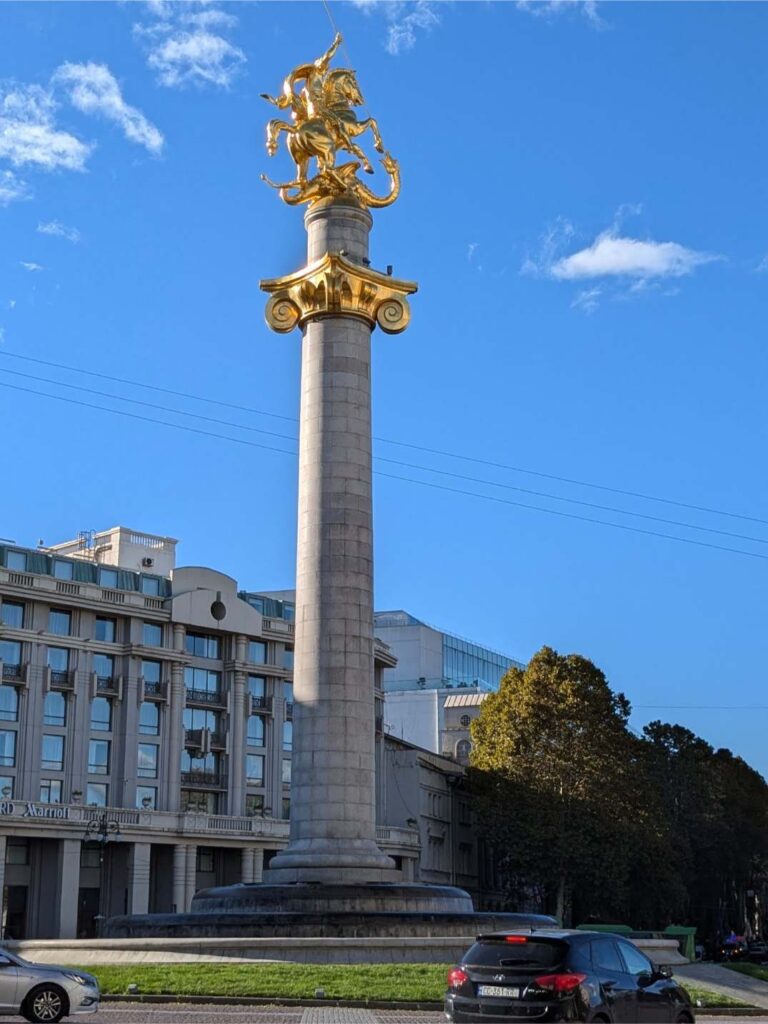
    Liberty Square, Tbilisi, Georgia

    One of the reasons I was excited about Georgia is because it was a part of the USSR and there are tons of artefacts around. Buildings are obviously one, but the metro is what I was looking forward to. It was the fourth metro system in the former Soviet Union, and started operations in January, 1966. After the steepest escalator ride I have been on, we caught the metro from Liberty Square to Rustaveli.
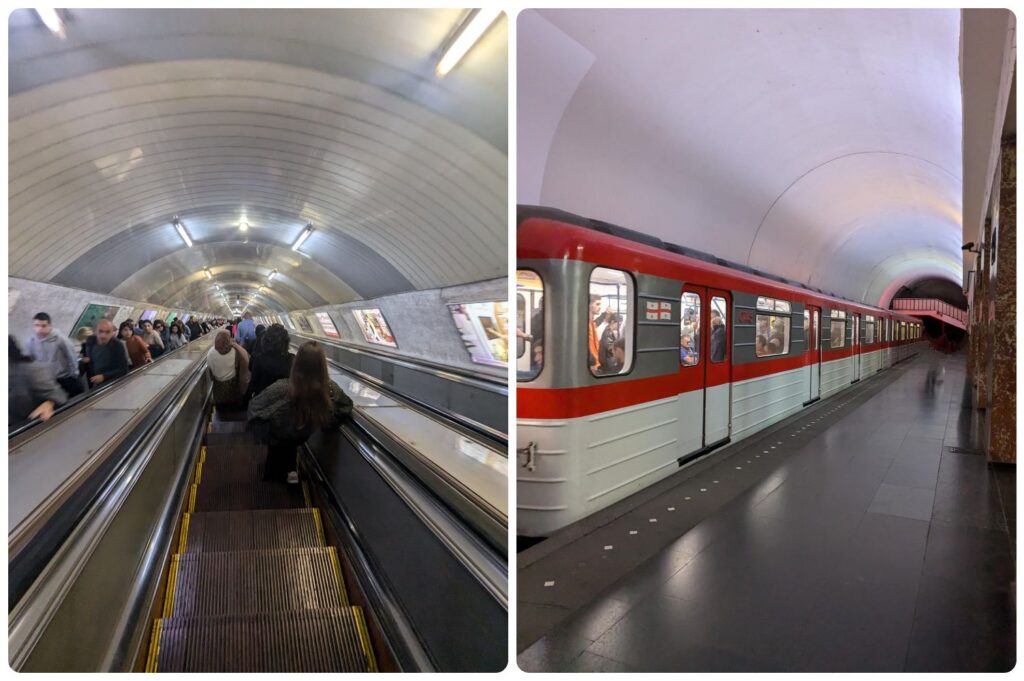
    Tbilisi Metro

    We dropped by at Gabashvili House (Blue House), but could only manage a side shot of its Old Balcony.
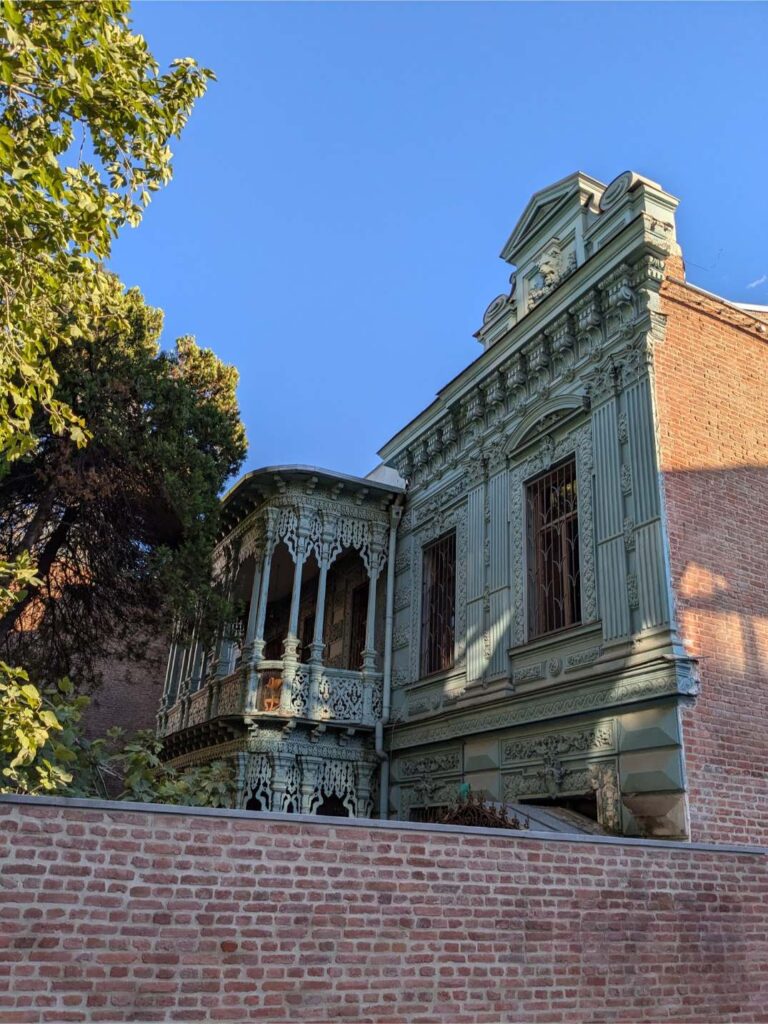
    Gabashvili. House (Blue House)

    The final destination on the first day was the Funicular ride to Mtatsminda. There is an amusement park there but we were only interested in the view. It was definitely the most expansive, but we preferred our Tiflis view.
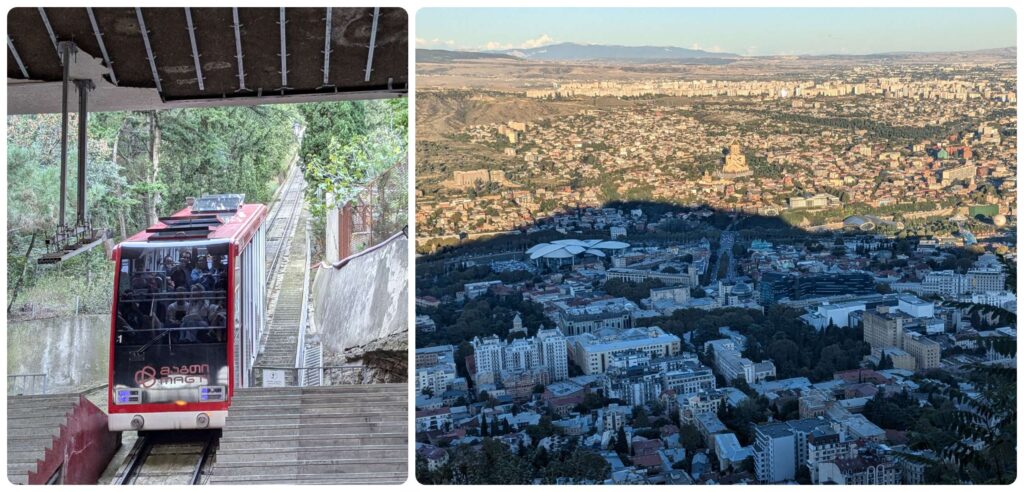
    Funicular to Mtatsminda

    The area around Meidan Bazar is quite buzzy late in the evening. There are, as is now usual, many Indian folks trying to get you to an Indian restaurant. We overheard one woman specifically asking for khichdi for the kid and the restaurant guy saying ‘sab kuch milega‘. Oh well.
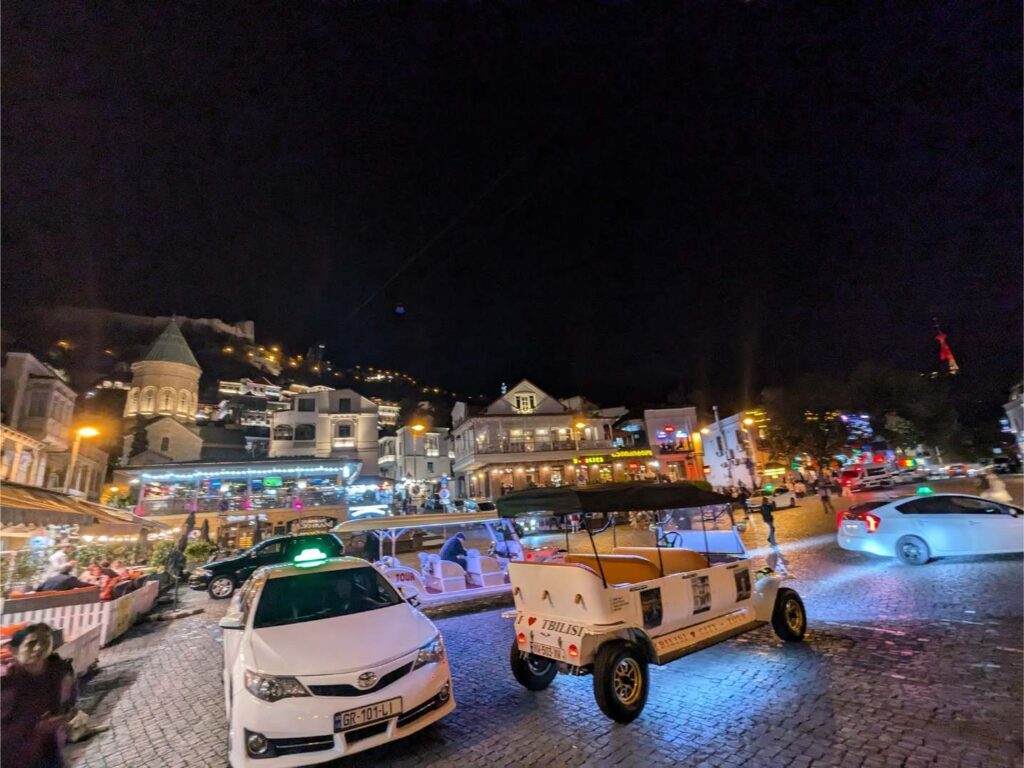
    Old Town, Tbilisi

    When we got back from our Sighnaghi trip, it was the weekend when Tbilisi was celebrating its birthday. That meant that there were food stalls, music and trinkets all around. It’s a great time to walk around, because vehicles are not allowed on many roads, though it does get crowded. It was amazing how well and fast they were able to clean the place following the weekend festivities.
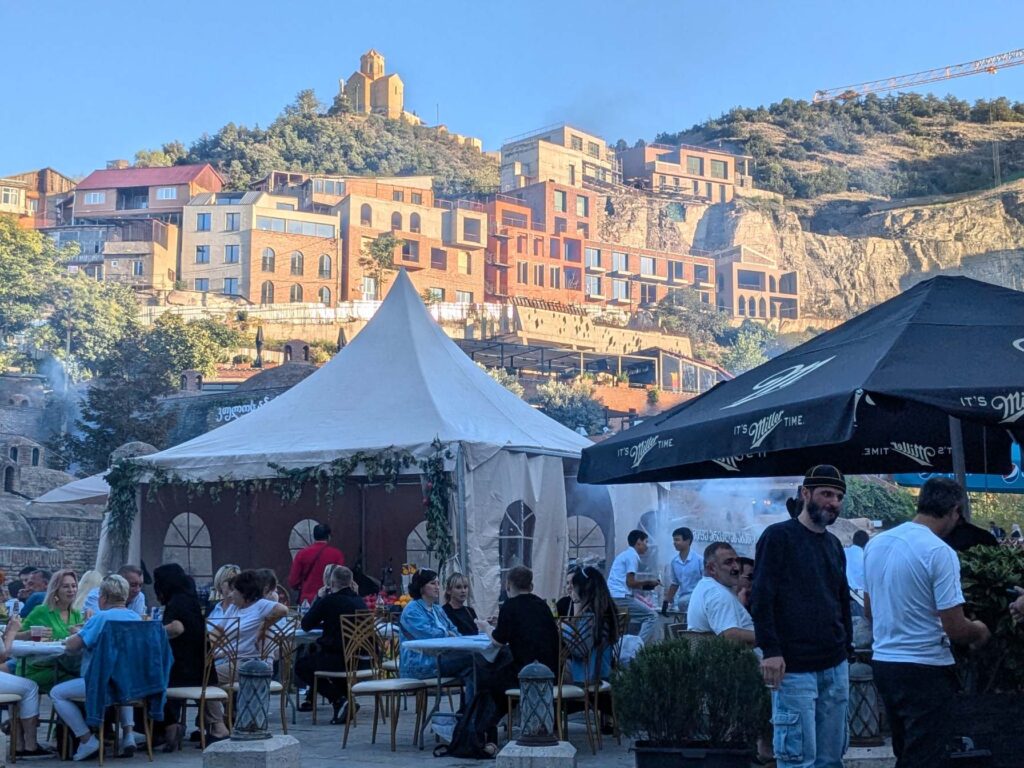
    Old Town, Tbilisi

    After walking around the stalls a bit, we decided to take a long walk before dinner. Away from the crowds, around the Gomi Street area. There are a couple of view points here but we were too lazy to climb the stairs. The roads were steep enough!
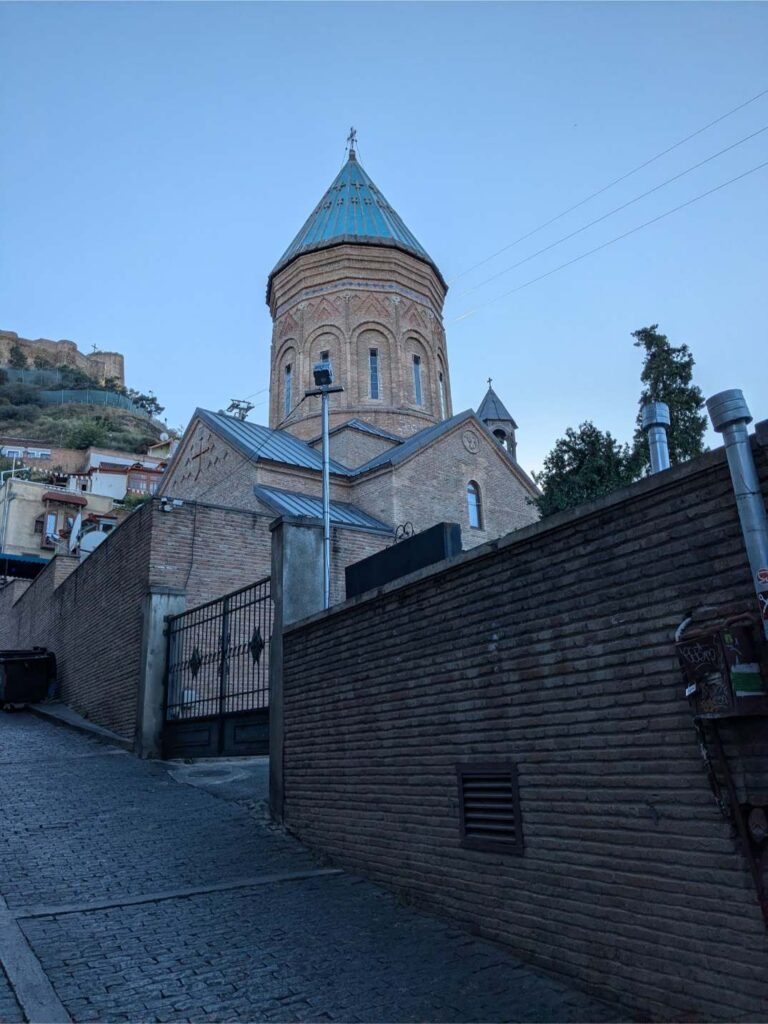
    Old Town, Tbilisi

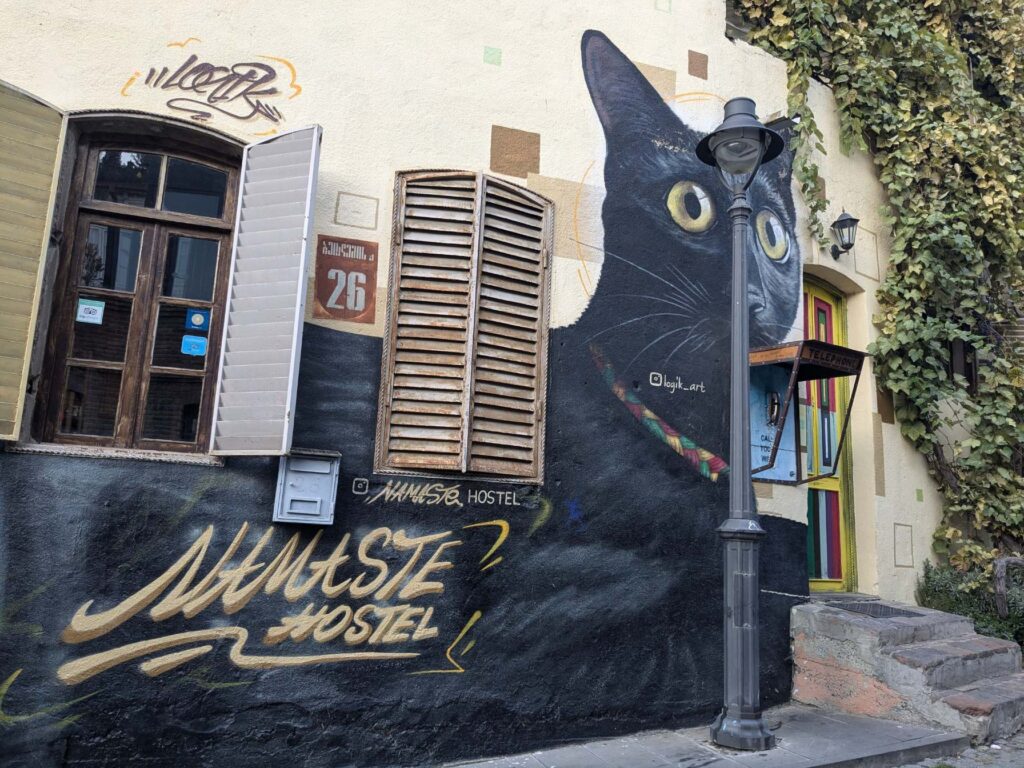
    The Namaste Hotel was super cute!

    Old Town, Tbilisi

    See 360, where we had planned dinner.
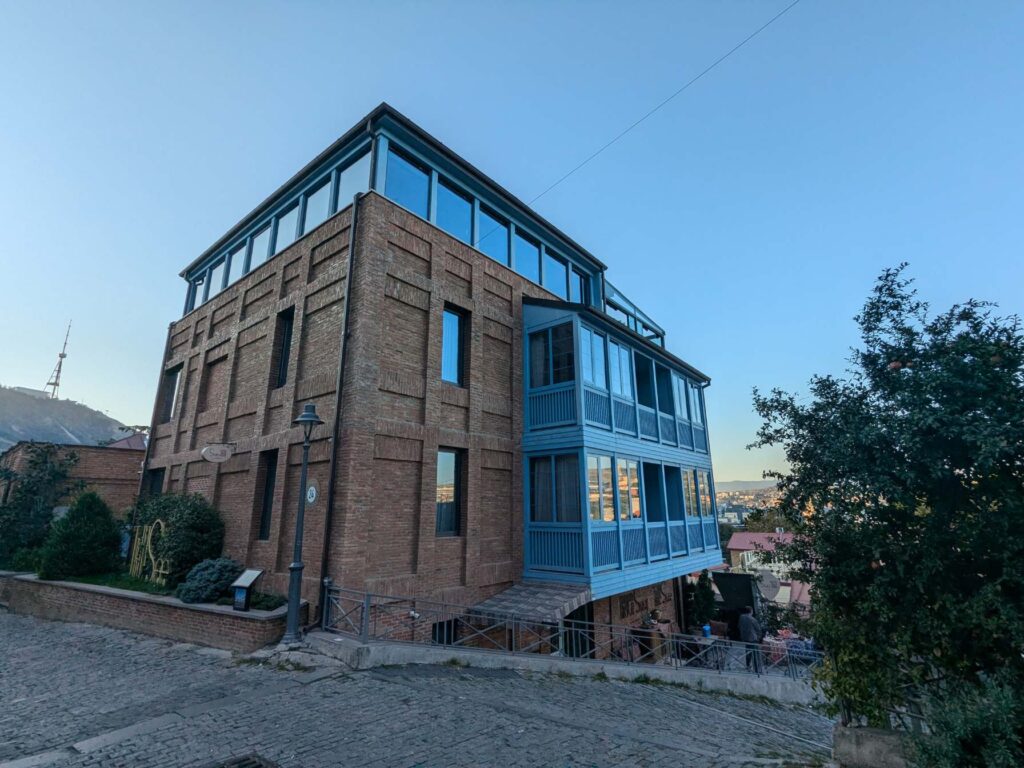
    See 360, Old Town, Tbilisi

    This was around Gudiashvili Square, and probably the time we enjoyed most. There is a park and we could hear the live music. We sat down for a bit, moved on to check a couple of craft beer places for the next few days (they were tiny and we skipped) and then came back to spend more time at the park. There were kids having a picnic, dogs who didn’t bother us, a pleasant breeze and in general, a long sigh atmosphere.
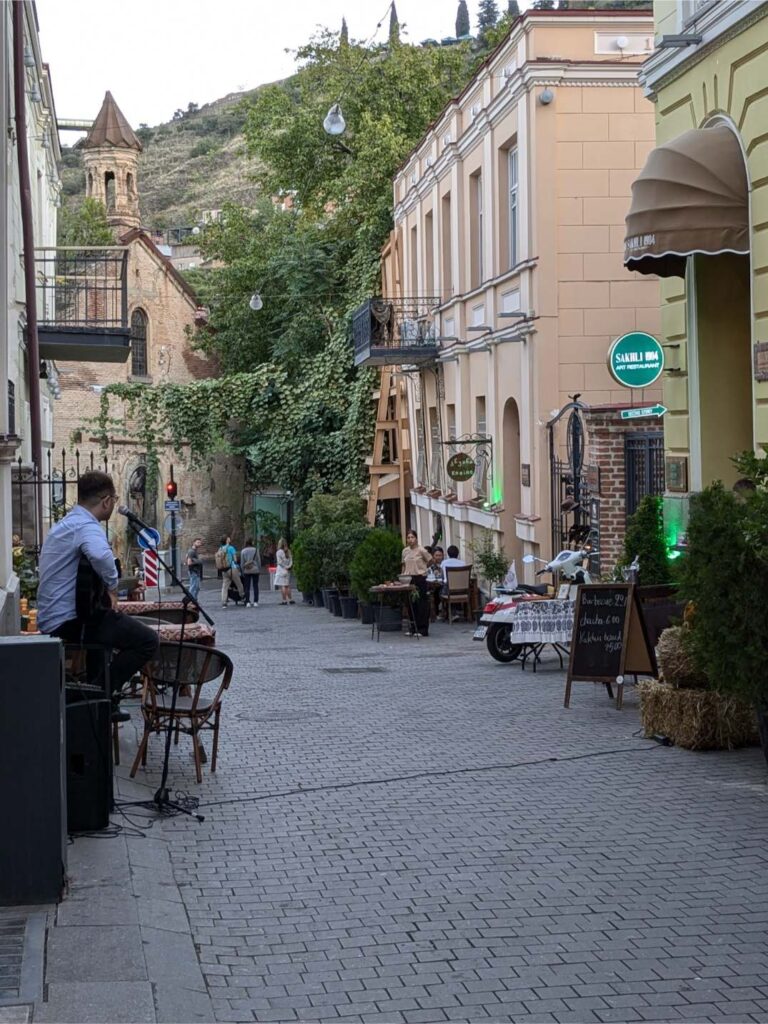
    Old Town, Tbilisi

    Chronicles of Georgia is away from the city, and after a fun exchange with the driver who promised he would arrive despite the various traffic snarls, we got to see a fabulous structure that literally chronicles the story of Georgia. And what a view of the city.
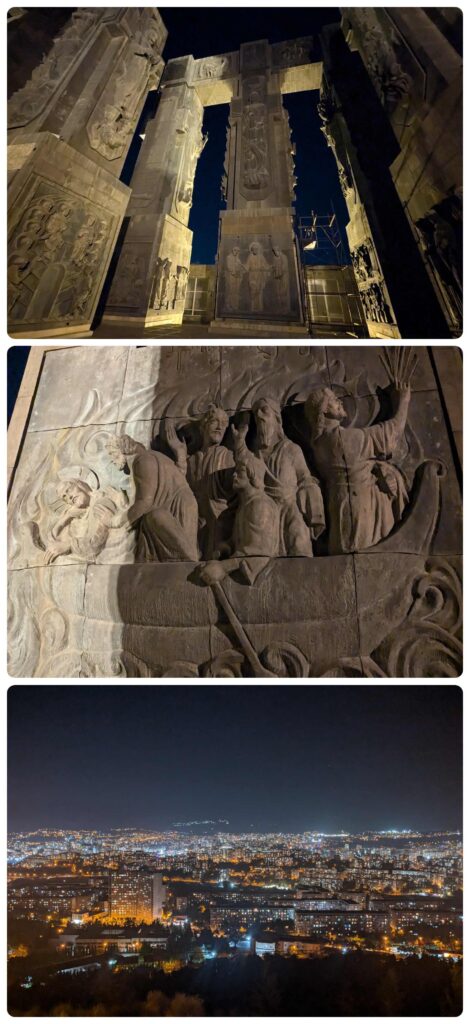
    Chronicles of Georgia

    Eat

    As part of our walking tour, we also visited a traditional bakery. In addition to a cheese pie and another with vanilla inside, we also tried the Lemonade Natakhtari, and D had a tarragon version of it. Loved everything!
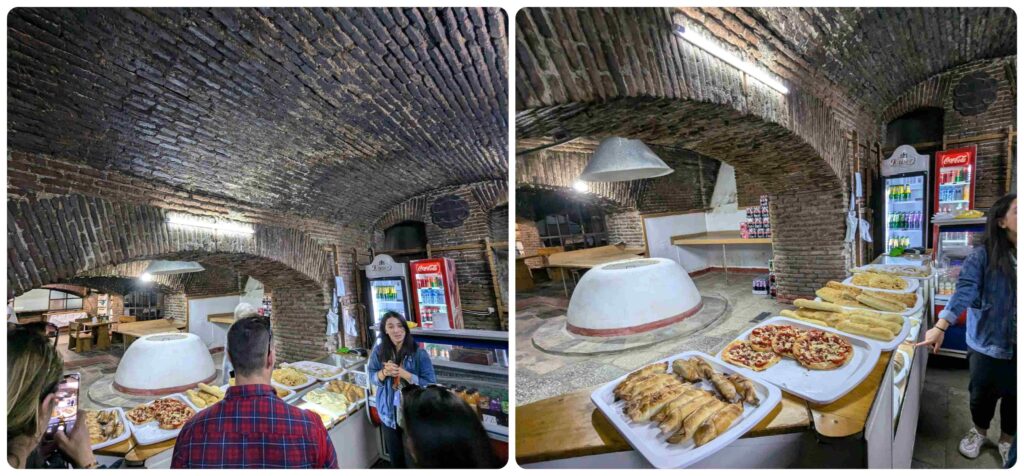
    Bakery, Old Town, Tbilisi

    Our first dinner was at Khinkali Pub and is the one we enjoyed most. In addition to the Khinkali, we tried the Adjaruli Khachapuri (there are other types too) and in both cases, there are specific ways to eat them. D had already researched the first and a restaurant staff taught us the second. D started out on wine, while I tried the residue – Chacha. It’s not arrack though it is really strong. It’s a clear version of brandy made from the leftover grape residue after winemaking. This is easily the best place for your first meal – great vibe, friendly staff, and excellent food.
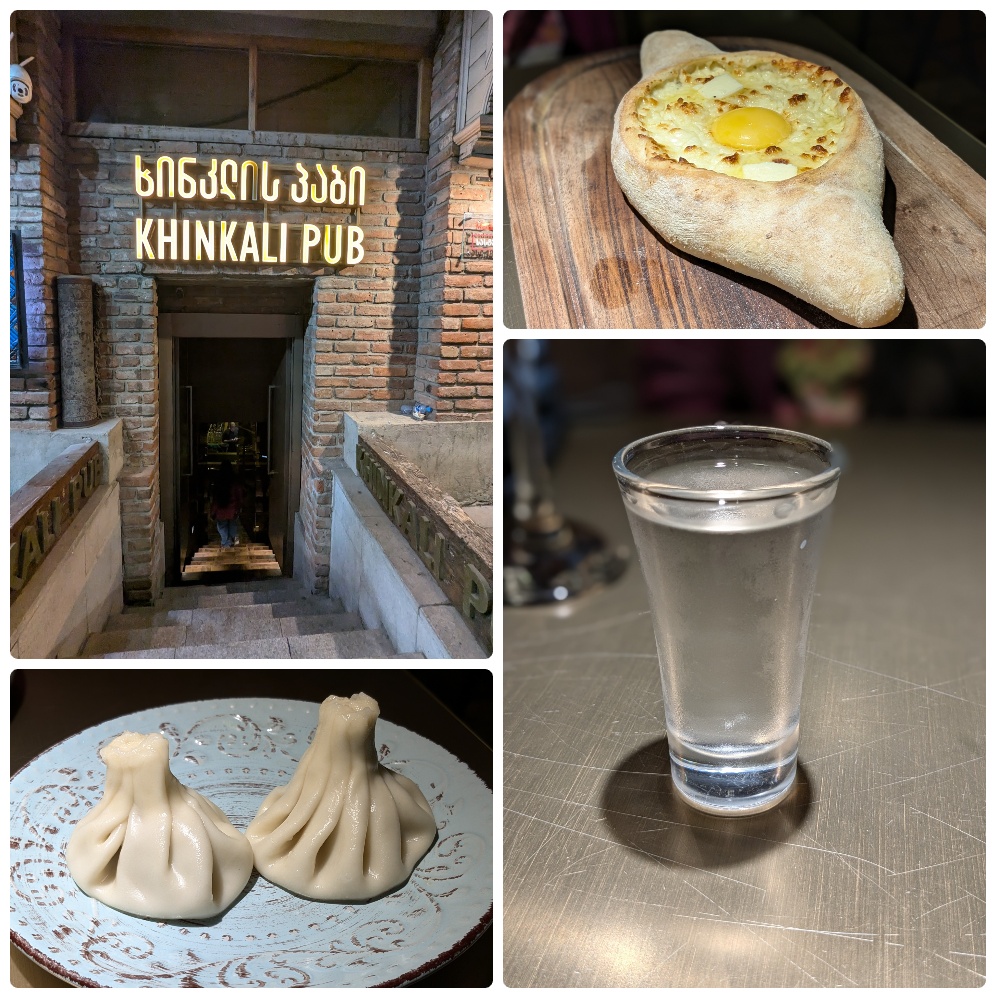
    Khinkali Pub, Old Town, Tbilisi

    Restaurant Pasanauri is on the main road, and we went there after our half day walking tour because we were too tired to seek out other places. I tried the oak Chacha (closer to the brandy colour and aged in oak casks) while D continued the wine journey. We also tried the Chicken Shkmeruli – chicken fried and then slowly simmered in a rich garlic and milk sauce. Not our favourite. Pasanauri has a few grumpy people who also happen to be quite racist.
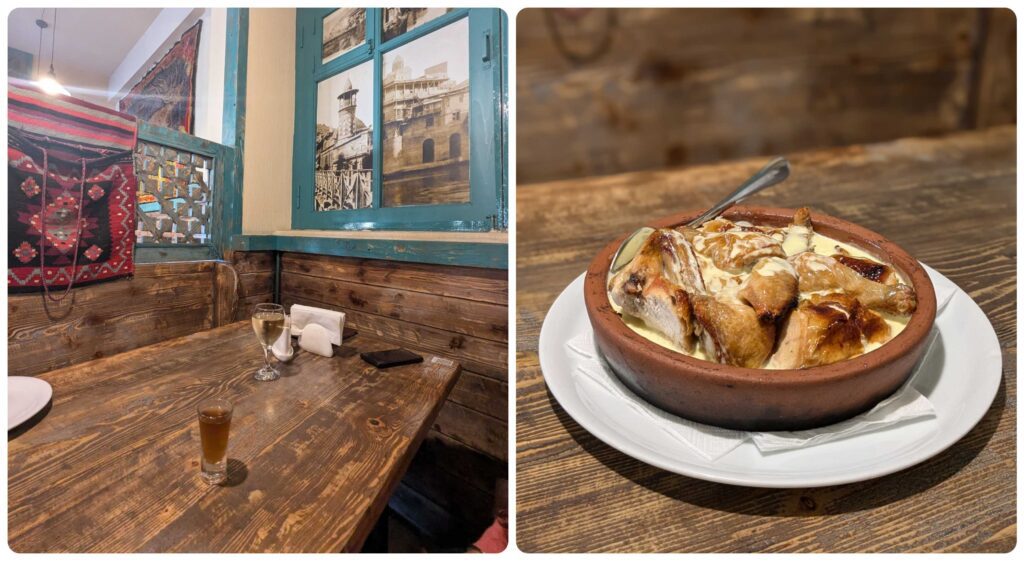
    Restaurant Pasanauri, Old Town, Tbilisi

    Our tour guide suggested 2 Tona when I mentioned an interest in craft beer, and that was a hit. Their Skybread (Hefeweizen) and Gustav (Munich Helles) were both smooth and splendid and though we didn’t care much for the pork barbecue and the beef stew chashushuli, the beer more than made up for it.
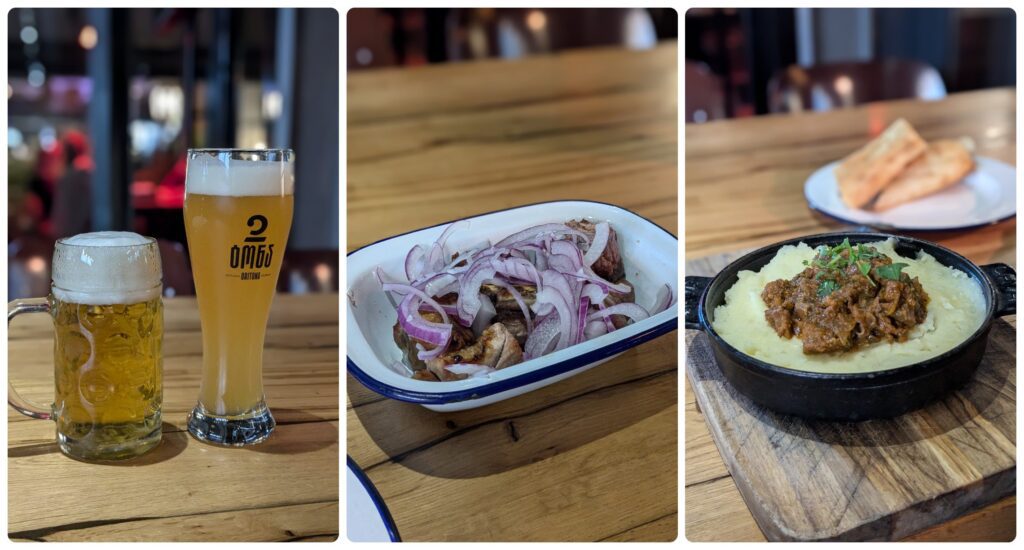
    2 Tona, Tbilisi

    Fresh fruits. A great thing to munch when you’re walking around.
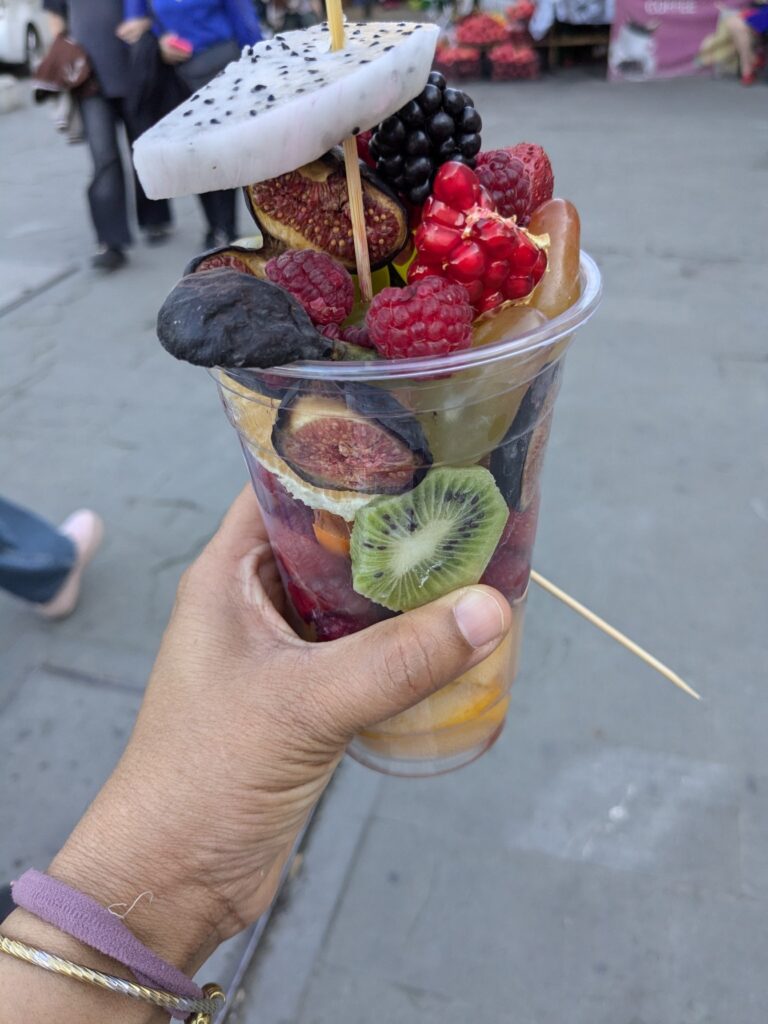
    Old Town, Tbilisi

    Next to the Khinkali Pub is Restaurant Hide. They almost share a menu. The vibe is different, but the service staff were friendly here too. We finally had Kompot – a good break from alcohol. We tried the Kharcho soup and an Ojakhuri (literally ‘family meal’) and enjoyed both.
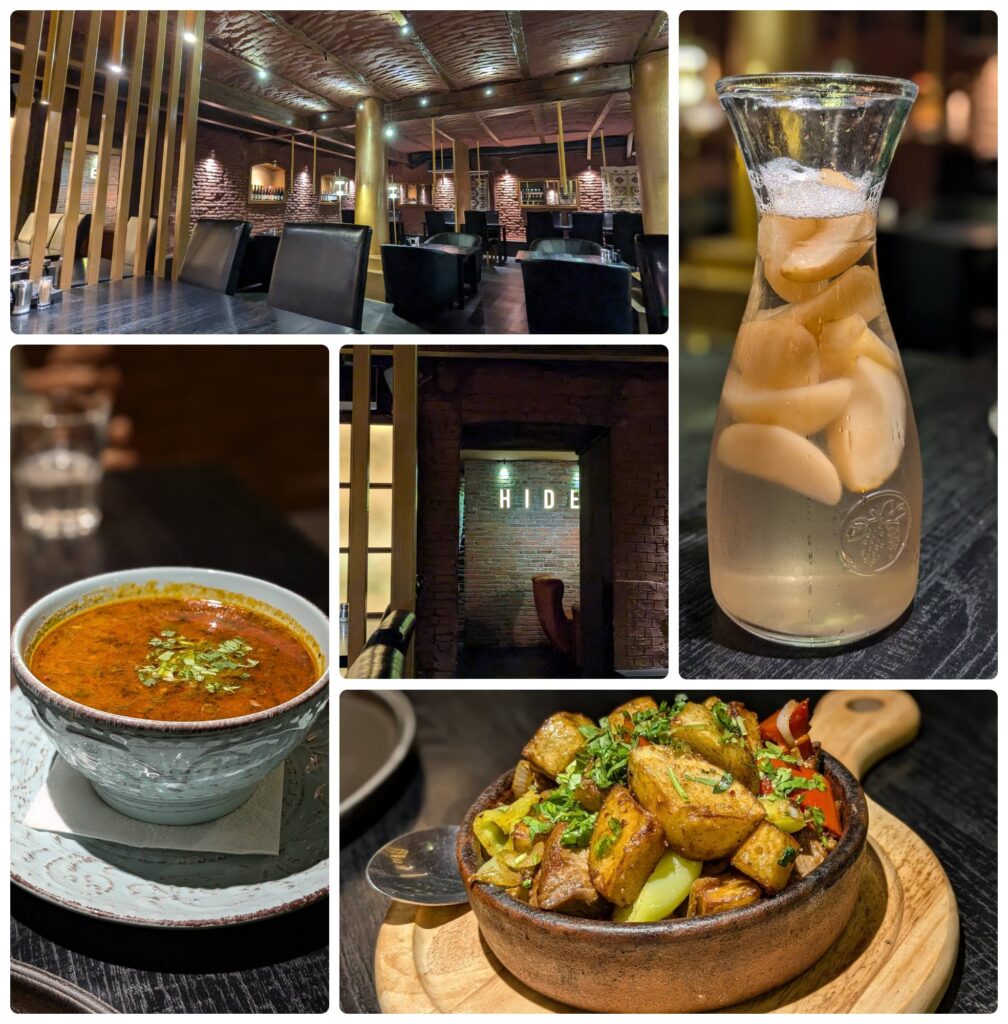
    Restaurant Hide, Old Town, Tbilisi

    See 360 was one of the costlier places we dined at. We hadn’t reserved so couldn’t get a table on the terrace. Indoors wasn’t too bad though. I tried the Karva beer, and it wasn’t the best I’ve had. The pork barbecue was just fine, and we really didn’t like the Chakapuli (a stew of sorts). The dessert though was quite interesting, it’s their special.
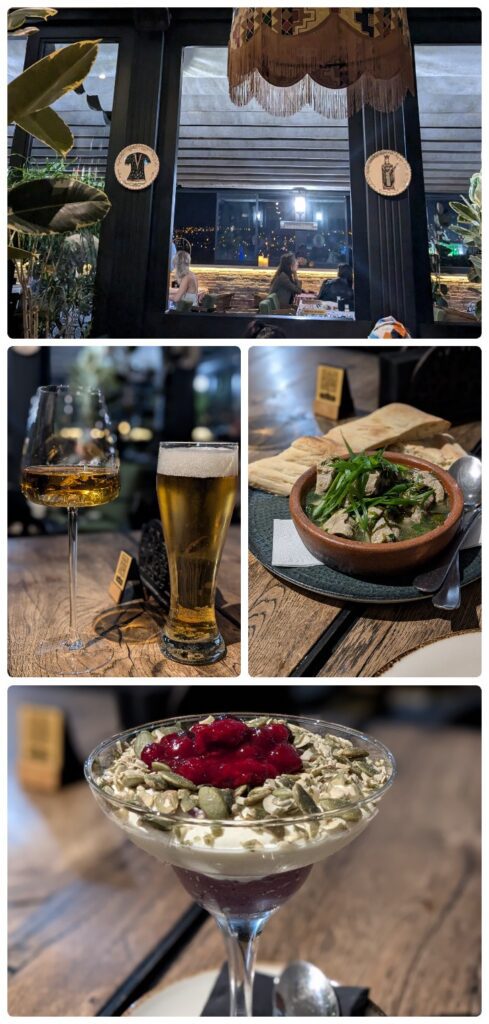
    See 360, Old Town, Tbilisi

    After we got back from the Chronicles of Georgia, we really were too tired to walk around. Shemomechama was nearby, and we had the place all to ourselves. The staff, as per the internet, were supposed to be friendly, but they were just cordial. We had the Badri-Jani (aubergine with a walnut paste), which even my carnivorous taste buds liked and the Chebu (seemed like huge fried momos). The cognac was smooth.
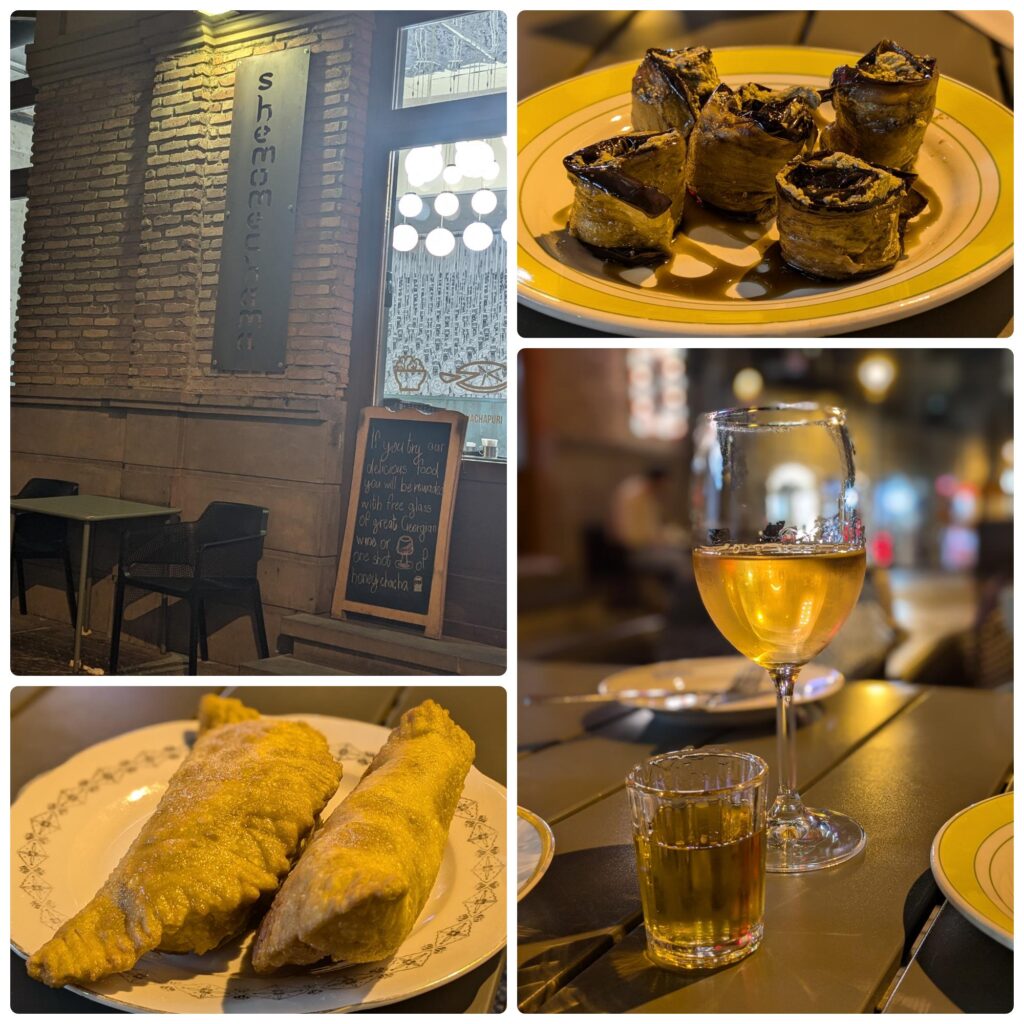
    Shemomechama, Old Town, Tbilisi

    Our last meal in Georgia was at Tiflis Veranda. The meal wasn’t Georgian, but tasty enough.
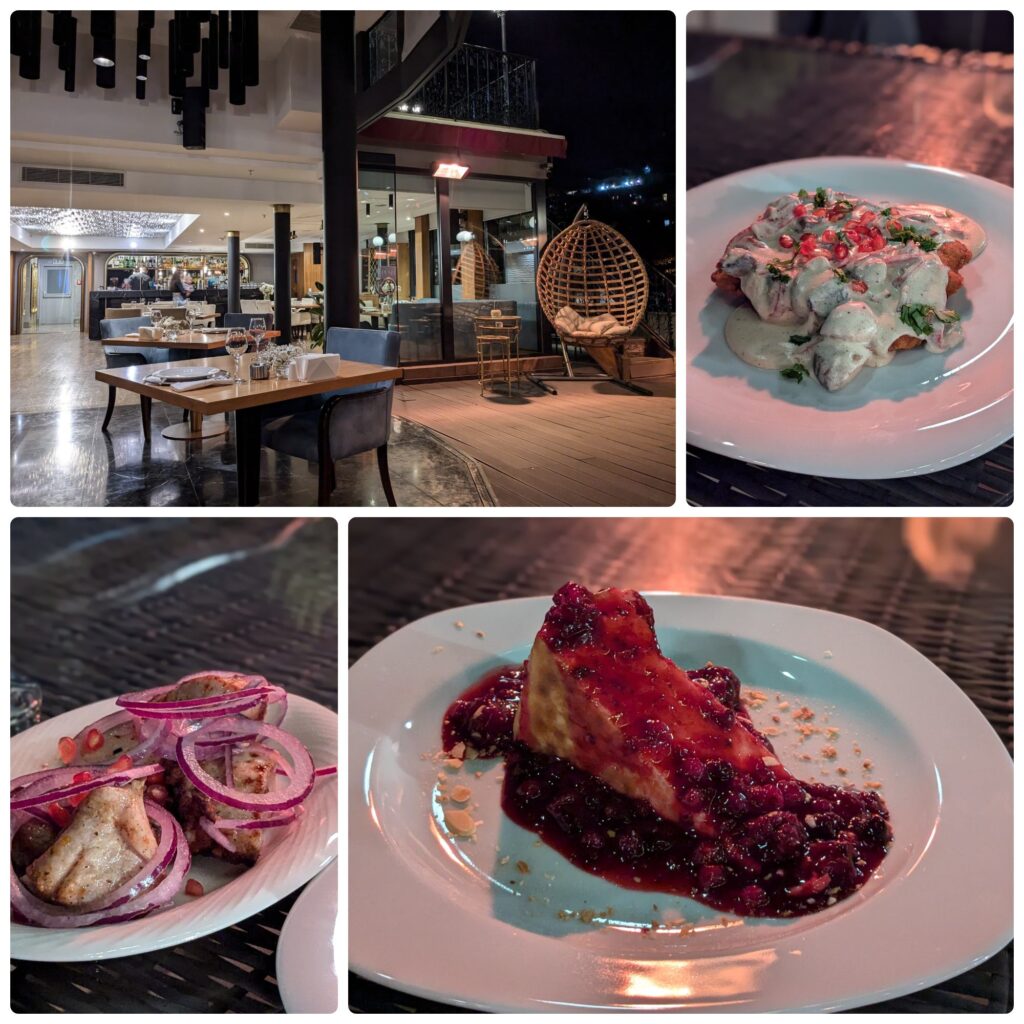
    Tiflis Veranda, Old Town, Tbilisi

    That was a bonus because what we went for was the view. 🙂
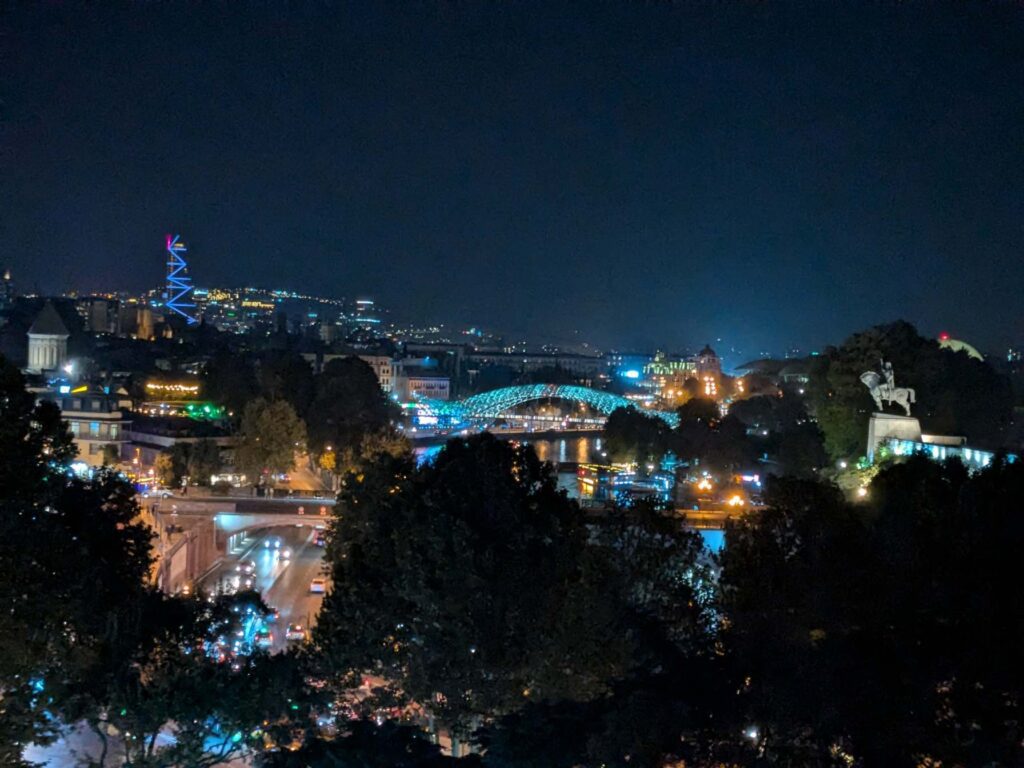
    Tiflis Veranda

    I really liked Tbilisi. It had interesting places and things to see from a cultural perspective, unique food, great wine and cognac, and a lot of friendly folks.

    Next up: Georgia outside Tbilisi
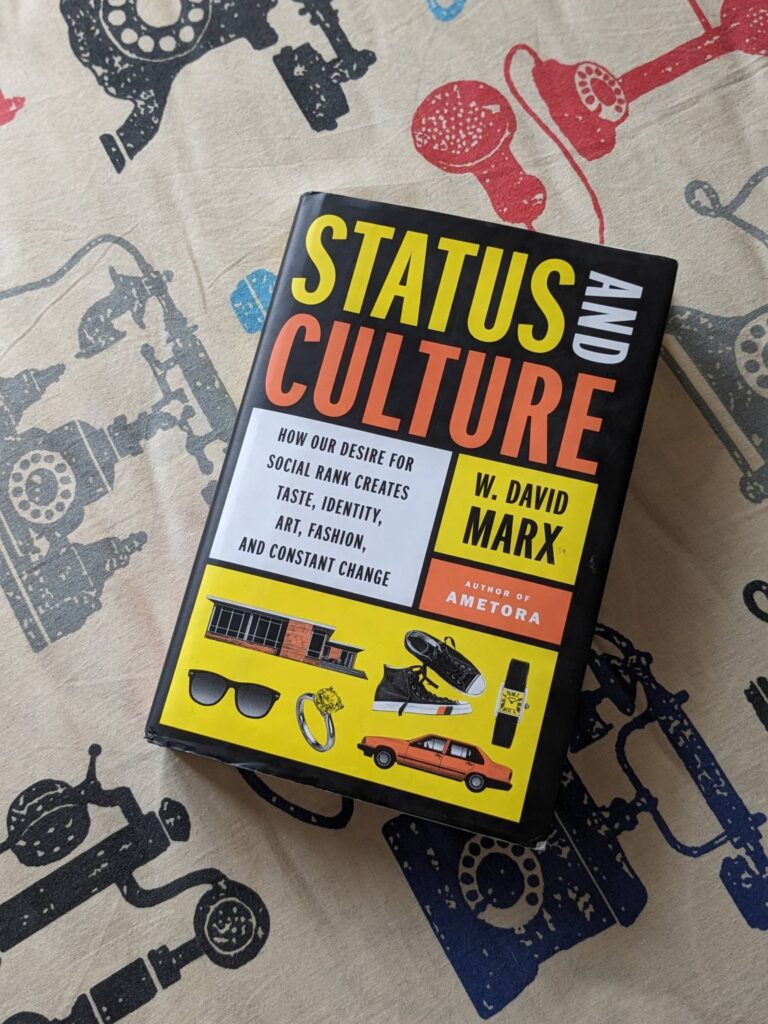
  • Status & Culture: How Our Desire for Social Rank Creates Taste, Identity, Art, Fashion, and Constant Change

    W. David Marx

    I love it when a book matches the expectations set by the cover. In this case, a very intriguing “how our desire for social rank creates taste, identity, art, fashion, and constant change”. As GenX , and a marketer, I have often tried to make sense of the changing nature of culture courtesy the effects of the internet. This book is extremely insightful as it navigates what culture is, how it gets fashioned, and then, how it has changed in the last couple of decades.

    The premise is that beyond functionality and pleasures, most things we do is for status-seeking. And this sparks creativity, which in turn, creates culture. David Marx uses a bunch of sciences, including anthropology, neuroscience, economics, philosophy and meshes them with art history, and media studies to answer why things become popular, why that changes over time, and how it shapes our identity and our behaviour.

    The book is divided into four parts, beginning with understanding status, conventions, signalling, and how this relates to taste, authenticity and identity. It then delves into classes and sensibilities, subcultures and countercultures, how status-seeking feeds creativity, and fuels culture, and its changes. Further, it uses fashion cycles as a means to understand how cultural changes happen, and the role of mass media in it. This section also studies the part that history plays in shaping culture, and how frequent blasts of ‘retro’ are inevitable. All of this puts us in a great place to understand what the internet age has done to culture, and some direction on what is ahead.

    I found the book engaging and accessible, and very useful in understanding my own behaviour and ‘tastes’, as well as that of people I know, and society at large. Highly recommended.

    Notes
    1. The Beatles mop top haircut’s origin story is Stu Sutcliffe’s (the original bass guitarist of the Beatles) German girlfriend trying to imitate the French mode, which was becoming popular among the local art boys. After their reluctant conversion, it became their signature, and a global trend!
    2. Status denotes a specific position in the social hierarchy. Every status comes with specific rights and duties, the most desirable benefits coming to those at the top (more attention and rewards, deference, access to scarce resources, dominance – make others do things against their wishes). Status is bestowed by others, it is social. Status is contextual – local, global. And it is zero-sum, when one gains, someone else has to lose.
    3. Achievements get embodied in particular forms of capital – political, educational, economic, social. This capital determines our memberships in different groups.
    4. Different status levels have different conventions. At first conventions of social interactions regulate behaviour at a conscious level, then we internalise them and they become habits. And then they set our perceptual framework for observing the world, and our expectations. Our sense of meaning and order. Lifestyle is thus a requirement of social rank and an expression of it.
    5. Just as we internalise conventions, status value acts on our brains at a subconscious level. Conventions with high status value appear to us as beautiful, and vice versa. But we attribute this liking to other things like practicality, cost, sentimental value or just personal preferences. (vacations)
    6. The moral duty of self actualisation is a status duty – individuals at the top of the hierarchy must pursue unique behaviours and distinctive choices.
    7. Status symbols are a signal that allow a quick reading of and by others. But they offer alibis (quality, aesthetic features etc) so it is not just a symbol.
    8. There are five signalling costs – money, time (PhD), exclusive access, cultural capital (knowledge of conventions by spending time among high status), norm breaking
    9. Taste, as reflected by multiple signals, is how status appraisals happen. To have good taste means making better choices than others.
    10. Lifestyle choices must reveal congruence – an internal consistency with the target sensibility. Deep knowledge opens the door to better taste, and congruence reveals our commitment to high status sensibility. The highest status people make distinctive choices through bounded originality.
    11. In signalling, we build personas – observable packages of signals, taste, sensibility, immutable characters and cues absorbed from our upbringing and background. Others use this persona to determine our identity. And we have a ‘self’, known only to us.
    12. Our ‘cultural DNA’ = hidden elements, immutable characters and cues, conventions for normal status, emulations (of higher status) and individual distinctions
    13. iPod won as a status symbol, though Microsoft Zune had better features
    14. Old Money taste focuses on patina, visual proof of age in their possessions (vintage) They uses this as an advantage over New Money.
    15. The professional class (70s onward) built a balance of economic, social and cultural capital. Impressing old money and embarrassing new money’s ‘loud’ tastes
    16. New Money’s use of economic capital in signalling spurs the creation of expensive luxury goods – sports cars, summer homes, designer clothes etc. Old Money’s countersignalling and focus on patina and cultural capital get companies to make classic, modest goods with functional appeal. The professional class’s signalling through information creates a market for middlebrow/consumer media guides, functional goods, artisanal goods, and copies of Old Money lifestyles. Underprivileged individuals’ desire to be part of culture outdo peers pushes companies to offer kitsch and flashy entry-level consumer goods.
    17. Immanuel Kant a sorted 3 authoritative criteria for artistic genius – the creation of fiercely original works, which over time become imitated as exemplars, and are created through mysterious and seemingly inimitable methods.
    18. Individuals make adoption decisions within the framework of human interaction. They consider how when and from whom they receive information, how they view uncertainty about switching and how they will be judged in the community for making the switch This creates five distinct groups, innovators, early adopters, early majority, let majority and laggards. The diffusion process – high status adoption of new convention for distinction, early adopters’ embrace of that convention as emulation of their status superiors, early majority reinvention and simplification to follow an emerging social norm, late majority imitation to avoid losing normal status , laggards’ passive adoption without intention
    19. Elite flock to three particular categories of items that fulfil their needs. Rarities, novelties and technology innovations.
    20. Four related phenomena, in the internet age – the explosion of content, the clash of maximalist and minimalist sensibilities accompanying the rising global wealth, the rejection of taste as a legitimate means of distinction, the over evaluation of the past in Gen X’s retromania and the abandoning of the past in Gen Z’s Neomania.
    21. “You can’t just walk around and be visible on the internet for anyone to see you. You have to act and the main purpose of this communication is to make yourself look good.” Social media also enables us to quantify our status like never before in like retreats comments and followers.
    22. Before the internet, elites could protect their status symbols behind information barriers and exclusive access to products. The internet broke that.
    23. Another elite group has stepped in to countersignal gauche extravagance, the professional class tech billionaires who are forming their own taste culture. They created wealth without shedding their professional class habitus. Skeptic of glamour and respect for thoughtful thrift, they make their choices based on functional rationales rather than the open pursuit of status symbols.
    24. Omnivorism (consume and like everything) has had major effects on culture over the last few decades. In the past taste worked as a decision classifier by drawing clear lines between social groups. Omnivorism drains this power by declaring nearly everything suitable for consumption.
    25. Collectively reaching the stage of meta knowledge we come to understand the arbitrariness of our own preferences taste and culture. The proclaimed superiority of preferred styles over others is accordingly and arrogant and bigoted act.
    26. Omnivore tastes then can be used to dismantle the status structures that prevent the equitable distribution of respect. In a world of celebrity wealth-gospel, and millennial financial anxiety, young entertainers face little backlash for aggressively courting likes, subscribers and advertisers. Follower counts and gross earning appear to be the only relevant sign of cultural import.
    27. Youth find ‘self expression by enlisting in a global army (e.g. BTS)
    28. Hysteresis – the lingering values of a previous age continuing to guide our judgments

    Status & Culture
  • Hokkaido Japanese & Korean Restaurant

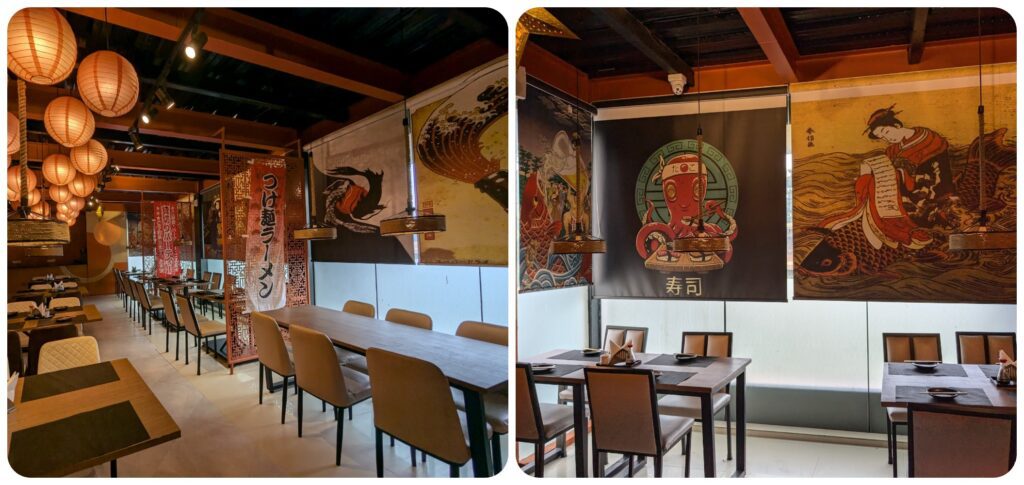
    Just as the restaurant itself is hidden in Indiranagar, Korean too is hidden in the menu. Actually, it doesn’t exist. There’s only Japanese. Now that I got that off my chest, we got there on a Sunday afternoon and had the place all to ourselves. It’s functional in terms of seating but made quite lively with the use of lighting and the art.

    Hokkaido, Indiranagar

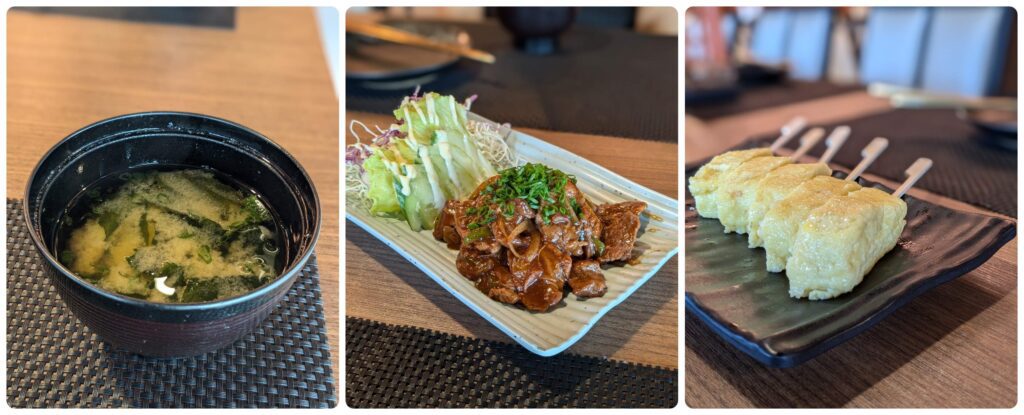
    D, I have realised will have Miso if there is Miso, so we ended up with a delicious Miso Shiru that set the appetite well for the Stir Fried Beef, which had great texture and just the right amount of spice for us.

    We first met Tamagoyaki at the Tsukiji Outer Market in Tokyo and I have been a fan since. This one didn’t really reach that level, but was definitely not bad.

    Hokkaido, Indiranagar

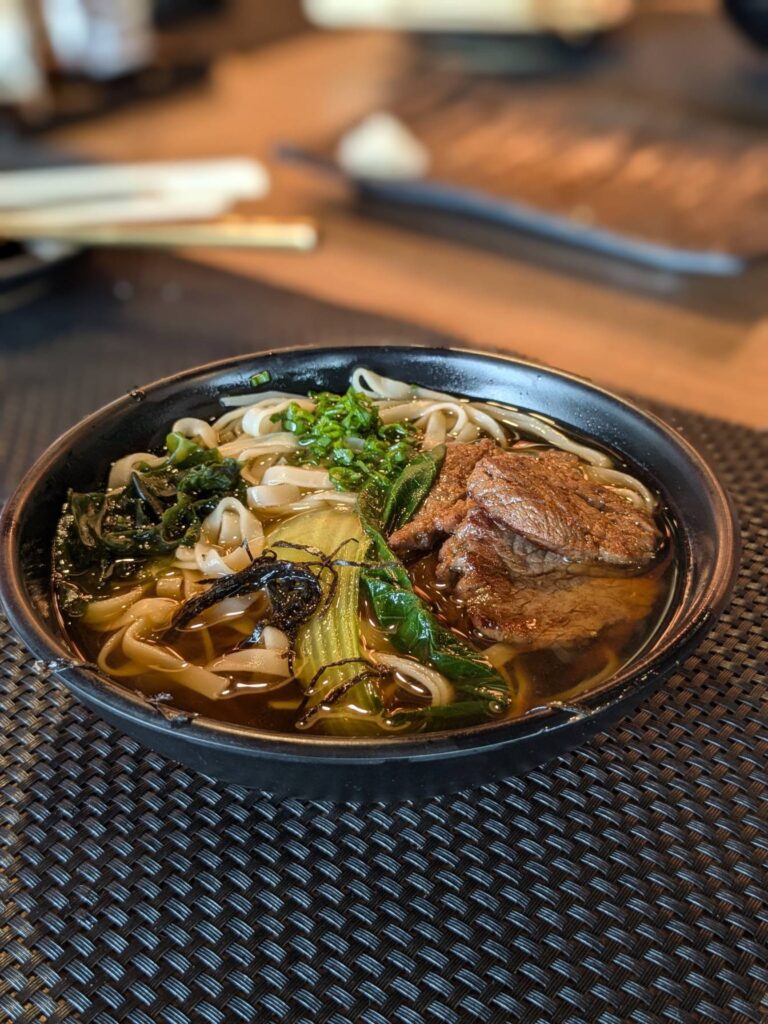
    We debated mains a lot and finally agreed on Gyu Niku Udon – udon topped with beef (again). On hindsight, we should have chosen something else because it was a bit similar to the soup. But we enjoyed it nevertheless.

    Hokkaido, Indiranagar

    We were a bit disappointed since we wanted Korean, but Japanese is a good second. The service is prompt and very helpful. We were left lighter by about Rs.1800. Overall, not a bad outing if you’re craving Japanese.

    Hokkaido Japanese & Korean Restaurant, 10/1-1, 1st Floor, 7th Main, 1st Cross, Appareddypalya, Indiranagar

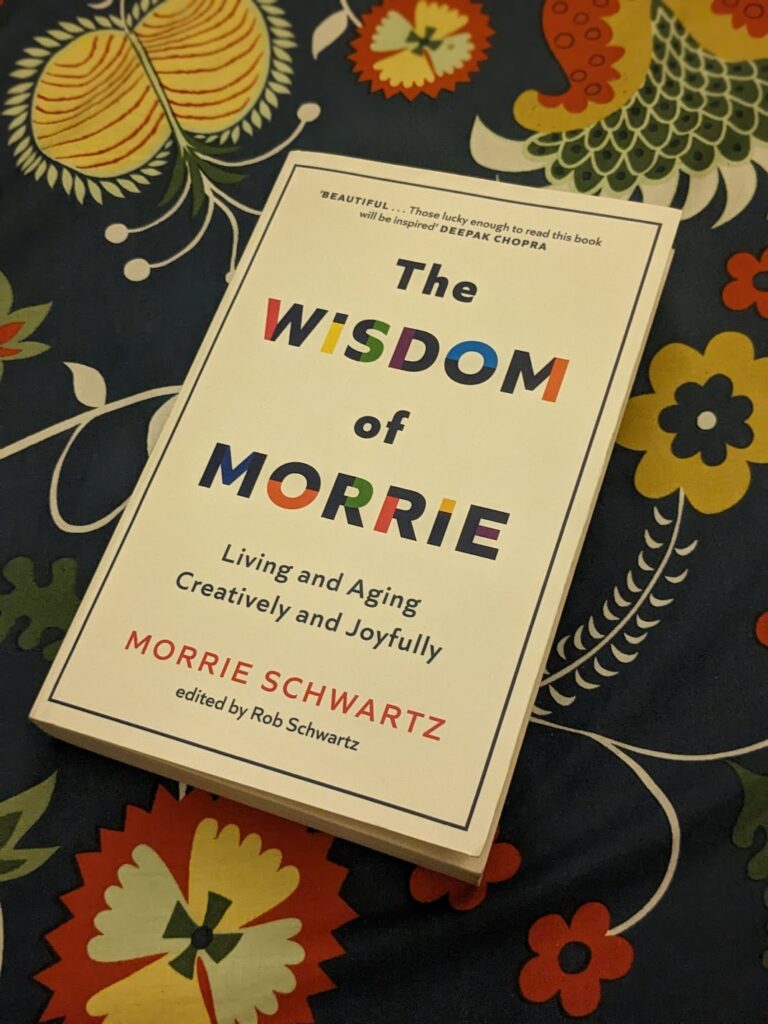
  • The Wisdom of Morrie: Living and Aging Creatively and Joyfully

    Morrie Schwartz, Rob Schwartz

    Such is the impression left by Mitch Albom’s “Tuesdays with Morrie” that more than a decade later, the moment I realised it was the same Morrie, I had to buy The Wisdom of Morrie. Rob Schwartz, son of Morrie Schwartz discovered the manuscript, written during 1988-92, in the early 2000s and with the help of his mother, edited it.

    While the book is full of insights that are useful at any stage of life, by the author’s own admission, it speaks to the sixty five year old and beyond. But I am glad I read it now. One of the things that I have complained about is the way mid life almost blindsided me, with the physical, mental, and emotional changes it brought. This book is a great primer for the next stage, and I will most definitely read it again in another 15-20 years.

    The book is divided into nine chapters, each of which delves into a specific domain. It begins with one’s own awareness of aging and impending death, and the contradictions one faces at later stages in life – some things become easier, and some more difficult, you want some things (solitude) and their opposite (company) – and how one can find an emotional balance.

    It then moves on to how we can expand our awareness, which according to Morrie is the summation of the many tools one requires to age well and become the best version of oneself. He also calls out ageism and agecasting, and notes how one can do it to self as well.

    The next chapter is where the book gets into great detail on the actual issues people face as they age, and how to handle them. This is the longest chapter, and rightfully so. The following chapter continues this theme – how to come to terms with all the baggage we have accumulated thus far. The last two chapters are perspectives on how to age well, and become the best version of oneself.

    Morrie not only uses the knowledge he had amassed from his work as a psychologist and teacher, but effectively channels the empathy and reassurance of someone who is himself living through it, and knows many others who do. This puts him in perfect position to not only understand the challenges, but also provide ways to overcome them. Not in theory, but in actual practice. He delivers this with sensitivity and compassion, using logic as well as anecdotal examples.

    In the Hindu ashrama concept, we have vanaprastha and sanyasa. This is a great resource for anyone in these stages. And for those others who want a sneak preview.

    Insight
    Fear is often the mirror image of need. For example, our need for self-preservation is the other side of our fear of physical injury.

    The Wisdom of Morrie