
Month: May 2022

  • Klara and the Sun

    Kazuo Ishiguro

    “The Buried Giant” didn’t really work for me, so I started reading with a mix of anticipation and apprehension. The lump in the throat as I turn the final pages is what I expect from a Kazuo Ishiguro book, and it most certainly delivered on that ache of profound sadness. It reminded me not just of his earlier book “Never Let Me Go”, but also of Louisa Hall’s “Speak”, which is centred around AI’s evolution around stories and storytelling through time. 
    Klara, an “artificial friend” serves as the narrator in a dystopian future where children are “lifted” for enhancing their intelligence. The world at large seems to have a fair share of tribes and movements, as technology has caused a division of classes in which many are “post employed”. We first meet Klara in the store where she is put up for sale, as an observant MF, who loves watching the world through the store window, and who is devoted to the sun (she is solar powered). She is chosen by Josie, a 14-year old made unwell by the “lifting” process. 

    From then on, we see multiple themes playing out – some human, some human and AF, and some just AF. The relationship between the humans – Josie, her mother and father who are separated, their neighbour Helen and her son Rick (who is Josie’s dear friend), and Capaldi, whose studio Josie and her mother visit for her “portrait” – reveal the different “sides” of their selves that play out on different occasions, their understanding of their own fragility, and their diverse views about how society is evolving. This is closely connected to the humans’ interactions with Klara, which show their mindset towards the AFs, again polarised. Most poignant are the moments with the empathetic Manager. 

    But being the narrator, Klara’s own thoughts and actions are the most interesting. She sees the world in boxes (I wonder if that is connected to how we slot people), she “feels” enough for Josie to be prepared to sacrifice anything for her, and has a hatred for the Cootings Machine, both of which are all too human. Her observation also makes her very perceptive (“I understood that my presence wasn’t appropriate as it once had been,”) even though the humans around her are often not. (Spoiler sentence ahead) My favourite is the deep insight at the end, when she says that Capaldi’s belief that there was nothing special inside Josie that couldn’t be continued was flawed because he was looking in the wrong place – it wasn’t inside Josie, it was inside those who loved her. 

    Ishiguro has a way with prose that allows him to move the story forward without massive plot-changing interventions. And as always, he also manages to keep the reader interested with the layered narrative and wonderful insights that make us human. In this case, the book made me wonder about the time when (I am not sure it’s an “if”) AI becomes sentient/ develops consciousness – would humans be able to understand (Klara’s faith in the sun, for instance), what is the kind of loneliness the AI would face, how would it handle its obsolescence, would it also show different kinds of love (the selfish and the selfless), and yes, can it have a heart – “I don’t simply mean the organ, obviously. I’m speaking in the poetic sense”.

    Klara and the Sun
Kazuo Ishiguro

  • Artificial Culture

    It’s almost a year and a half since I wrote In Code we Trust. More recently, Tim Ferriss had Eric Schmidt on his podcast (transcript). In what I thought was a fascinating discussion based on the latter’s recent book  The Age of AI: And Our Human Future, (coauthored with Henry A. Kissinger and Daniel Huttenlocher), they also brought up AlphaGo. Go was a game that humans had been playing for 2,500 years, and it was thought to be incomputable until DeepMind’s AlphaGo beat world champions. As Schmidt explained, some of its moves and strategies were the kind no one had thought of before. In Kissinger’s words, we’re entering a new epoch, similar to the Renaissance, this age of artificial intelligence, because humanity has never had a competitive intelligence, similar to itself, but not human. To note, a more recent version – AlphaGo Zero self-taught itself without learning from human games, and surpassed its predecessor in 40 days!

    (more…)
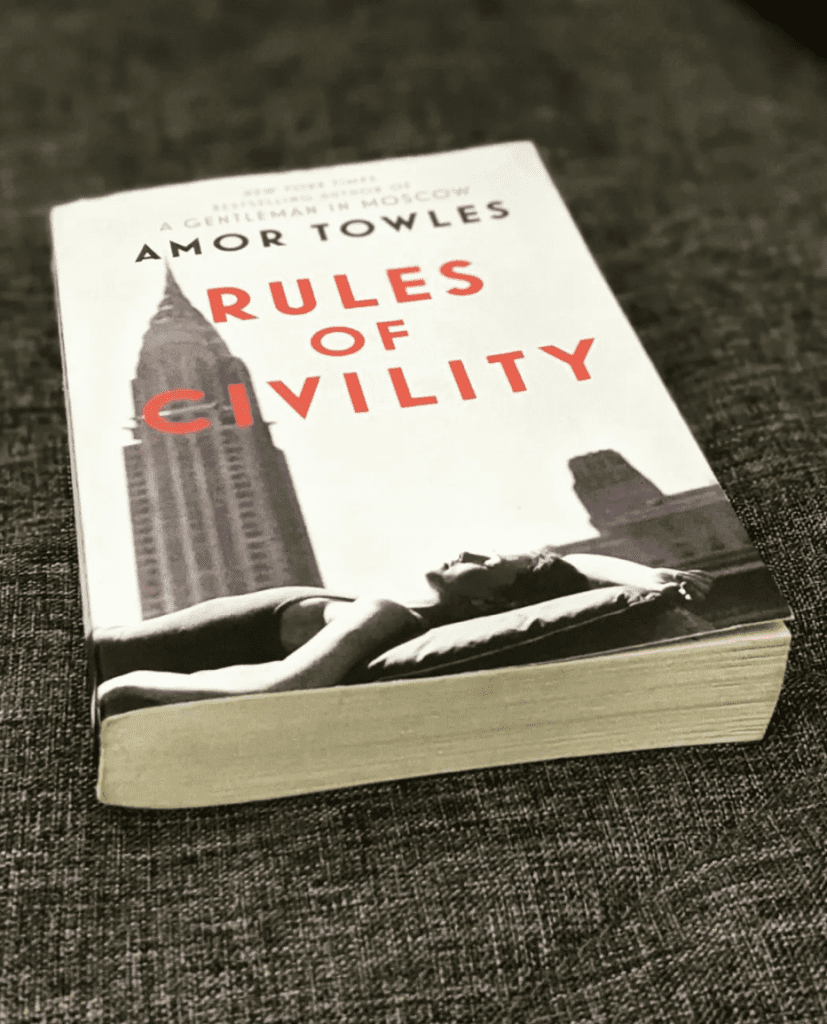
  • The Rules of Civility

    Amor Towles

    “For however inhospitable the wind, from this vantage point Manhattan was simply so improbable, so wonderful, so obviously full of promise — that you wanted to approach it for the rest of your life without ever quite arriving.” That last bit, that’s how I feel about some books. This is one those, just like “A Gentleman in Moscow”. I have to admit a bias because that book is among my all-time favourites. 

    In the preface, we meet Katey Kontent (originally a Russian immigrant Katya), who, in an exhibition in 1966, sees the photograph of an old acquaintance Tinker Grey. It catches him underweight, with a visibly dirty face, ill shaven, in a threadbare coat. As Katey’s memories come flooding back, she decides to leave, but catches another photo of Tinker at the exit – clean shaven, in a custom-made shirt and a cashmere coat. The second was from year before the first, prompting Katey’s husband Val to say “riches to rags”. “Not exactly” is Katey’s response, because in the first, Tinker’s eyes were bright and he had the slightest hint of a smile on his lips. And that sets the stage for a wonderful ride that starts on the last night on 1937, one Katey met Tinker for the first time. 

    The photographs remind Katey not just of Tinker, but a mix of people who would play important roles in her life – Wallace Wolcott, Dicky Vanderwhile, Anne Grandyn, and her best friend at that time – Evelyn Ross. And then there is New York, or specifically Manhattan whose different shades also appear, as Katey’s life changes. Amidst the parties, cocktails, flings and high-heels, there are extremely well-etched characters (some really powerful women among them), all different from each other, and all with moments of deep poignancy. 

    Anything more and I think I’d take way the joy of discovering the layers of the book, and the sharp revelations too. Enjoy the ride. 

  • Designing my desires

    A world of transactional efficiency

    It was a little over 4 years ago that I first brought up the increasingly transactional nature of our interactions and even existence in general. I was reminded of it while listening to Amit Varma’s podcast with Nirupama Rao. Interestingly, they brought up contexts similar to what I had used – mails and rails. I had used birthday greetings going from long mails/cards to a ‘Like’ on someone else wishing the person a birthday. Travel was the other context, and I liked Amit’s example of train journeys being a unique experience. In contrast to say, the flight from point A to B.

    Last year, around the same time, I had framed it as An Efficient Existence, and used the example of Taylor Pearson’s 4 minute songs – the timeframe he had mentioned for songs in the context of  certain rules that creators need to follow if they want their work to be consumed and appreciated. I had brought up an earlier era of Floyd, Springsteen, Fleetwood Mac etc whose songs didn’t follow that template. Demand or supply, what happened first, I asked. Does it have to do with the abundance of choice now, and the demands of instant gratification? While templated packages for all sorts of consumption are increasingly the norm, people also want to finish and move on to the next thing on their list. Transactions. (Generalising), there seems to be very less desire to have an immersive experience. Outside the screen, that is. As the Spotify ads show (unintentionally and literally) we’re usually in a bubble, oblivious to our surroundings.

    (more…)
  • How will you measure your life?

    Clayton M. Christensen

    Just because the title of the book is a question doesn’t mean that you will get simplistic answers – Clay, James and Karen make that clear on the jacket. But what it does is give a bunch of perspectives on how to frame your personal and professional life and purpose, how to approach the decision-making involved, and how you could think about success and failure.

    The book has three sections and covers a lot of interrelated topics – what motivates us – hygiene and motivators – which are often interpreted wrongly (the opposite of job dissatisfaction isn’t job satisfaction, but rather an absence of job dissatisfaction), the role of calculated directions and serendipity in the pursuit of the life and career we aspire to, the importance of matching strategy with the decisions you make on your resources – energy, money, time (relationships are a great example), the excellent framing of “job to be done” seen through the perspective of the customer/partner, equipping your children for the future, shaping culture in the family and in an organisation, and the slippery slope of “just this once” in matters of ethics and values. These are all delivered using interesting anecdotes, thus making it a very engaging read. 

    Having said that, the book was written in 2012, when social media was not the phenomenon we see now. I think it is fair to say that its all-pervading influence can be felt in all aspects of our life – from what we aspire for to measurement in terms of Likes and followers! That is not to say that some fundamentals in the book are not relevant it only means that we should (for our own purposes) add that layer when using the frameworks in the book. The other question I am thinking about is whether we should measure at all or just live. 

    https://www.instagram.com/p/CZMe91rlO0L/