Month: December 2020

  • In Code we Trust

    Eugene Wei’s TikTok and the Sorting Hat is a splendid read on many counts. It provides some excellent perspectives on tech companies’ crossovers across WEIRD (Western, Educated, Industrialised, Rich, Democratic) and non-WEIRD countries like China and India, made complicated by the culture difference. This serves as the context setting for TikTok’s rise in the US, and some deep chronicling on how this came to be, while juxtaposing it against social networks like Facebook, Instagram, Snapchat and Twitter. On an aside though, all of these networks have found varying degrees of success in India. Meanwhile, he points out that TikTok is not really a social network, because instead of a social graph, it plays on an interest graph that it builds from the user’s reactions. All of this makes for some excellent reading. But what really caught my attention was this – 

    in some categories a machine learning algorithm significantly responsive and accurate can pierce the veil of cultural ignorance. Today, sometimes culture can be abstracted.

    A meta example of this appears at the end of the post when he visits the Newsdog. At that point it was the top news app in India, and it was built by a Beijing-based startup. Around 40 male Chinese engineers, none of whom could read Hindi!

    (more…)
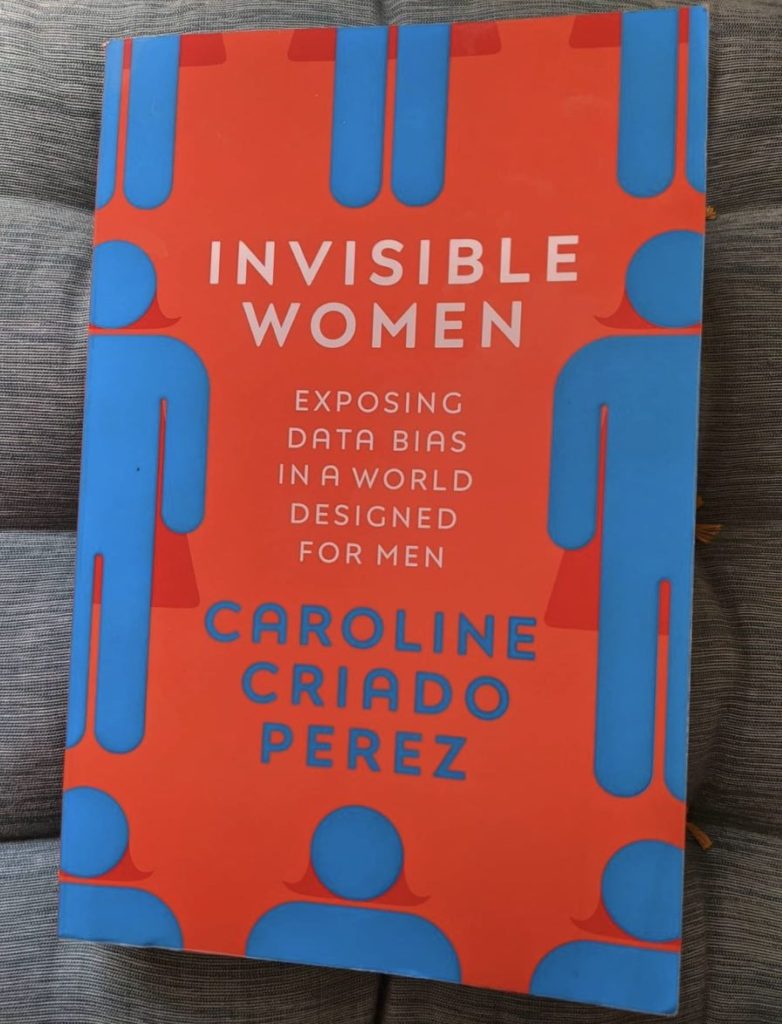
  • Invisible Women: Exposing Data Bias in a World Designed for Men

    Caroline Criado Perez

    Enlightening! While a part of the title reads “exposing data bias in a world designed for men”, I think it extends well beyond that. It provides perspectives that I had not even considered, even though in the last few years, I have tried to be more conscious of the challenges that women face at the workplace, in public spaces, their everyday lives, and how the world works differently for them in the many, many things that men take for granted. This, therefore, is a book that I think men and women should read, for different reasons.

    For women, it will probably serve as an insightful articulation of many things that they have thought about, talked about, or attempted to change, and give them information about how women around the world have taken them up as challenges and sometimes succeeded in setting things right. I will stop at that, and not be presumptuous in assumptions.
    For men. Where do I even start? I think we will see the world differently after reading this book. The challenge for us would be to be conscious of the inherent bias in our thinking, our behaviour, and the way we design objects and systems. As the blurb says, imagine a world where the phone you use is too large for your hand, where the safety of the vehicle you travel in has not really been designed with you in mind, and the medicine you have been prescribed is just wrong for you because you weren’t adequately represented in trials! In essence, “the lives of men have been taken to represent those of humans overall.”

    The author uses data and case studies from multiple domains to highlight how women haven’t been fairly represented, and in many cases to also show how correcting this could lead to a better result not just for women, but for humanity overall. Public transport, urinals (ever wondered why there’s always a queue for women while men seem to find things much easier), workplace practices, product design, medicine, disaster relief, the pain is everywhere. And they are at various levels of seriousness. Some made me say “oh, I didn’t think of it that way”, many made me grimace, and most are just appalling.
    It has given me many perspectives, and a resolve to work harder at contributing to fix this. One really doesn’t have to be a genius to understand the impact better representation can make, at an individual and species level. With all that being said, in the end, I also have to admit, quite sheepishly, and to underline the point, that while many of my favourite authors are female, I might have completely missed this book if my wife hadn’t made it part of our list! See? 🙂

  • Metaverse: Get a second life

    What’s real?

    I read The Real-Town Murders around the same time last year. It is set in England in the near future, or at least partly so, because it also features Shine, “the immersive successor to the internet” into which people are happily plugged in.

    More recently, in “Why is this interesting?“, I learnt of Roblox, apparently used by three-fourths of all 9- to 12-year-old kids in the United States at the moment. It’s more than a gaming platform, it is a single digital location that now offers all her old activities: playground, schoolyard, theater, and mall all in one. Thanks to the pandemic, and the digitisation that it has fast tracked, an entire generation might have a different definition of “real”. In the real world of adults, gaming is on a tear, and many reports claim that AR and VR are on the cusp of massive adoption. To note that Snapchat is the king among social networks for a particular generation.

    (more…)
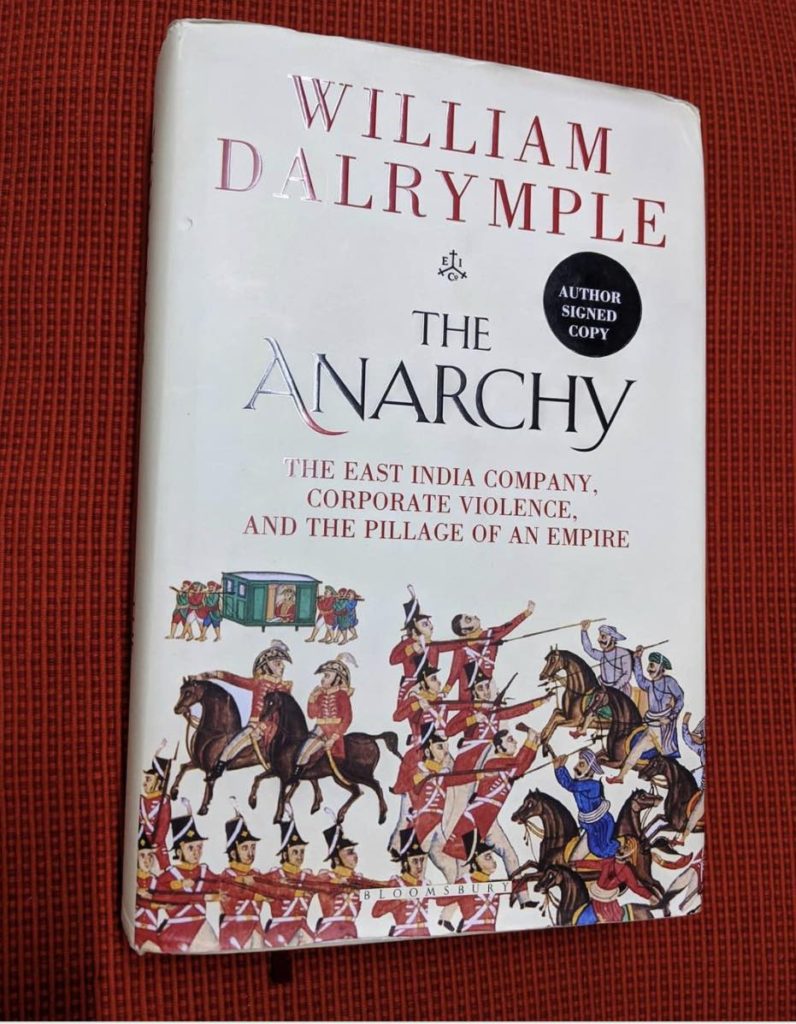
  • The Anarchy: The East India Company, Corporate Violence, and the Pillage of an Empire

    William Dalrymple

    There was so much money in India – that’s one of my biggest takeaways from this book! Every other page has a note at the bottom that shows the current value of the money that was paid to a local mercenary or the Company as protection money, or a deal as simple as crossing the river safely! I am exaggerating only a little bit. It reminded me of the inane charging for random things by modern airlines, and corporations in general trying to squeeze out every bit of revenue from the average user. And the story of the East India Company is exactly that – a corporation that arrived in India for trade, and ended up pillaging the country and finally giving it to the Crown on a platter.

    Dalrymple begins from where it all started – London, 1599, when the idea of the company was first discussed seriously by a diverse set of individuals. Though not an original idea, the joint stock process allowed the Company to raise resources efficiently in the beginning, and until things went south, provide handsome profits to its investors. The book traces the Company’s trailblazing journey in India, one that features not just its own principals like Clive, Hastings and Wellesley but the local rulers and power brokers as well – from the Mughal emperor (in name) Shah Alam, and Tipu Sultan to mercenaries like Benoît de Boigne who helped shape the Maratha army into one that matched the Company’s own fighting force, and interesting characters like Begum Samru, a feisty courtesan who became a mini-ruler in her own right! Some familiar from history, and others from the author’s own earlier works (like James Skinner from White Mughals). A word on Shah Alam – he is a far cry from his glorious predecessors, but in an age when living till 50 was a luxury, the man survived every tribulation that was thrown at him and lived into his late 70s even as his enemies perished around him.

    It is amazing how, from an inconspicuous office in far away England, with less than a hundred employees, a corporation controlled the destiny of a land as large and diverse as India. It was in 1600 that the Company received the charter from the Queen, and by the early 1800s, they had defeated the last credible threat – the Marathas. These two centuries are full of intrigue, and there are multiple occasions when a single different decision or event (e.g. if Nelson had not sunk Napoleon’s navy and the latter had been able to give Tipu an assist) might have resulted in an entirely different contemporary history. Politics – the English replicated the Roman divide et impera, and economics – many of their moves would have been impossible without local financing – went hand in hand in what was the first hostile takeover of a nation by a business entity. That’s not the only first – abuse of corporate power, lobbying, unfair trade practices, the Company pioneered all this. And finally, in another first, it had to be bailed out by the government because it was too big to fail!

    If you’re a history enthusiast, this is obviously a must-read, and even if you’re not, this is a fascinating piece of history that you’ll enjoy.