Month: March 2020

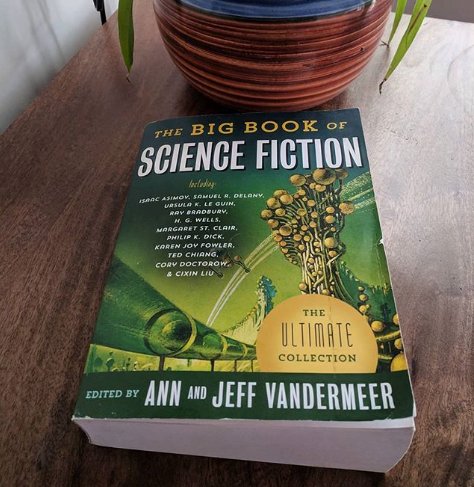
  • The Big Book of Science Fiction

    Ann and Jeff VanderMeer

    If science fiction is even remotely of interest to you, this is a veritable treasure trove! 105 stories spanning 1160 pages. Only a couple of authors get to have more than one story, and that means there is a diversity of work that’s arguably unparalleled in any collection of this nature. The stated objective of the book is indeed that – diversity. And it happens on multiple counts – non-English writings (and therefore, the variety of geographical settings – other than Antarctica, all continents are represented), gender (of authors and characters), and most importantly, the type of science fiction – dystopian, alien encounters, space operas, post-apocalypse, and even satire.
    The stories are broadly in a chronological order of when they were written. The introduction to each author before the beginning of a story is very helpful in terms of context setting.
    While I do love science fiction, I really haven’t read enough to comment on the choices of representation made by the authors. I can count on one hand the number of stories I have previously read. But at least a couple of them are my all-time favourites in fiction – Asimov’s “The Last Question” and Ted Chiang’s “Story of your life”. I also found a story – Sandkings -by an author familiar to many of us from an alternate “universe” – George R.R. Martin. An absolute thriller that I thoroughly enjoyed.
    My other favourites are these : The Triumph of Mechanics by Karl Hans Strobl, a macabre, dystopian tale with a sense of humour! Desertion by Clifford D. Simak, a story based on pantropy – modifying humans for space exploration, as opposed to changing the alien environment. Another favourite that uses this theme is Surface Tension by James Blish. Philip K. Dick’s Beyond Lies the Wub seems quite prescient about “we are what we eat”! Katherine Maclean’s The Snowball Effect is about an experiment by academia in a sociological setting that leads to a more-than-anticipated impact. William Tenn’s Liberation of Earth is a brilliant commentary on US intervention in Korea/Vietnam, even while doing a great job of reducing the collective ego of the apex species of earth! His other work The Ghost Standard, later in the book, is an absolutely delightful satire.
    Grandpa, by James H. Schmitz has alien ecology as a theme and builds the tension excruciatingly well! Stranger Station by Damon Knight is an intense first-alien-contact story that dwells on the complexities very well. Vadim Shefner’s A Modest Genius is a lovely tale of romance and invention while Sever Gansovsky’s Day of Wrath is a thriller based on biotech experimentation gone wrong. The Hands by John Baxter is a creepy tale that reminded me of Aliens.
    F.L. Wallace’s Student Body would make it to my top 5 in the book, exploring both alien contact and environmental impact really well. The feminist utopian world created by Joanna Russ in When it Changed is subtle yet impactful. Yasutaka Tsustsui’s Standing Woman is as poignant as it is surreal. Sporting with the Chid by Barrington J. Bayley is dark and builds up to a terrifying climax.
    Josephine Saxton’s The Snake Who Read Chomsky is another incisive tale on biotech experimentation with some excellent twists and turns. Reiko’s Universe Box by Kajio Shinji is somehow sad and upbeat at the same time. Greg Bear’s Blood Music combines microscopic phenomena and macroscopic impact really well. Robert Reed’s The Remoras uses a space opera setting for an excellent human drama. The last story in the book – Baby Doll by Johanna Sinisalo – is a disturbing take on sexualisation of children that falls well within the realms of possibility, sadly.
    Isaac Asimov, Ursula K. Le Guin, Ray Bradbury, H.G. Wells – the book has work by all the greats of the genre, and you are also likely to discover authors whose stories you will enjoy!
  • Fox in the Field

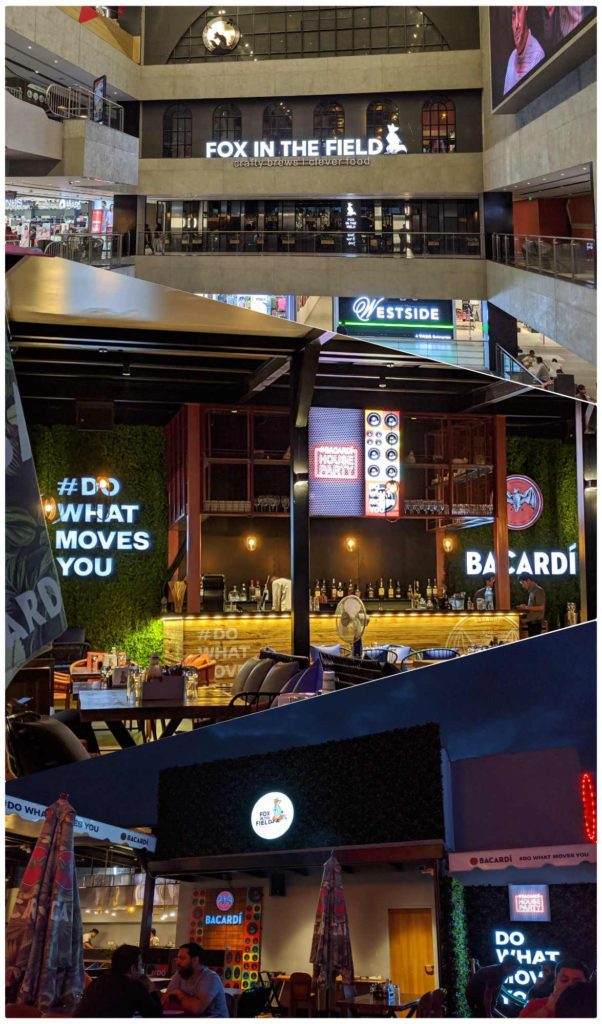
    Each time we visited Forum Shantiniketan, we wondered when the sign would evolve into an actual microbrewery, and finally, sometime in early January, it actually happened! The craft beer menu wasn’t available on Zomato so we called to confirm. After reasonably meh experiences at multiple eateries in the mall (Rassasy by Barcelos, Smokehouse Deli, Uno Chicago Bar & Grill) and only Punjab Grill being the saving grace, we were naturally cautious and expectations were minimal.

    Seating should never be a problem here – there are 4 floors, including one that seemed like a mini amphitheater! We chose the terrace option on a crisp Saturday night. Part covered, part al fresco, it has comfortable seating options for different group sizes. Bacardi seems to have branded the fox’s den, if one goes by this floor’s decor.

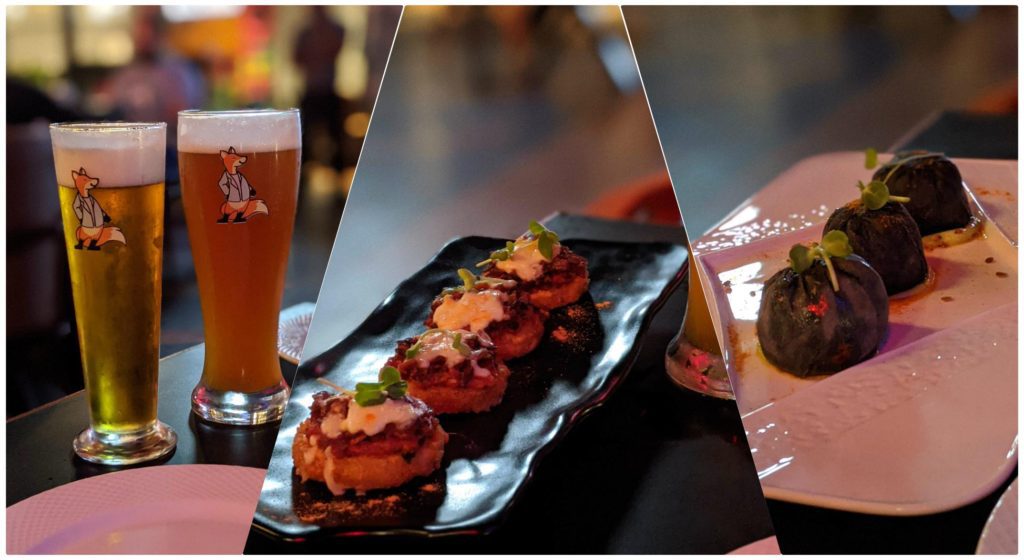
    Of the five craft beers available, we skipped two – the Chocolate Stout and the Tripel IPA. We began with a Hefeweizen, which from experience is the safest bet. This one was no exception, and seemed fresh as well. The Saison Farmhouse had an intriguing description – “champagne of the beer world”. A pale ale, highly carbonated, it had a touch of sour that worked well.

    The Dabeli pizza with bacon was interesting since they don’t really occur naturally together. The bacon was only the topping but its texture and the spiciness of the dabeli complemented each other very well. Naan Pops also was an interesting dish – we chose the Butter Chicken option and it didn’t disappoint. A good time to note that if you like pork, the menu has a ton of options across cuisines.

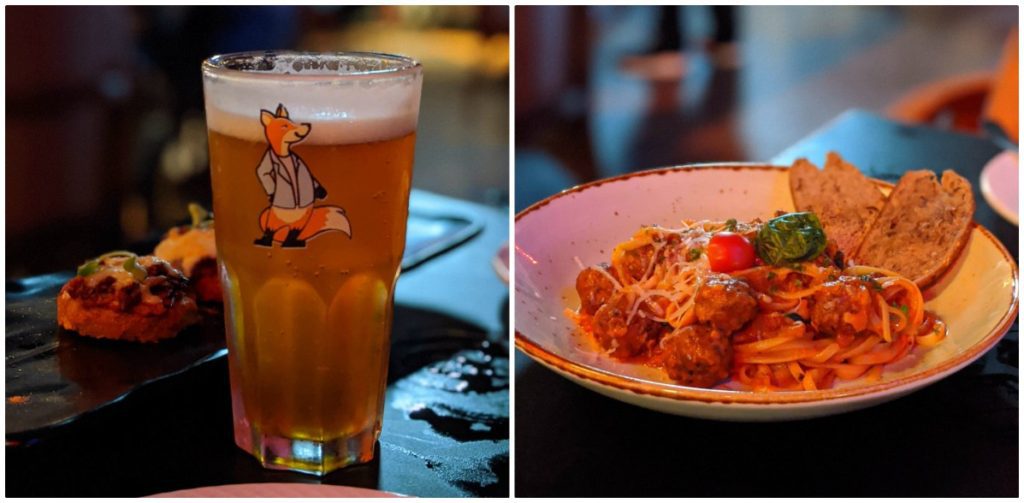
    We then tried the lager – spicy hops and a refreshing zing! For mains, we chose the Linguine with lamb dumplings. The pasta itself was a little suspect, but the tomato based sauce, and the lamb dumplings made up for it. The bread too contributed with texture and taste.

    The dessert options didn’t excite us much, so we skipped.

    The bill came to a little over Rs.1800, which is absolutely a good deal given the location and the quality of beer and food. The service was friendly and prompt, and the playlist was perfect evening lounge. This one we will repeat!

    Fox in the Field, Forum Shantiniketan Mall, Whitefield Ph: 47483072

  • Womankind

    Invisible Women, which I discovered thanks to D, is a book that I have been recommending to as many people as I can because of how enlightening it was. Though the extension of the book title is “exposing data bias in a world designed for men”, it actually goes well beyond that and brilliantly articulates the challenges that women face at the workplace, in public spaces, their everyday lives, and how the world works differently for them in the many, many things that men take for granted.

    In another powerful book that I read recently, The Age of Surveillance Capitalism, Shoshana Zuboff eloquently explains how the latest form of capitalism has gone rogue and is now well on its way to influencing human behaviour and actions at industrial scale. By extension, this is a systematic assault on the concept of free will, all part of a relentless bid for more money, power and control. While industrial capitalism exploited nature, surveillance capitalism is doing the same to human nature. (more…)

  • Speak

    Louisa Hall

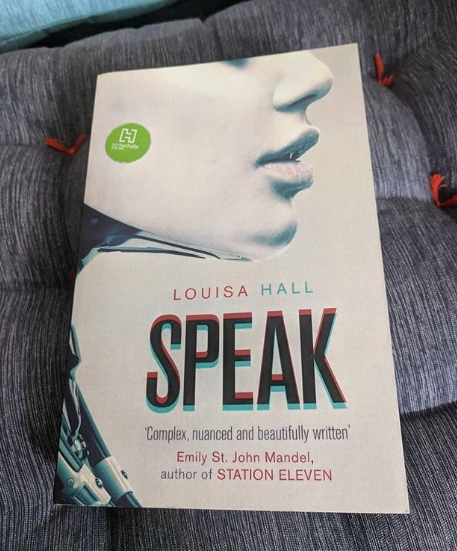
    If you’re familiar with Asimov’s works, you’d know one R.Daneel Olivaw. The robot who lived closed to 20000 years and shaped the fate of humanity. If you follow the Robot and Foundation series, it’s almost like Daneel’s biography. “Speak” reminded me of that because it is almost like a biography of AI. Or rather, an AI that was the most commonly used one until its doll manifestations – babybots – are shipped away to a desert for being too human-like. That’s where the book begins, and through five different narratives, we see its progression.

    The book is as much about the narrators as it is about the evolution of the AI itself. Their voices live on through the AI, and a motley bunch they are. Mary Bradford makes her way across the ocean to Massachusetts some time in the 17th century, on a voyage (and a marriage) she doesn’t really fancy. She fills her diary with her thoughts on the soul, memories of her dog and her own confusions regarding her husband. In the 60s, the diary is read by Ruth Dettman, who convinces her husband Karl to name the (chat) bot he created MARY. They disagree on what memory could bestow on an AI (“MARY will remember your words, but it won’t ever feel them. It won’t understand them”, says Karl.) A little before that, Alan Turing writes poignant letters to his best friend’s mother. In 2035, Gaby White is a paralysed child, who cannot handle the trauma of her babybot being recalled. In 2040, Stephen Chinn, the inventor of the babybot, is a tech whizkid whose rather unfulfilling personal life is in sharp contrast to the various companionship tools and books he has given society, the climax of which is his imprisonment for a creation that was too human. MARY has been shaped by them, and their lives have been shaped by MARY.

    The strands of cause and effects are too complicated to be completely unraveled, but there is a cohesive narration that is evident. I liked the book not so much for this structure, but the sensitive portrayal of nuanced and layered emotions. There is a neat irony here – what it means to be human conveyed through AI and flawed humans who worked on it.

    Each “voice’ hits its own distinct note of poignancy, and the author’s prose handles them wonderfully well. There is a lyrical quality that adds much to the narrations. One of those books where the words reach out from the page, and make you pause and sigh before you read on. I think it worked for me because at its core, the book is about a fundamental human need – the desire for companionship, and the need to be understood.

  • Bohemians

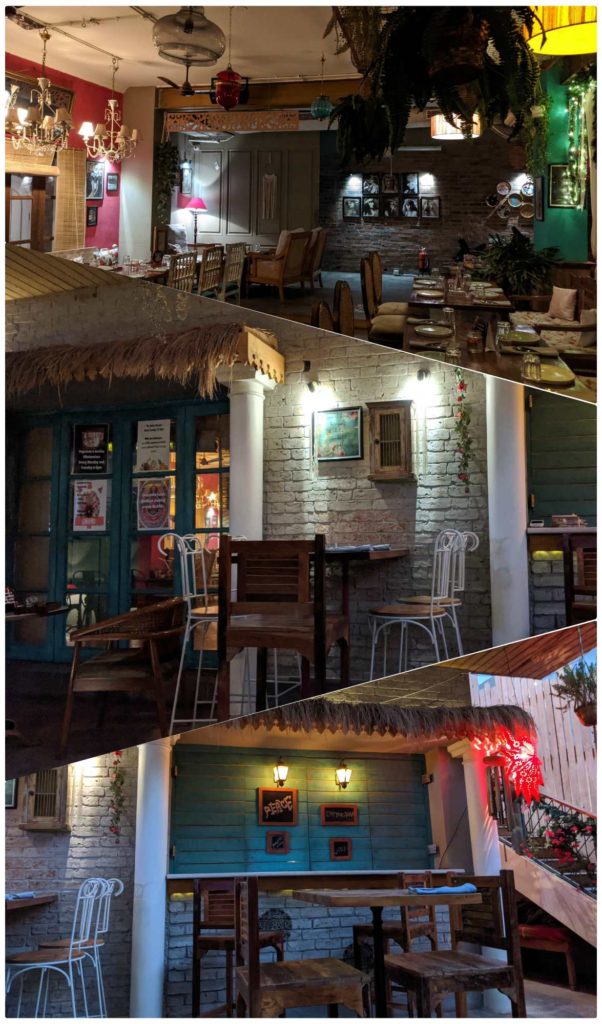
    Bohemia in the heart of Indiranagar would seem an impossibility, but Bohemians does manage to get it done. My first visit was with colleagues and since I knew D would love the decor, I decided to give her a surprise and we braved the traffic to Indiranagar on a Saturday evening.

    I was given a surprise by the folks there who said the entire indoor section was closed for pest control. A restaurant choosing to do that on a Saturday evening is indeed Bohemian! Thankfully, on promising that we wouldn’t grab a table, we were allowed to look around a bit before taking a table outside. This section, facing 12th Main, is a great alfresco option too – the transparent fiberglass makes sure the view of the open sky, and tree isn’t obstructed. That’s if you want to look up. You could also raise your spirits by looking sideways – at the bar! Oh yes, there was a “no photos” challenge too, which I tend to happily accept in public spaces. In this case, why would you not want people to share this lovely looking space!

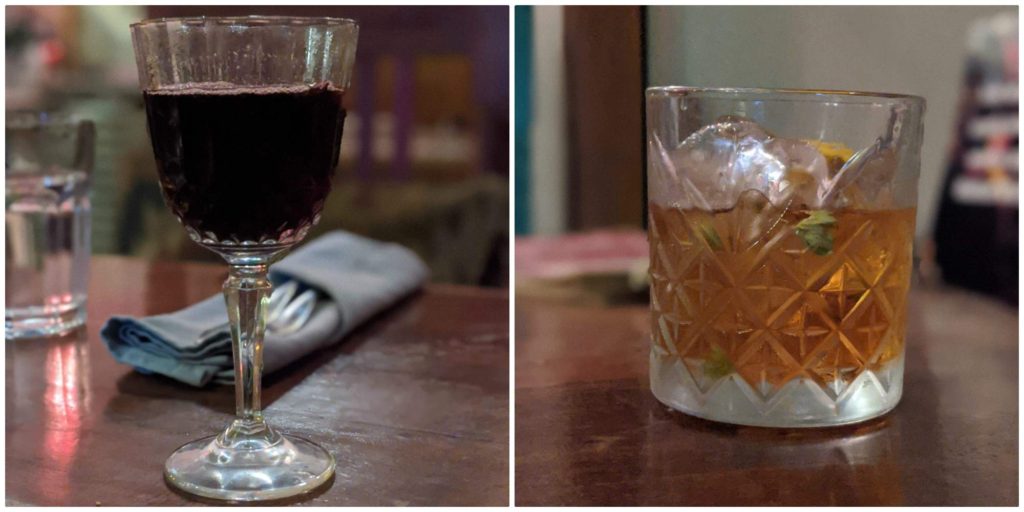
    It was the perfect weather for the Portobello markets mulled wine that D ordered, and enjoyed much. I went with a Turkish version of my favourite drink – Old Fashioned. Normally, I dislike any variations, but cardamom bitters are an exception, because the aroma adds to the experience.

    The Ukranian Borscht seemed like a good place to start. My intense dislike for beetroot was balanced by the love for beef. The soup was flavourful and delicious, though I missed the sour cream topping. The Banana Leaf Wrapped fish (Patra Ni Machi) got the green chutney perfect and the garnish added a little texture.

    Since we were eyeing the dessert section already, we decided to go light on the mains – the Barbeque Chicken seemed perfect. I found the sauce a tad too sweet for my liking, but was distracted enough by the bacon. The Oreo Peanut Butter pie has obvious greatness in the name itself and is a great way to end the meal – excellent ganache and surprisingly light.

    The service is helpful and prompt, which was a surprise since I had heard exactly the opposite! The playlist is perfect for the mood of the place. The wallet was lighter by a shade short of Rs.3200. Drop in when you’re around 12th Main, for good food and a unique experience.

    Bohemians, 966, 12th Main Rd, Indiranagar Ph: 9880435789