Month: March 2019

  • AI: Artificial Instincts

    In Regression Planning, I wrote on whether we could re-learn the skills we have outsourced if events force us to. I read The Book of M recently, and it led me in a different direction on the same subject. The book is fiction set in a dangerous future, where people lose their shadows. What starts as a curiosity takes a dangerous turn when they realise that with the shadow goes memories. All kinds of memories – from their life thus far to the knowledge that they have to eat to survive. The extreme case is forgetting how to breathe. Imagine feeling suffocated and ultimately dying when all that’s needed is to draw a breath. Yes, it’s extreme and yes, it’s fiction. And isn’t that just instinct, you would ask. Yes, again.

    Yuval Noah Harari writes in”21 lessons from the 21st century” about how in March 2012, three Japanese tourists in Australia drove their car into the Pacific Ocean, thanks to their unwavering trust in the GPS. Apparently it kept saying it would navigate them to a road! You could shake your head and quote Einstein on the infiniteness of human stupidity, but I don’t think it’s that simple. A better question to ask would be why they didn’t trust their intuition.

    We all have intuitions and intelligence that we develop over a period of time. We become smart, or that’s how it’s supposed to work! But is that really so now? The smartphone was only the first step. Devices and even ambient environments are becoming smart. In a few decades we have moved from machines that help in physical tasks to systems that are taking over cognitive tasks, something Kevin Kelly has written about in The Inevitable. We’re increasingly outsourcing intelligence. The silver lining is that we’re at least trying to ensure it stays comprehensible to us!

    Instagram, Facebook, Tinder, Spotify, Netflix, Amazon – everything is a feed of recommendations, whether it be social interactions, music, content or shopping! Once upon a time, these were conscious choices we made. These choices, new discoveries, their outcomes, the feedback loop, and the memories we store of them, all worked towards developing intuition. Beneath the cognitive skills we display externally is the wiring, and as the saying goes, Neurons that fire together, wire together. I think we’re now in the process of firing intuition and outsourcing it to algorithms. I don’t know what will happen first – advances in cognitive neuroscience, or the outsourcing. The hope is that they will happen in parallel and we will make choices about them after conscious reasoning.

    Intelligence, intuition and instincts. The journeys in the first two are what have gotten the third hardwired into our biology and chemistry. When we cut off the pipeline to the first two, what happens to the third, and where does it leave our species? What is the organism that has artificial instincts?
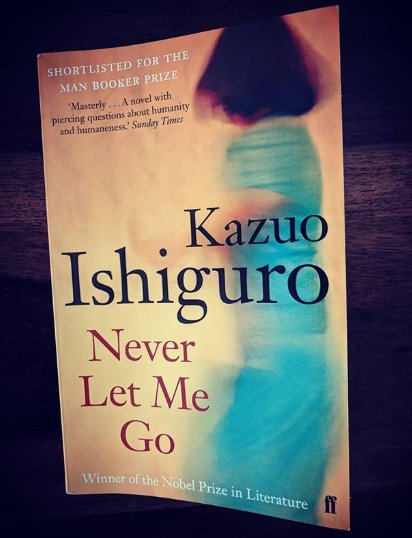
  • Never Let Me Go

    Kazuo Ishiguro

    This is only the second Kazuo Ishiguro book I am reading. But I found at least a few parallels from The Remains of the Day. For starters, both books left me incredibly sad. Some of it is for the plight of the characters, and some of it is do with the other commonality in both the books – the awareness of what could have been. Another thing I noticed is how the principal characters of both books develop a different perspective when they drive through the English countryside.

    Barring this, the books are quite different. (mild #spoilers ahead) This one is set in quite a dystopian future – humans are cloned for organ harvesting, raised in environments that don’t allow a lot of interaction with the outside world, not really made aware of their future, and are not even considered to be real humans capable of feelings and emotions. The focus of the book, though, is on three characters , their relationship with each other, and the world around them.

    It doesn’t really start off with a lot of intensity. The beginning, though it alternates between different phases in the narrator’s life, has a very Malory Towers feel to it (I thought) with different teachers (guardians), the institution and its myths and norms, and the relationship between them and the students, and between the students themselves with their friendships and rivalries. But even that early, one can catch the difference – a clear one being the exhibitions and the “gallery”, both of which are a forum for the students’ creative expression – and this does turn out to be an important theme in the book. The book then traces the life of these students as they step out into a different environment and progressively take up their prescribed roles in society.

    It left me thinking on quite a few things – these humans cannot have children of their own. Is their art supposed to be a means of immortality? But contrast that with how the author dismisses the value of art a couple of times. What are the ‘carers’ and ‘donors’ an allegory for? Is there some sort of parallel for our roles as children and parents, and how both of them, in a way, contribute to us not being a version of ourselves that we could be if they weren’t in our lives? And to end, the bittersweet irony of humans without emotions becoming carers and donors, and exhibiting a complex set of feelings that are on par, if not rival that of the humans they are ‘serving’.

    This is one of those books that drew me in, and without a lot of fuss and theatrics, engaged me in a deep way. Loved it.

  • MeMo

    It’s been a while, but that’s the way it always has been with us. I am posting this on a day when I know I’d have heard from you. Some years you’d call, some years you’d WhatsApp, and the last couple of years, you took to Twitter just so you could needle me.

    Twitter was our playground. We had our own language, I remember people getting irritated by it! I was always in awe of you, and your sublime words and ideas. It didn’t begin on Twitter though, it began with a comment on a blog. But it did end on Twitter, and it speaks about how out of touch I was, that I got to know when someone added me to a conversation.

    On that day, many people reached out to me, asking me if I was ok. I was, but I wasn’t, and ironically, I felt you’d be the only person who could understand what I was going through.  But I went through the motions – I tweeted about you, retweeted those posts about you, and signalled normalcy. (more…)

  • Wanderers

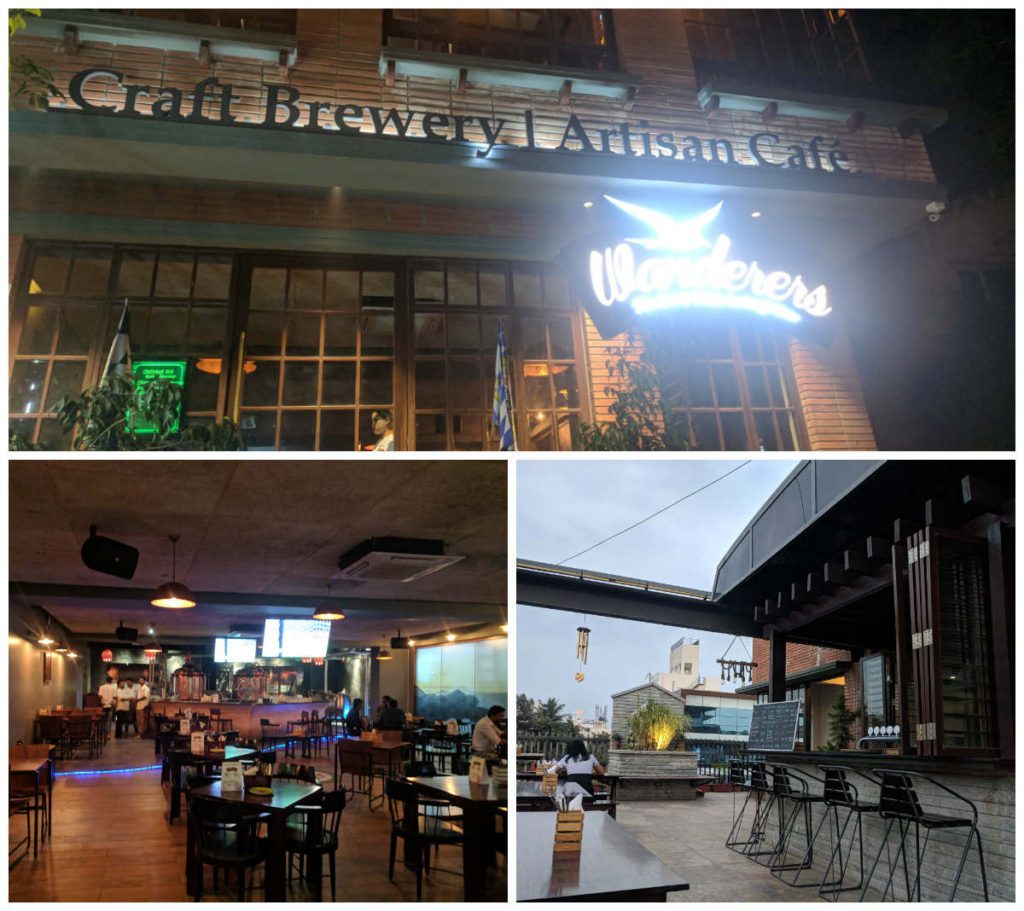
    Not all who wander have lists, but we do. It was Oktoberfest and we had decided to visit as many breweries as we could. So off we went to Kalyan Nagar, which as I’ve said before, is a place we enjoy visiting. This time, we also got to witness the famous (or infamous) “white topping”, because 7th Main, where Wanderers is located, was being subjected to it!

    We found the ground floor a little too closed, despite the landscape drapes! The next floor was not yet open, and so we sat on the rooftop, which we quite liked, despite me being underdressed for surgical strikes. A pedestal fan and mosquito coils helped.

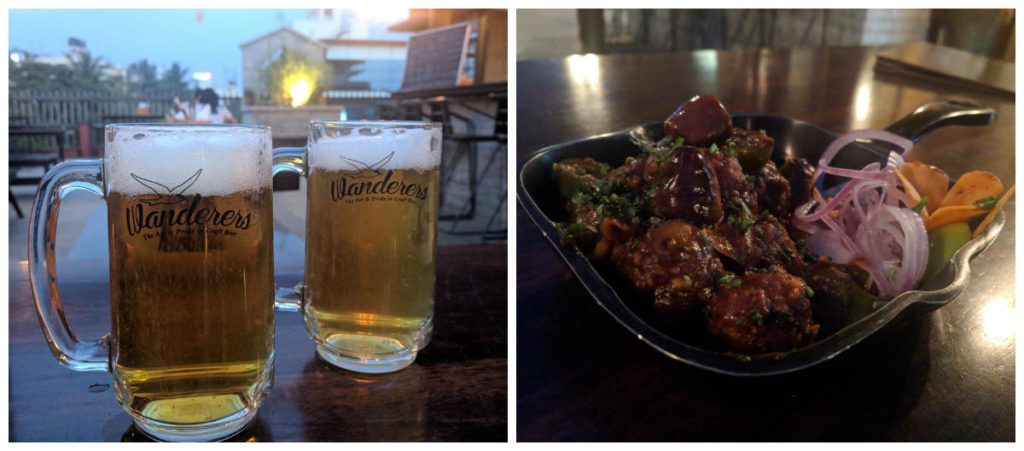
    We began with Cauvery’s Bliss and Erica. The first is a Pilsner style Lager. Crisp and slightly bitter, it was medium hop and went down smoothly. But we liked the latter more – Kölsch style ale, again medium hop. From what seemed an elaborate menu then, we asked for Assam’s Ghost Chili Balls. The filling was chicken spiced with chili beans and tossed in soy sauce. This was a very good beer companion though it took a while getting to the table.

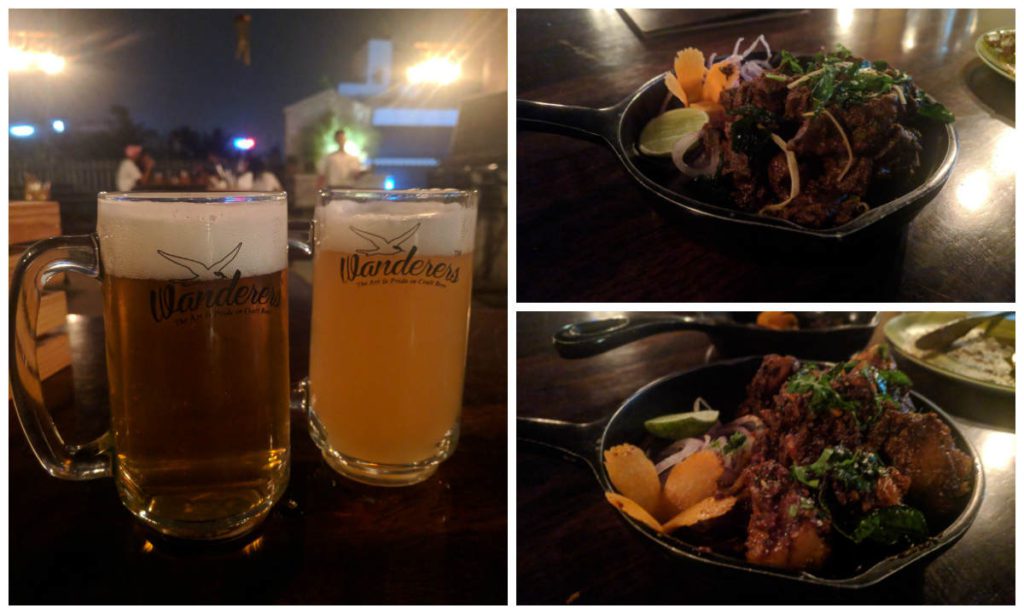
    Zomato had a 2+2 offer on drinks, so we ordered another Erica and a Wanderer’s Weizen, which was essentially a Hefeweizen.  The Jamaican Pulled Pork Sliders weren’t available, so we tried a Liver Peppers. That’s when we first encountered the curry leaves fetish. At first, it didn’t bother us. But it hit us hard in the Coorgi Pork, which was a replacement for Australia’s Meat Pie, another dish that existed only on paper. Check out the images below, those two dishes are practically twins!

    For an artisan cafe, the desserts were pretty standard, so we skipped. After all, we have our own artisanal fare at Bloomsbury near home! The bill came to a little less than Rs.1550. The service was quite friendly, though a warning on the twins would have been nice.

    Wanderers, 7th Main, 1st Block, HRBR Layout, Kalyan Nagar Ph: 25455225

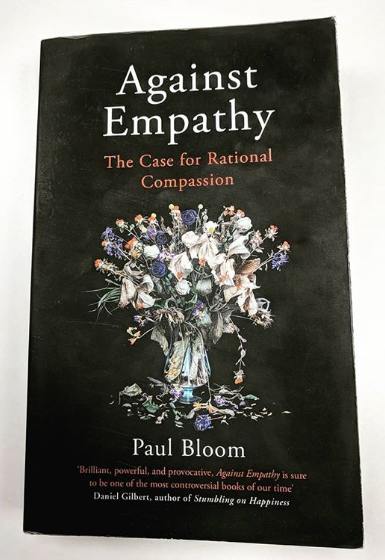
  • Against Empathy

    Paul Bloom

    As far as the title goes, he was preaching to the choir. My thoughts on empathy have been shaped over the last few years based on some excellent books like The Selfish Gene, The Moral Animal, Thinking Fast and Slow, Who’s in Charge? and even How Adam Smith Can Change Your Life, which is quoted by the author quite a bit. These thoughts are not kind to empathy being the best guide for decision making of the moral or even sometimes the day to day kind. They also favour rational compassion. So, theoretically, this book should have worked for me, especially because it has been recommended by some of my favourite thinkers.

    But it didn’t to the extent that I had hoped it would. This, I think, is largely because the premise of “against empathy” required little validation for me, it was the case for rational compassion that I was more interested in. After all, disproving one thing is not always automatic proof for another, even if the “another” is part of the title of the book! Unfortunately, the book spends just spends the last 10 pages (of 241) on rational compassion. Or at best 25, if one extends a benefit of doubt to occasions where the author argues for it in related contexts.

    I did come across a few interesting things though. Some framing for example – how both folks for and against gun control/immigration are possibly driven by empathy. The only difference is who they are empathetic to. And quotes – this one being my favourite – “Scratch an altruist, and watch a hypocrite bleed” ~ Michael Ghiselin. (I really believe in this one, and the selfish interests that drives erm, selflessness) I realised that I was in the august company of Thomas Hobbes and Abraham Lincoln in this. There are also interesting concepts like the moralization gap – how we discriminate between the immorality of acts done to us and done by us (exaggerate the first, downplay the other).
    The arguments are a mixed bag, but the writing style is witty and accessible and I would recommend it to folks who are intrigued by the thought of being against empathy. If you’ve already arrived at it via thinking/reading, this could help you in validation, but only on the first part of the title.