
Year: 2016

  • Consumer-facing AI : Phase One

    Since the launch of the Messenger Platform and bots, (a handy summary by Mashable) the world has had a lot to say about this move by Facebook – ranging from “fantastic start” to “frustrating and useless“. Somewhere in the middle probably lies the truth. Facebook is, of course, not the only player in this specific game – to name a few, Slack, Telegram, Kik all are at it! A more elaborate representation of the landscape can be found here.

    Somewhere in all this hype is a little grain of truth. For instance, two (plus one) trends, as explained in this post by MG Siegler, are pretty evident – the rise of messaging, app saturation and the increasing application of AI/machine learning. Bots are well placed in the intersection of these three. (more…)
  • The Girl from Nongrim Hills

    Ankush Saikia
    I must admit a little bias before I write more. For one, it is set in Shillong, which despite a visit that didn’t deliver what it was supposed to, retains a wistful, charming space in my mind, mostly thanks to one Anjum Hasan. Also, the book is written by Ankush Saikia, whose Jet City Woman I quite liked, and who is now an Instagram friend. 🙂
    I finished the book in less than three days, and would have finished it in one sitting if I hadn’t exercised some self control! That is a testament to its racy narrative, which just doesn’t flag in all of the 200+ pages. I thought it was just the right material for a slick flick.

    (more…)

  • Map making

    Untitled

    (via)

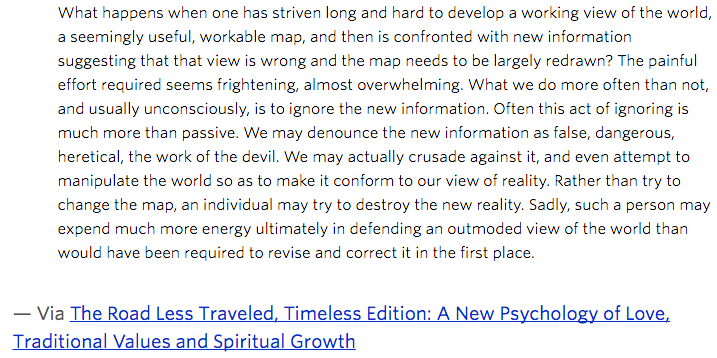
    In “The Case Against Cosmic Justice” I’d brought up how (IMO) randomness was the key driver of the universe, and that pretty much every other concept (God, karma etc) was a narrative fallacy. I think that requires a little editing. To use a phrase from “Sapiens”, these other concepts aren’t really fallacies, they are inter-subjective realities. That means it they are belief systems that a lot of people share and agree to. e.g. money, nations. This is different from subjective reality – my personal reality as I experience it or choose to see it e.g. Salman Khan should be in jail for killing people, and objective reality – one which exists irrespective of anyone’s belief systems e.g. gravity. (more…)

  • Tippler on the Roof

    On one of those Sundays when we felt like visiting a completely new place, we chanced upon Tippler on the Roof on Zomato and decided to make a trip to Indiranagar. I think mid-morning trips in Bangalore are also instances of time travel – not only do you cover distances much faster, you also start noticing old buildings and establishments that are usually blocked from view thanks to traffic. Meanwhile, from the address, (map) I figured that TotR had replaced Khaaja Chowk.

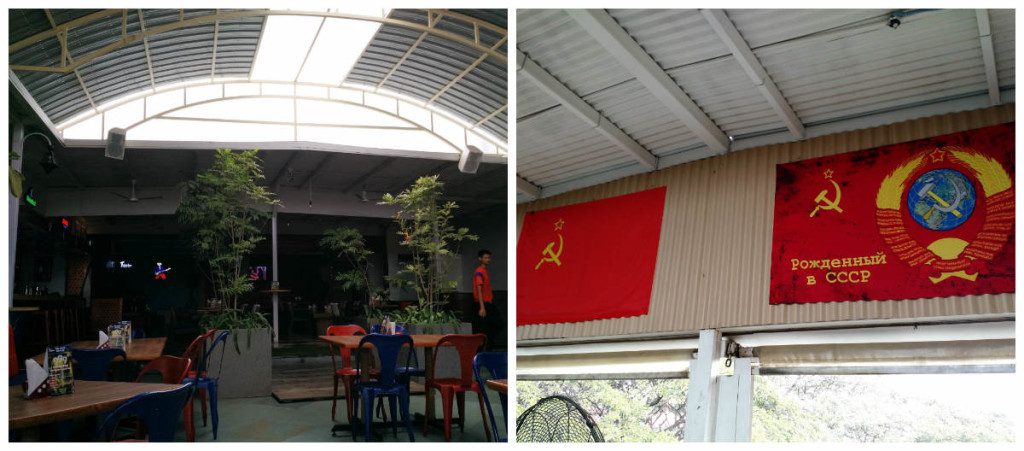
    I remember Khaaja Chowk having an alfresco section, but there’s a retractable roof now. The layout itself has been completely changed. There’s a stage and some plush sofas next to it. Seating is mostly along the remaining three walls with a few tables in the central space. These are mostly functional seating with a touch of grunge. The walls are where Russia meets pop culture. Star Wars and Breaking Bad posters hang out with Stalin and Communist propaganda. Makes for an interesting mix!

    collage1 (more…)

  • Sounds like a brand

    An earlier post’s title was reasonably self explanatory -“Convenience & Choices“, but to summarise, I had dwelt on the abundance of choice we have on all fronts these days, and its (inverse) relationship with conscious choice. I’d quoted from a wonderful article on the death of video stores, The enemy of video stores was convenience. The victim of convenience is conscious choice. The post was subjective, and more a consumer/individual perspective, but what does it to the supply side, or specifically, brands?

    Would it be fair to say that convenience is an enemy of brands as well? Let me explain. There are ‘brands’ that have been built on the proposition of convenience. Given the internet’s penchant for eliminating middlemen who do not provide its kind of value, and its ability to create convenient interfaces, everything from Google and Amazon downwards is built on the idea of convenience. That’s not what I am talking of. My line of thought is whether convenience (also) leads to a certain kind of commoditisation – it becomes not so much about what I want, but more about how easily I am getting it. So long as the product/service is comparable in terms of price and value proposition, and not necessarily superior, I’d be fine. The premium is on ease and time, and not on the brand/product.  (more…)