
Month: November 2016

  • Biergarten

    First published in Bangalore Mirror

    Whitefield might have its share of infrastructural woes, but in the meanwhile, the number of microbreweries opening up in the neighbourhood means that someone is at least raising hops! The beer would be available only in early September, we were told when we visited Biergarten, (map) but we are used to waiting in, and for things, in Whitefield, so we weren’t surprised. Sooner or later, things will hopefully get bitter. The place covers a fairly large area – at the centre is an alfresco section, with long tables that are perfect for the shared table concept of a conventional biergarten. Surrounding this, but a level above, is a mix of seating options – bar stools, plush sofas for lounging, and functional seating. The bright lights and the green glow give a lively feel to the place, the music is upbeat and the overall ambiance is quite relaxing. The courteous and accommodating service also helps.
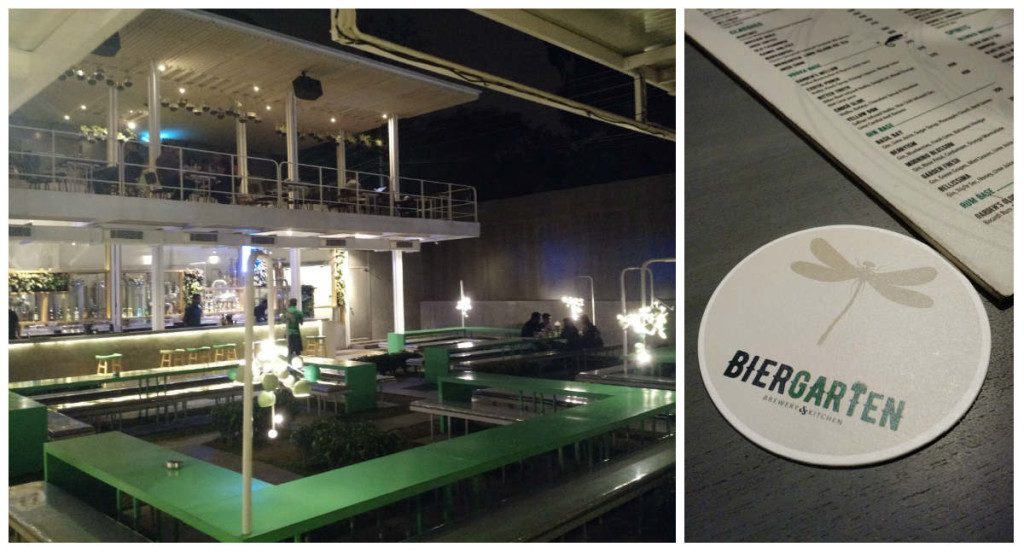
    collage1 (more…)

  • Building Slack

    (no, not the product!)

    Towards the end of Life Menus, I had mentioned how I have quite a ‘scarcity mindset’ when it comes to money and time. I don’t think there will be enough, and many of my thoughts and actions are influenced by this. As explained very well in Scarcity, (highly recommended book, and thanks @shefaly) this is related to tunnelling, and my ‘inability’ at a certain point in time to see the larger picture and the broader consequences of my immediate actions.

    One of the ways I have tried to beat it (and the book also has a term for it) is to create what’s called slack. [Remember the space between stimulus and response quote I keep using?] The reason I’m very interested in slack is because it can not just help me maintain equilibrium within myself, but also enable some sort of control in my relationship with others.  (more…)

  • Capital : The Eruption of Delhi

    Rana Dasgupta

    Much has been written about the Maximum City – fiction and non fiction – and it continues to be the muse of many authors. But other than Dalrymple’s City of Djinns, I have not really read a book on Delhi. Add to that Rana Dasgupta’s superb play on the title itself – Capital – and this was a book I had to read. I am really glad it didn’t disappoint.
    There are many Delhis, as Dalrymple brought out in his book. The city has existed in many forms across centuries, and many of them live side by side – Mughal, British, post-partition, post 1984, and the one that the author stresses most on – post 1991. It is easy to see many parts of the commentary as a standard impact of globalisation, but if you have lived on both sides of the 90s, you would know what an enormous impact liberalisation has had on our lives. But I get ahead of myself!  (more…)
  • Growth, Prosperity & Infinite Games

    One of the things that struck me in Douglas Rushkoff’s “Throwing Rocks at the Google Bus” was how much the line of thought on growth resembled the “infinite game” philosophy of James P Carse. In the former, the author explains how, as money becomes an end to itself as opposed to a means, a system built on a central currency gets into a growth trap. i.e. growth for the sake of growth. To frame it in the second book’s context, this tends to be a zero-sum game for all involved. There is a clear winner, and that winner takes all. i.e. a finite game.

    Rushkoff explains how at this point in time, platform monopolies, (e.g. Amazon, Uber, AirBnB) and businesses in general, are playing finite games. And that is how growth has become the enemy of prosperity. In the second half of the book, he calls for more sustainable (and inclusive) ways of growth. This has much in common with Carse’ definition of an Infinite game, whose only purpose is the continuation of play, and sometimes, bringing more players into the game.  (more…)