
Month: September 2016

  • Micro Singularity & Ethics

    The Guardian long read on “How algorithms rule our working lives” was a fantastic though distressing read, about employers using algorithms to filter out candidates based on reasons ranging from mental health to race to neighbourhoods to income. This in itself has massive implications on creating and expanding class divides and closing access to folks based on biases that are arguably unfair and lacking nuance.

    If we zoom out beyond work and jobs, it’s fairly easy to see that algorithms are having an increasing impact on our consumption and life in general. The biggest services in play – Facebook, (M, newsfeed items) Google, (search results, Google Now) Amazon, (Echo, recommended products) Apple (Siri) – all heavily have algorithms in play. And that brings us to biases in algorithms. Factor Daily had a couple of posts on teaching bots ‘good values‘. Slate had a great read on the subject too – on how Amazon’s computerized decision-making can also deliver a strong dose of discrimination. Both offer perspectives on how biases, both intentional and unintentional, creep into the algorithms, and the Slate article also brings out some excellent nuances on the expectation from algorithms, and how offline retail chains (selection of store locations, for instance) and human decisions compare to algorithms.  (more…)
  • Axiomatic

    Greg Egan

    I have always been amazed at Neal Stephenson for being able to write Snowcrash and The Diamond Age in 1992 and 1995 respectively. I am now equally amazed that Greg Egan wrote this in 1995. In fact, even more, because while the first two books were novels and dealt with a smaller number of concepts, this book is a collection of short stories, and except for a (connected/repeat) couple, are unique concepts. Imagine, 18 stories with ideas that would still be regarded as science fiction!

    In addition to this, there are at least two factors that made me a fan. The first is that while the ideas themselves are wonderfully imaginative, the focus really is on the effect on humans and humanity. Nuanced explorations of how the human psyche functions and reacts when faced with profound moral choices. The technology, though advanced, is taken as a backdrop against which societal, psychological and philosophical questions are raised and consequences revealed. ‘The Hundred Light Year Diary’, for instance, where everyone knows their fate, or ‘Eugene’, in which a couple try to design a perfect child. Both stories featuring the ‘Jewel’ are a wonderful study on the idea of consciousness. ‘The Walk’ is a fantastic thought on ‘identity’. ‘The Moat’ I found particularly relevant in this era when we are facing a widening economic divide. (more…)

  • Framing passion

    A lovely Malayalam movie came out earlier this year – Maheshinte Prathikaaram – a simple premise based on actual events. The movie is set in Idukki, which makes for a great backdrop and also provides excellent material in the form of the simplicity of the people and their lifestyles. We saw the movie soon as it released and I loved it. Very few scripts manage to  bring together an enjoyable mix (read balance) of humour and poignancy, and it requires a well chosen and talented cast to execute it well. This movie did both.

    While the principal narrative track (the revenge that is suggested in the film’s name) around Mahesh, the protagonist, is entertaining in itself, the idea around his father’s character – Vincent Bhavana – interested me a tad more. Recently, I saw the movie again, and now that I knew how it would play out, I could pay more attention to this track.  (more…)

  • The Irish House

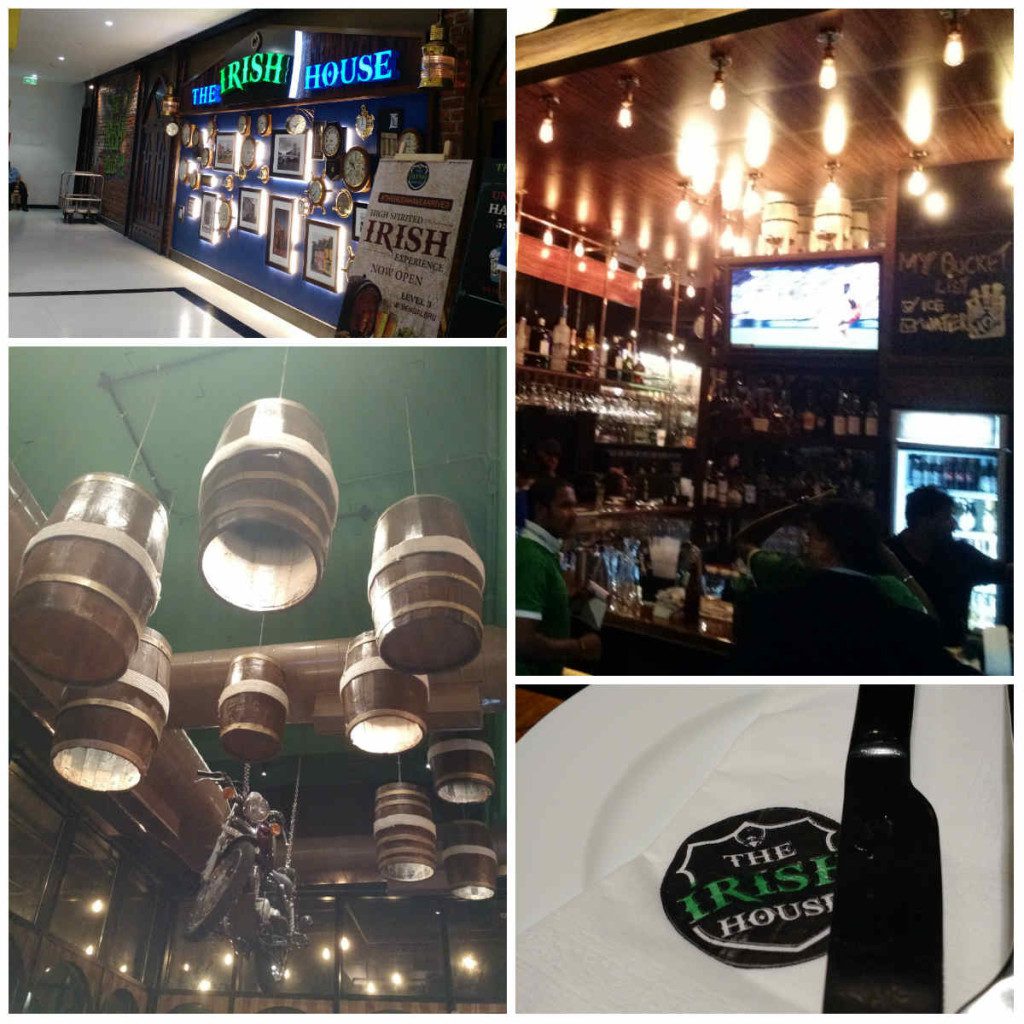
    The Irish House had opened to much fanfare, going by my Insta feed, but we dropped in a few weeks later. That, and the fact that we were there relatively early in the evening – 7.30 PM – led us to believe that we’d get a table easily. That wasn’t meant to be, and I suspect that it has something to do with the Happy Hours till 8. First impressions weren’t great – the person they’d left at the door had no idea how to handle things when the place was full. We had to coax him to take down our number, and let us know when there was a table available. He kept letting people in (they never came back as they waited at the bar and took a table when it got free!) and was probably there just to open/close doors, and the lady who occasionally made a visit to the front door was probably in charge of this. But we could see that the poor thing was hassled enough, multitasking! Lesson learnt, we should reserve a table anyway! We thankfully got a table in 20 minutes.

    A lot of wood, Irish green frills, and standard pub posters make up the decor, though the place is quite lively, especially the bar area, which has quite a lot of international beer brands on display. The balcony area did look promising, though we didn’t venture out. I took a picture of the hanging bike, just to ensure that I wasn’t imagining things on account of pub vapours! We had to wait quite a bit for someone to take the order, and when that happened five minutes after 8, we demanded justice – happy hour extension since we were seated and ready with our order before 8! It took a bit of debate, but they were nice about it. Yay!

    collage1 (more…)

  • Decrees of Influence

    ‘Influence’ as a subject has been popping up on this blog since 2010, the last post sometime in Feb 2014. In about half a dozen posts, I wrote about influence in the context of the landscape and complexities, visibility-credibility framing, the data driven approach and its challenges, ‘micro celebrity’ price tags, brands’ usage of influencers as media, and my talk on influence at #WIN14.

    Conceptually, I am all for “influencer marketing”. I know it can work in some contexts because of what we achieved with it in Myntra in 2012-13. But even further back, in 2010, thanks to a discussion on a post by Palsule, I realised that with web platforms, after a certain scale is reached, the culture starts resembling that of mass (media) and the ‘influencers’ as well as ‘influenced’ begin a relationship that’s familiar from a mass media era. (Influence Cycles(more…)