
Year: 2015

  • Return of a King: The Battle for Afghanistan

    William Dalrymple 

    “Those who cannot remember the past are condemned to repeat it” This book brings that quote to life! More than the book itself, kudos to Dalrymple for choosing a subject that has so much of relevance in the contemporary era! In fact, I wish it were written a few years earlier. ‘Return of a King’ is the story of the British (East India Company) invasion of Khurasan (modern day Afghanistan) in 1839 in an effort to establish their man Shah Shuja ul-Mulk, (descendant of the Ahmad Shah Durrani, regarded to be the founder of the modern state of Afghanistan) on the Kabul throne in place of the incumbent Dost Mohammed. That was the easy part, but as one Afghan commented then, the British had gotten in, but how would they maintain this status quo, or even get out? In a couple of years, the Afghans, in an ever changing mixture of coalitions, rebelled against the British and massacred them on their way back to Hindustan. The British then created an Army of Retribution to avenge this, and ended up bringing things back to square one.

    What set off this chain of events is something I have read about in some Sherlock Holmes adventures and seen alluded to in other works like ‘Kim’. The Great Game, an international milieu of intrigue that pitched the mighty powers of the time – Russia and Britain – against one another. Afghanistan, as per British intelligence, was where Russia was poised to strike next, to control Central Asia. This was supposed to be achieved with Dost Mohammed’s help. The Russian plans were far less threatening than reported by the British and ended up creating a war that need not have been. There is some amazing parallel here with what the Russians (80s) and the Americans (now) tried to do in Afghanistan! (more…)
  • Algorithms of wealth

    Some strange quirk in the cosmic order of things led to Landmark shipping me Piketty’s ‘Capital in the Twenty-First century’ instead of Rana Dasgupta’s Capital! I kept the book (yet to read it though) because economic disparity has been an interest area for a while now, I had touched upon it in the context of AI and job loss in Artificial Humanity. Reading The Black Swan has only accelerated this interest.

    Taleb divides the world  into Mediocristan and Extremistan to point out the extent of predictability in the context. Mediocristan can safely use Gaussian distribution, (bell curve)  but in Extemistan, that’s dangerous. From what I understand, given that there’s no real limit upper limit of scale, individual wealth will increasingly behave in a more Extremistan way. To quote his own example, “You randomly sample two persons from the US population. You are told that they earn jointly a million dollars per annum. What is the most likely breakdown of their income? In Mediocristan, the most likely combination is half a million each. In Extremistan, it would be $50,000 and $950,000.” He states that almost all social matters are from Extremistan. (more…)

  • District 6

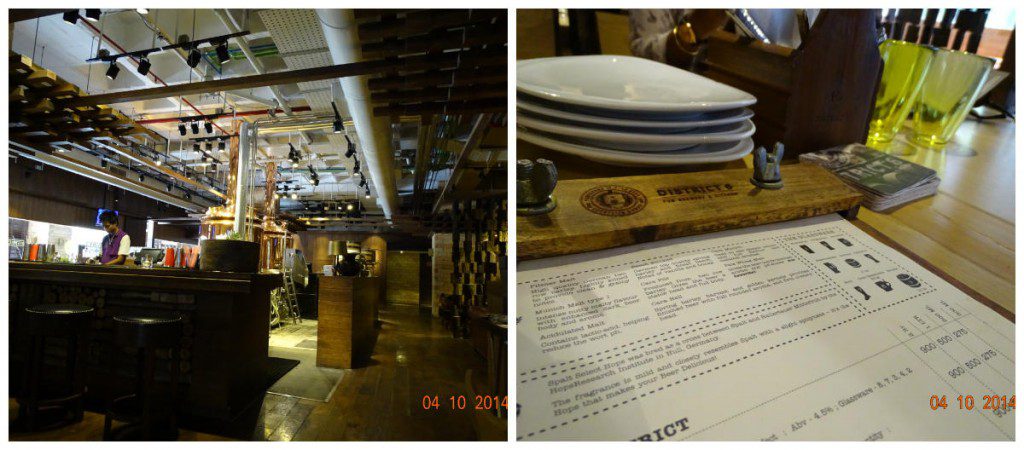
    Back in September, we heard this fascinating piece of news that Malleswaram got itself a microbrewery! We decided to go there at the very first opportunity. The long weekend in the beginning of October gave us just that – four days of holiday meant that we had enough time to get to the Sheraton (where it is located) and back. (never mind the publishing date) Speaking of the Sheraton, if you try to access District6 via the hotel’s main entrance, you’ll be asked to go right back, take the entrance just before Orion Mall and you’ll find the valet immediately to the left.

    The place has a grunge wood exterior, and on a Saturday afternoon, didn’t really have the buzz that one normally sees in a microbrewery. In fact, it seems more like a fine dining restaurant which also happens to serve craft beer, and you’d realise that mostly because of the gleaming vats. There’s a seating area outside where you can sip beer and watch the world go by.

    collage1 (more…)

  • The IoT battlefield

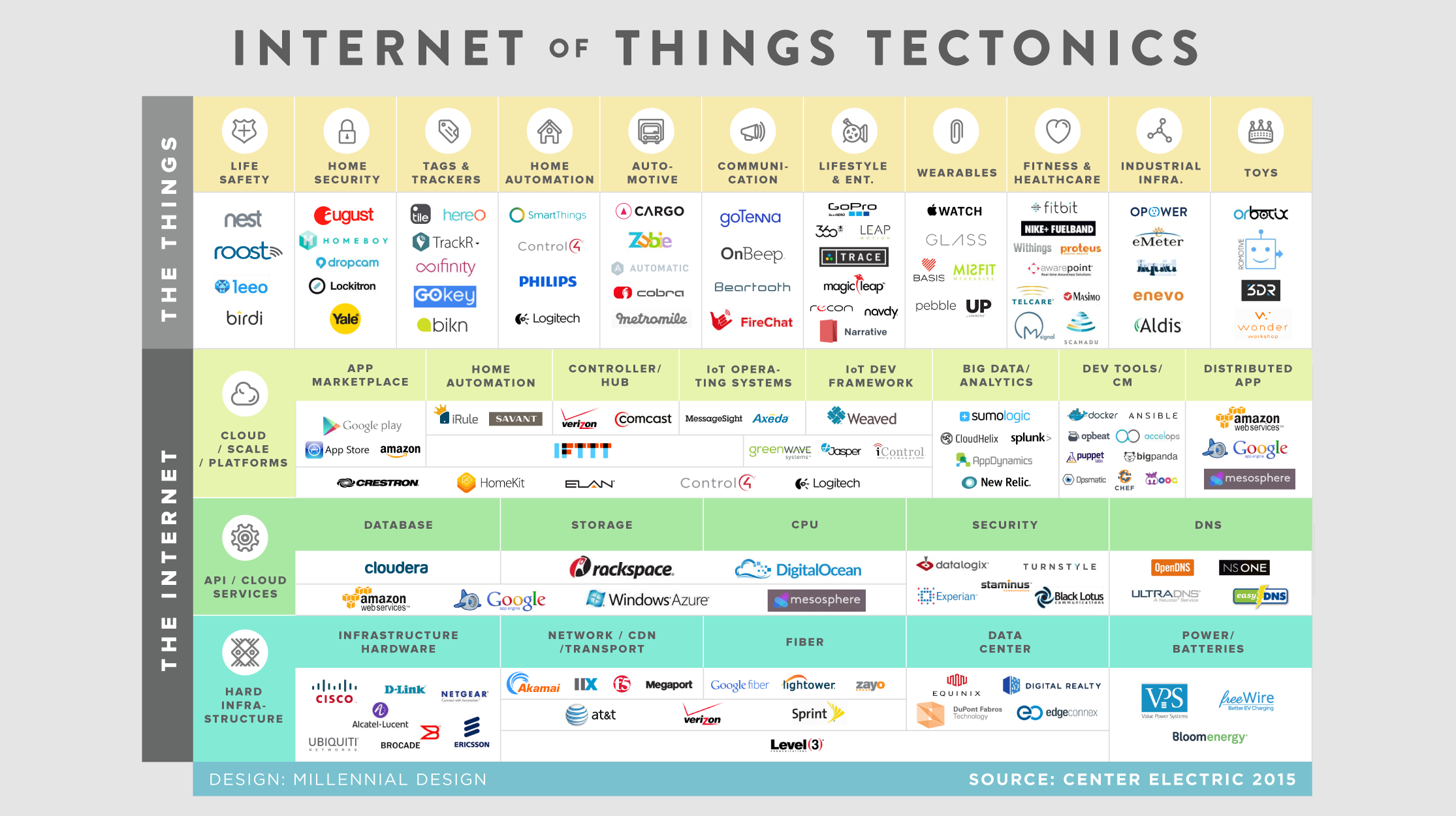
    The last time I wrote about the Internet of Things, I hoped for an application layer that could sense and collect data and convert it into use cases. In fact, the title of the post was Interweb of Things, the nuanced difference between them being connection (IoT) and interoperability. (WoT) (read) In the few months since that post, there has been quite some activity in the space. I saw a very useful classification a few days ago that illustrated both the ‘things’ as well as the infrastructure and showed the possibilities of interoperability. (via)

    IoT

    (more…)

  • Serious Men

    Manu Joseph

    “All a man really wants is to be greater than his friends”- Ayyan Mani’s belief is indeed the theme that runs through ‘Serious Men’ though it manifests in different ways across classes. The jacket pitches the plot as the ramifications of Mani’s efforts to raise himself above his peers by creating the myth of his son’s genius, but the story belongs as much to the scientist Arvind Acharya as well – an eccentric genius heading the Institute where Mani works, and whose contempt for his peers and views about the direction that physics should advance in, make him a target.

    The narrative switches between the two characters – from Mani’s first salvo in showcasing his son’s non-existent mental abilities to the office politics at the institute to Oparna’s entry in Arvind’s life and so on. The author fully uses the characters to philosophise, (“Hope is a lapse in concentration“) but it’s woven in excellently and doesn’t jar at all. There is some amazing wit – usually acerbic when Acharya is involved (“I have been inside your mind. It was a short journey“)- as well, and again, in line with the nature of the characters. What I really liked is how the author has fleshed out the characters – not just the main ones, but those in a supporting role as well. Their motivations, their own little quirks, all point to a deep insight on how the human mind works, though it is surfaced in unusual ways. (more…)