
Month: November 2015

  • Sita

    Devdutt Pattanaik

    Fantastic!

    When I reached page 250 (almost 5/6th of the book!) – at which point Sita is freed – I finally allowed myself the comparison that had been bubbling inside my head for a while. Jaya, an illustrated retelling of the Mahabharata by the same author, ranks among my top five books of all time. Thus far, this book had not really touched those levels. Rationalisation was easy – the Mahabharata is perhaps a more complex and interesting tale because of the sheer number of characters, the back stories, and the grey shades that permeate every character in it. There were many little nuggets I hadn’t known about earlier, and that made the reading more exciting. On a relative note, the Ramayana is more ‘linear’, and there are a limited number of layers that the author can add to situations or characters. I consoled myself with the fact that the narration was as spectacular as Jaya, and I had gained at least a couple of perspectives beyond my current understanding of the epic and its underlying philosophies. (Aham, and Aham Brahmasmi, for example) I did wonder though, why the author had to call it Sita – there wasn’t really a justification. (more…)
  • Empathy & Monoculture

    Thanks to Shefaly, I saw this excellent video on Aeon about “outrospection.” As opposed to discovering who we are and what we do in this world by looking inwards (introspection), “outrospection” is about discovering it through cognitive empathy – consciously looking to understand the perspectives of others, and going beyond the labels we might have made for them. The idea is that outrospection is the ask of the times we live in, and not introspection.

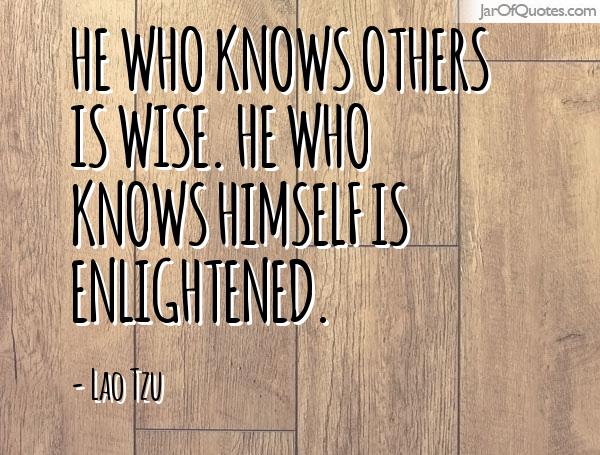
    I quite disagree with that either-or view, and think both have their place in this era. They both work in tandem. For example, to let go of my prejudices, I’d have to understand why they exist in the first place and then proceed to change my perspective. Here outrospection follows introspection. Once I let go of my biases and listen more objectively, my worldview and my view of myself starts shifting again. In this case, introspection follows outrospection. As Lao Tzu says,

    3f3f3c8752b634128418895a84c26f6b (more…)

  • Barebones

    First published in Bangalore Mirror

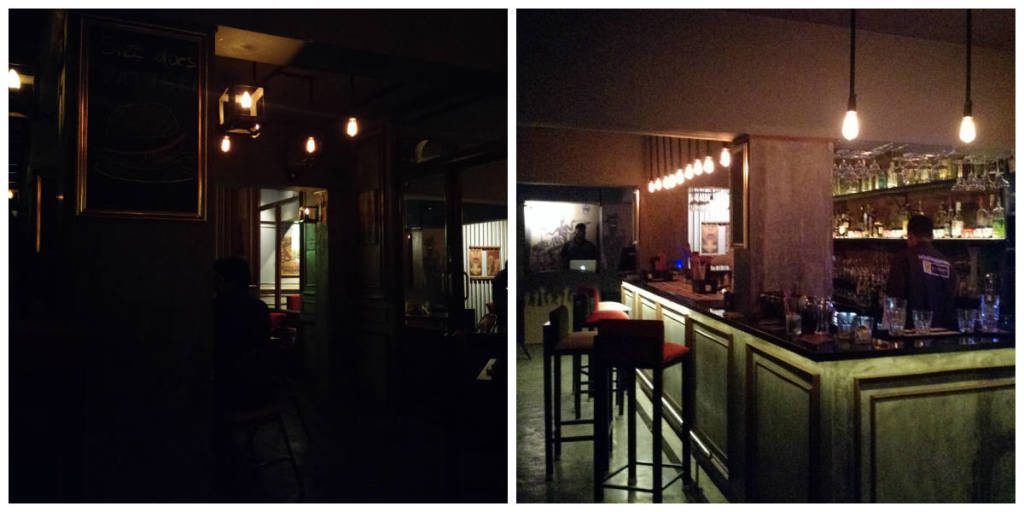
    If you’re stuck between a 26 year old pub chain that’s iconic enough to go for an IPO (why is it so difficult to believe that Pecos filed for an IPO?!) and a microbrewery that’s arguably the town’s favourite you’d probably stick to the basics, make no fuss and figure out a unique proposition for yourself. (map, it’s above 3oh3 and yes, there’s valet parking) You’d also call yourself Barebones. (though I suspect the idea behind the name is more about a ‘come as you are’ attitude) A flight of stairs takes you to what’s primarily a balcony bar, with some amount of indoor seating. The first thing that hits you, or more precisely, your eardrums, is the music. We have much to talk about on that , so first, take a seat. You can choose between the outdoor space – dim lighting, a few high stools, and a reasonably good view of the road, and a cozy looking indoor area – well lit, some very interesting wall art, chalkboards that add a layer of meaning to the quirky sounding cocktails, and a bar that reassures you that you’re in the right place! So far, so good, but wait, there’s something clamouring for attention. Ah yes, the music. Under normal circumstances, this is the point where I’d whine about not being able to have a conversation thanks to the volume levels, but when the playlist starts churning out Sting, Counting Crows, Crash Test Dummies, Snow (Informer!) and so on, mixes it up randomly with the Bee Gees and Lou Bega, and in general takes me time travelling, it’s hard not to grin happily. But hey, let’s not get sidetracked by nostalgia when there’s food and drinks to talk about.

    collage1 (more…)

  • The Age of Kali

    William Dalrymple

    I love doing this – reading a commentary long after the age has passed. It’s more than a decade and a half since the book was published and I’ve read four of the five books that the author has written since then. Both of these factors gave me quite a few perspectives on the book and the writing.

    I see this book divided into two on multiple counts – first in terms of geography, second in terms of narrative style, and third in terms of being true to the ‘script’ of the book. (more…)

  • The Man in the Mirror

    In Ennu Ninte Moideen, (a Malayalam movie based on a true story) the Muslim-Hindu lead pair is forced to stay apart because their families refuse to give their blessing. Even as years pass, they continue to wait for each other, or rather, their families. A song in the film is used to track this passage of time and as it began playing, I envisioned a scene. Apparently so did D, and it played out exactly the way we imagined. During what seems like a routine look-in-the-mirror moment, Prithviraj (the protagonist) notices his first grey hair. (3:40 -3:55 in the video) A poignant few seconds follow as he fully grasps the significance of the moment.  (more…)