Month: September 2015

  • Of destinations and feeds

    In An Ambient Future, I had written about how Google was potentially poised for something really interesting because technically, it had things in place to harness mobile, social and sensor data and overlay it with machine learning and AI. An early version of how this data could be surfaced contextually and be shown in an interface would be Google Now, as Christian Hernandez had pointed out. And that was why I was quite surprised and dismayed when I read that most of the team that had been working on Google Now had left!

    The larger context though is about content discovery and two possible approaches to it – destination (platform?) and feed. I remember reading Neil Perkin’s post on the subject last year (it’s a fascinating rabbit hole of related reads, you’ve been warned!) and it has had me thinking ever since, especially in recent times, with apps increasingly replacing the traditional website as a destination. So far, the feed largely served as a distribution method to destination, but I believe it is no longer that simple on the web, let alone mobile.  (more…)
  • The Bungalow

    First published in Bangalore Mirror

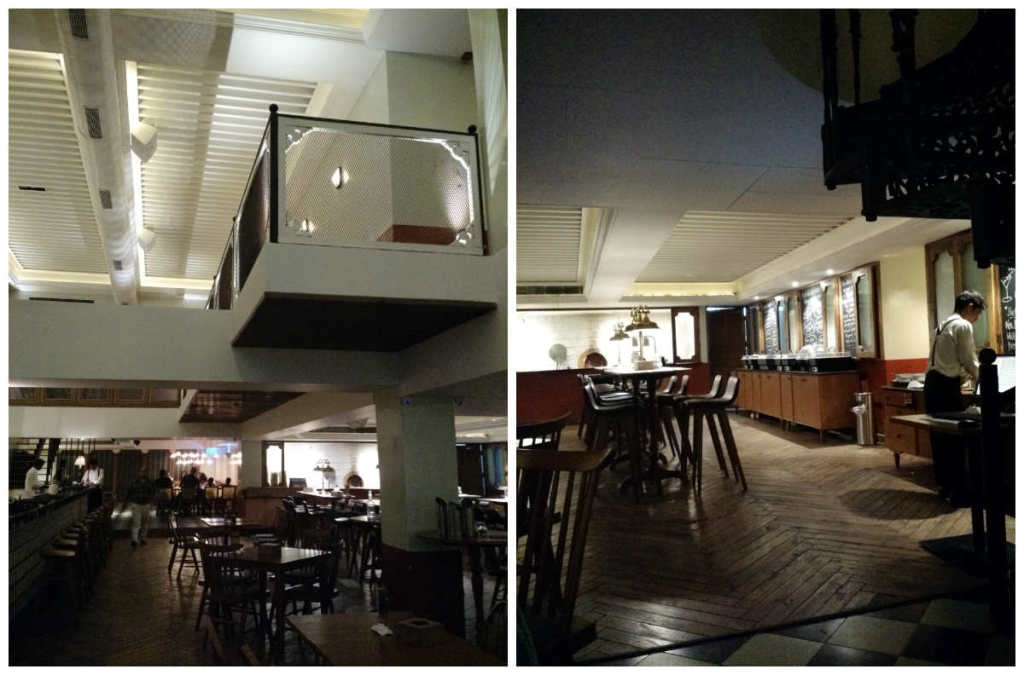
    Whitefield is slowly but surely trying to carve a piece for itself in the eatery map of Bangalore, and one of the latest contributions is The Bungalow Bar & Kitchen. (map, valet parking soon)  Let me take that up one by one. A classy white door leads into a space that totally lives up to the name. A huge hall with a high ceiling and an eclectic mix of seating is what one first notices. Plush leather sofas, bar seating, and high chairs, all of which represent different dining styles, make up the ground floor. A couple of stairways lead to more seating options, including a balcony that overlooks the bar counter. Speaking of the bar, it isn’t open yet, but will be soon. The overall ambiance pretty much demands spirits, (that should have happened by now) and we could immediately imagine two kinds of crowds. The first is the one that will chug down beer, hang around the pool table and be devoted to the gigantic TV screen that can be seen from almost all the tables. The second is the kind that will listen to the soulful jazz and classics that made up the playlist when we visited. Lastly, the kitchen. The spread is not overwhelmingly huge, but the interesting fusion attempts and the seemingly handpicked dishes from various cuisines give one the feeling that it might require several visits to do justice to the menu. That completes the dissection of the name, but the sum of the parts in this case is indeed greater than the whole. The courteous staff, the little technology that allows you to press a button to activate the service staff’s watch and tell him that the table needs attention, the way the space has been done up, all promise to provide an experience that goes beyond the food. Judging by the crowd, Whitefield seems to have taken notice.

    collage1 (more…)

  • The immortality of time

    Thoughts on immortality and its implications on personal and societal aspects of life have long been a favourite subject here. It has also been an area of interest from a philosophical standpoint. For instance, if we could live forever, what would be the relevance of time? Would our current existential questions be rendered irrelevant?  There is also an understanding that it is a process – our lifespans would progressively increase – as we replace our bodies (and later, minds) with mechanisms (augmented human) even more robust than the ones nature gave us.

    I found an excellent post on Quartz which dwells on the evolution of time management and makes the point that time management is actually making our lives worse. It also brings up something I had written about recently in the context of work, money and AI – the never ending race for efficiency. The article argues that the idea that managing time would get one back in control is a fantasy that only works in a finite world and that our to-do list is actually like the mythological Hydra!  (more…)

  • Narcopolis

     Jeet Thayil

    What a trip! Right from the single sentence prologue that lasts 7 pages which, to me, also gives a clue on how to consume this book – “Do I take a single continuous drag? You can, but then you have to recycle it inside your lungs, better to take short pulls, “How long should I hold it in?… it depends how much nasha you want” In essence, I could have read it in one shot and deconstructed it in my head, or I could consume it languorously and let the author take me through it at his own pace. I chose the latter, trying to keep up with his lucidity and fantasy. I honestly don’t know if I got it all right.

    The narrator Dom leaves us soon after the book begins – to Rashid, the owner of an opium den, Dimple, the eunuch who is his ‘kaamvali’, and to a small extent Rumi. (no, just a shortened form of Ramesh) The networks of stories are like waves, probably matching opium induced undulations of the mind. They are continuous, and have similarities – of pain, and a need for belonging and love. But they are unique too, as we watch time pass by – backward and forward – through the perspectives of different characters. The Stoneman references give us an indication of the timeframe the novel is set, but we also get a glimpse of the socio-political scene of China in the 1940s thanks to Mr.Lee. (more…)

  • The case against cosmic justice

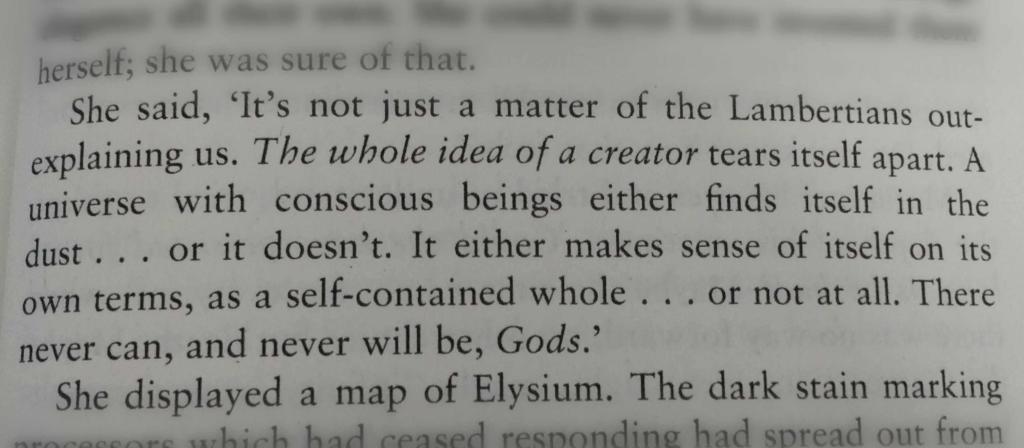
    Evolution, as I have already stated sometime back on this blog, is a fascination these days. Fundamentally, I see it as a gigantic A/B testing mechanism operating over large swathes of time, with only one seeming agenda – moving on. A lot of things make immense sense when I accept that as the only framework. Including the idea of God, which has several key roles. e.g. to provide the impetus to move on even when things are not going well (faith), explain the things that science cannot (yet) and so on. If it helps someone, it is a great idea, though as a species we have been consistently been stupid enough to let the practitioners of organised faith take advantage of us for their own needs.

    Clipboard01

    But that’s not what this post is about. One of the offshoots of faith (God/Cosmos/insert whatever works for you) is the related idea of cosmic/divine justice. I used to believe in that until very recently, and it was one of the attributes of being what I called myself – a spiritual person. But at this point, I don’t think it exists. There are at least two perspectives that brought me to it. (more…)