Year: 2014

  • The circle of nothingness

    During a recent trip to Cochin, Dad pointed to a newly constructed building and asked me if I remembered what had been there before it, since he couldn’t. Neither could I, though I might have walked/cycled/ridden/driven past it many, many times. I get quite disappointed on such occasions, because when a memory is removed, it’s almost as though a slice of my life, thin though it may be, has been taken away forever. Strange though it may seem, I feel a sense of guilt, towards myself for not retaining a complete picture of my own life, and towards the object itself. A few days later, we passed a plot on 12th Main, Indiranagar, where a commercial building is being constructed. This place will ‘always’ remain in my memory as my uncle’s house, though they moved away quite a few years ago.

    All of this reminded me of Schopenhauer’s “The world is my idea“, and a post I had written more than four years ago, the last paragraph in particular. From nothingness comes an idea, it then takes a tangible shape in a mind, and then probably manifests itself in words, deeds, objects and so on. Beyond its physical life, it exists in the minds of the people with whom it has been shared, maybe in forms massively different from its original, until the minds themselves are no more, and no connection exists between the current form and the original. “Soon you will have forgotten the world, and soon the world will have forgotten you.” ~ Marcus Aurelius  (more…)
  • Leaping Windows Cafe

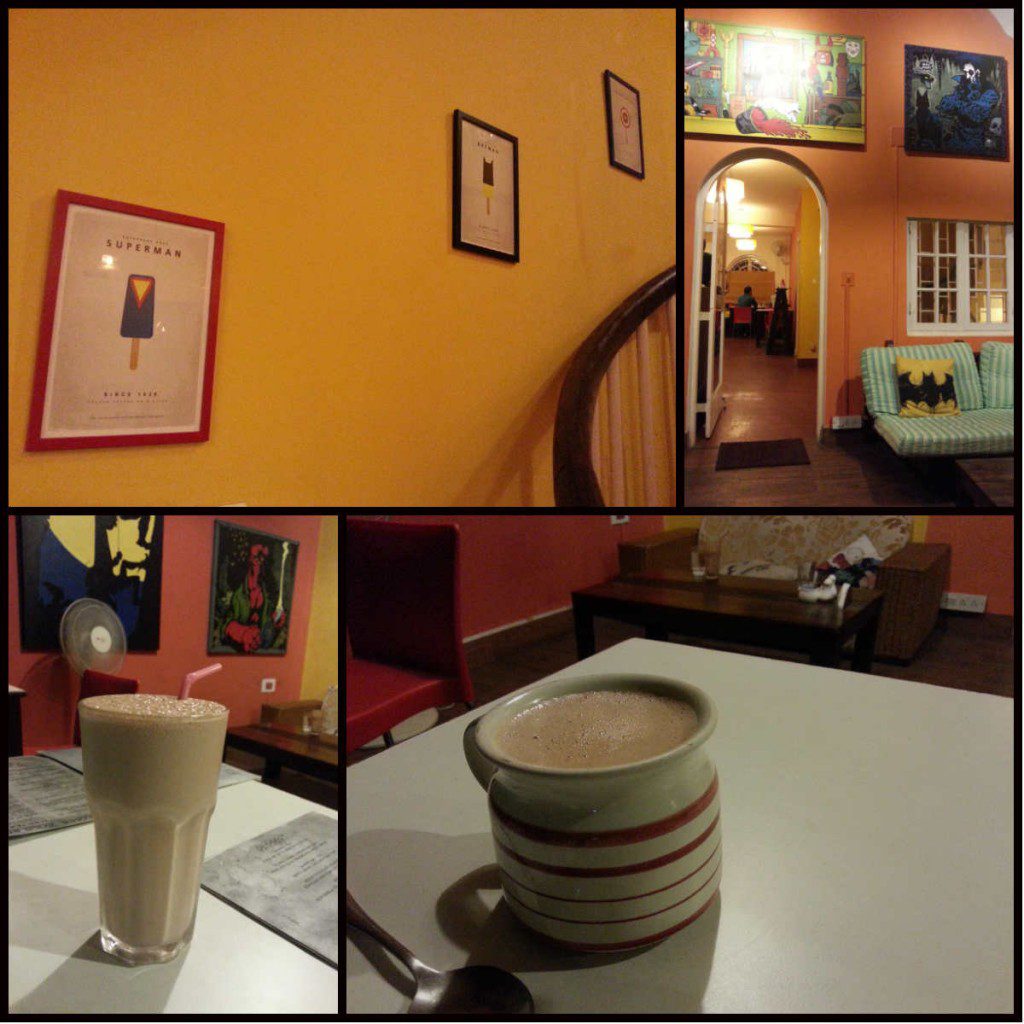
    One about-to-rain Bangalore night, despite the comments that we shouldn’t go there only for the food, we took a leap of faith, and landed up at this cafe in Indiranagar. You’re bound to miss it if you don’t know exactly where it is, so check the map in the link. It’s a house converted into a cafe and the ground floor is devoted to the library/reading rooms. Up a winding staircase and we got to a balcony where we managed to get a table for two. There are other seating options inside as well. You’ll love the ambiance if you’re into comics. Bright, colourful murals and comfortable furniture. What works for the balcony is that it also offers non-comic entertainment, thanks to a bar across the road! From the menu, I asked for a Nutella Banana shake and D wanted a Peppermint Hot chocolate. (day’s special, said the board) The shake was more banana than Nutella, and despite me specifically asking for no ice cubes, I got them in abundance. The hot chocolate was much better!

    collage (more…)

  • Processes, People & Culture

    It has been more than three years since I wrote about my Indigo fandom. Since then, they have been my preferred airline, mostly thanks to their on-time promise. A few weeks ago, Karthik wrote an excellent post “Why I love an errant Meru and hate the awesome Indigo!” that offered some unique perspectives based on a few of his recent experiences with the airline. He ends the post with When did the ‘plastic’ nature of Indigo’s customer-facing organization set in? May be around the same time their hostesses were asked to use wigs? It restored a sense of objectivity to my fandom.

    Our way of doing things” is how one definition of culture goes and I remembered Gautam’s recent insightful post on the components that make up ‘culture’ in an organisation. If you look at these factors, you’d wonder whether a cultural change was at the root of Indigo’s new avatar. It made me think of something I wrote earlier – Culture Architecture – the thrust of which  was culture being a strategic business advantage. But how can that be made sustainable? I’ve been a big fan of processes. Indeed, one of my favourite posters is

    626854484bf91ac616669379d9a394fd

    (via)

    (more…)

  • Difficult Pleasures

    Anjum Hasan

    Anjum Hasan is definitely among my top 3 favourite authors, and this book only adds to it. But that also means that this is not a thoroughly objective review. 🙂

    The book has thirteen short stories that have a varied set of characters in different circumstances. As the jacket informs us, some of the stories are borderline surreal, but that doesn’t take away from the empathy that the author (has and) seems to be able to evoke in the reader. This is especially commendable because the characters vary in age, socio-economic class, mindset, location and many other factors. Yet, the single common takeaway from each of these (sometimes not-so-ordinary) slice of life situations is how the author is able to drag the reader in and empathise with the character/s even if not completely identify with. (more…)

  • A republic of convenience

    Masala Republic is a Malayalam movie I watched recently. First, my sympathies with those who attempted the heroic task of watching it in a theatre, but to be fair, it did give me some food for thought. No, not about my choice of movies, but things slightly more important in the scheme of things. It talked, for instance, of issues that needed a voice – the changing socio-political and economic dynamics of Kerala caused by a huge influx of people, mostly low wage workers from Bengal and the North East.

    The movie begins with the disruption brought about in the life of these folks by a ban imposed on Gutka, which apparently is part of their staple diet! This reminded me of the (real) scenario I witnessed when the liquor ban was announced in Kerala. Almost overnight, I saw an ecosystem disbanded – small shops around bars, auto-rickshaws that ferried drunk guys home, to name a few components.

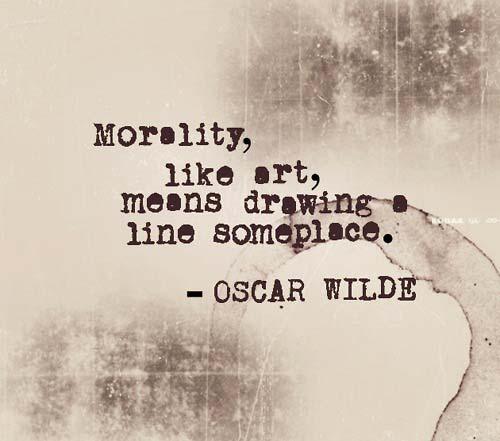
    Notwithstanding the political play that brought about this ban, I was forced to ask – isn’t alcohol consumption an individual’s choice? One might cite domestic violence, decrease in productivity, drunken driving etc, but unlike say, smoking, it does not automatically cause damage to the larger society. Isn’t a blanket ban a bit like banning automobiles because of road accidents? If the justification is that individual choice must bow before collective progress, then can we really condemn Sanjay Gandhi for the infamous sterilisation programme? After all, population control would, at least arguably, have meant progress. What we are debating therefore, (I think) is the means. And means is exactly what an alcohol ban is. Does society really have the moral right to take such a decision? Who decides society’s collective moral compass and what can resist such selective applications of morality?

    Clipboard01

    (via)

    Who decides where the line is?

    P.S. Would be glad if you could point out whether I am missing some relevant piece of information or logic here.