
Month: December 2014

  • An Interweb of Things

    Since the time I wrote An Internet of Things narrative, its trajectory and pace has seen tremendous acceleration, to an extent where TC has claimed that it has reached escape velocity. Indeed, there is a whole lot of activity happening that would back this claim – startups, larger companies getting interested in the space, geographic expansion and so on. In fact, the article has what seems like a comprehensive chart on applications, platforms etc.

    In my earlier post (linked above) I had pointed to the distinction between the Internet of Things and the Web of Things. What was then a nuance seems much more wider now and is even more relevant. Another article on TC, titled The Problem with the Internet of Things is actually about this. One of the products that has fascinated me for a while is Mother, from Sen.se. To me, it aims to solve this problem, and the last two points in their ‘Creating the Internet of Life’ document is proof of it. (Like wearables in 2014, I plan to get a consumer IoT experience in 2015, and this is most likely going to be my preference) Another simplistic but potentially very useful product I have seen is Flic. The last example is Signul, which uses a beacon system to automate things used in daily lives. (both on Indiegogo)
    (more…)

  • Chasing the Monsoon

     Alexander Frater

    The monsoon – a phenomenon that has India in a tizzy every year. To me personally, the monsoons are a treasure trove of memories, associated with the various Junes that have been part of my life – childhood, college days, work – different places and different times. So I picked this book with quite some interest.

    Frater’s prologue tells us about his intent and motivation, but I’m afraid it tends to get a bit technical and I wouldn’t be surprised if people stopped reading the book because of it! But the chapters that follow are completely different, so do persevere. The first chapter is all about the immediate trigger that made the author set out – chasing the Indian monsoon from “where the rain is born” (to quote Anita Nair) to the wettest place on earth.

    Trivandrum is where it all begins and the author captures the tension across the country around the beginning of the monsoon pretty well. The weather forecasters, astrologers, politicians, and even regular folks – all have their theories and perspectives. One of the things that makes the book really good is the author’s reading and chronicling of the milieu he has been pulled into – sociocultural, economic, political and so on. His meeting with Kamala Das, the death of John Abraham, (Malayalam movie director) the Ambassador car’s preeminence, all add flavour to the narrative.

    (more…)

  • Artificial Humanity

    In Natural Law, I had touched upon the idea that we will have to make choices as a species in the context of the role of artificial intelligence in our lives, and how/if compassion towards each other would play a part in these decisions. As I watch thoughts and events unfolding around me, I am beginning to think that it will most likely not be one crucial decision later in time, but a lot of smaller choices, made at individual and regional levels now, that will shape our society in terms of acceptability, morality etc. And so, just as I wrote in a post around five years ago, that we might not be able to recognise the final step we make in our integration with AI, there might be an increasing inevitability about our choices as we move forward in time.

    What sparked this line of thought? On one hand, I read a New Yorker post titled “Better All the Time” which begins with how a focus on performance came to athletics and has now moved on to many other spheres of our life. On the other hand, I read this very scary post in The Telegraph “The Dark Side of Silicon Valley” and a bus that’s named Hotel 22 because it serves as an unofficial home for the homeless. It shows one of the first manifestations of an extreme scenario (the nation’s highest percentage of homeless and highest average household income are in the same area!) that could soon become common. The connection I made between these two posts is that increasingly, there will be one set of humans who have the will and the means to be economically viable and another much larger set that doesn’t have one, or both. This disparity is going to become even more stark as we move forward in time. I think, before we reach the golden age of abundance, (if we do) there will be a near and medium term of scarcity for the majority.

    (more…)

  • Puma Social

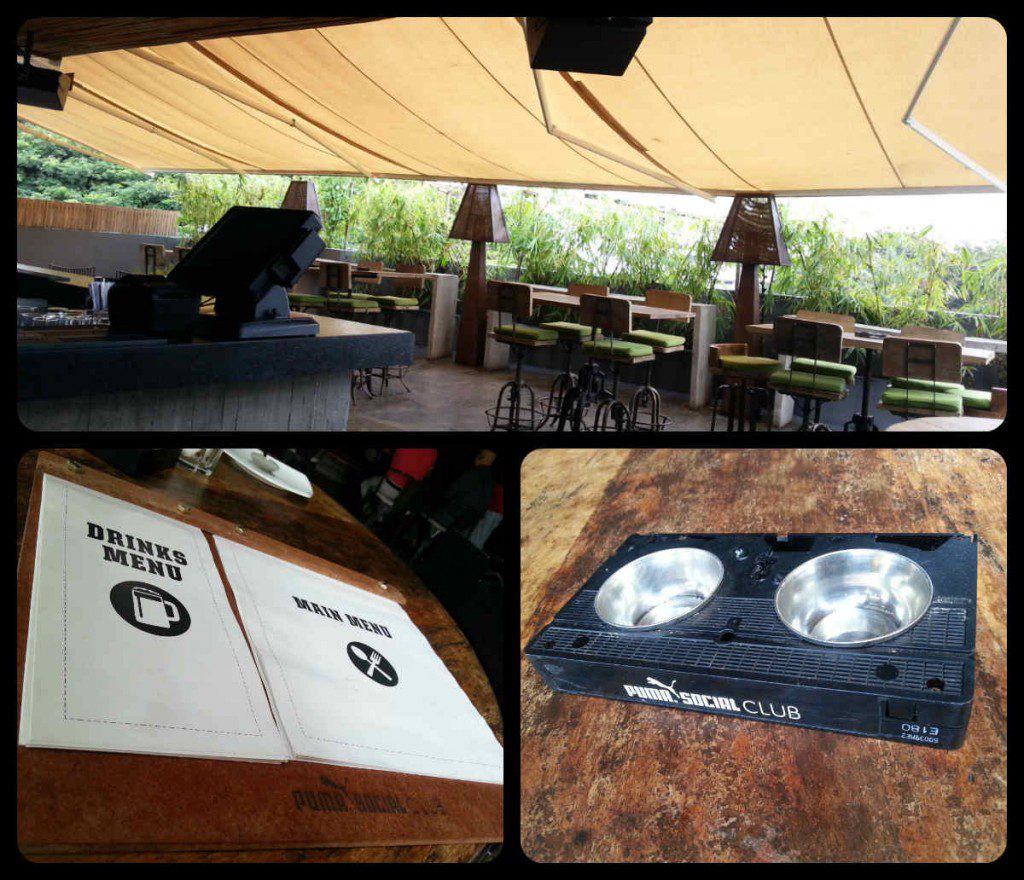
    Puma Social (map) is one of those places that people half our age flock to on Saturday nights. So we arrived there late, on a Sunday afternoon. We arrived on a social vehicle – auto-rickshaw – but I think there is valet parking. 12 PM is the official opening time as per Zomato, and we got there by 1, but they requested an additional 10 minutes to set things up! We pretty much had the place all to ourselves (except for an older couple and their kids) and after surveying two out of three floors, decided to sit on the second. The place has definitely been around for a while, and the biggest proof is probably the state of the decor and menu cards. (sauce smudges) But that doesn’t mean it isn’t a pleasant space. The bar stool seating at a few tables isn’t the safest bet after a few drinks but we weren’t planning a lot anyway, so we choose them. The place began filling up a bit after we had placed our orders. Those video cassette ashtrays, I thought, were a cool touch. 🙂

    collage1

    From the menu, we asked for a Coconut Chicken soup, the best way to begin a meal on a windy, cloudy day. It wasn’t very spicy but was thick enough with just the right amount of lemongrass, and we quite liked it. Meanwhile, I had asked for the Jack Hammer and D, for a Mai Tai. They weren’t really generous with the Jack Daniels or the honey in my drink and with the dry Martini and pepper, it made for just an average drink. D’s drink, with the almond syrup added to the standard white and dark rum, was a much better one. (more…)

  • Happiness: The End

    A while ago, in Happiness and Compassion, I had written about what Fahadh Fasil described as the biggest lesson he learnt from failure – he said it made him decide that he would only do things that made him happy. The more I read, the more I think, and the more I live, the more I start relating to what Fahadh is doing, and what Aristotle said, “Happiness is the meaning and the purpose of life, the whole aim and end of human existence.” Everything else – fame, power, money, compassion, detachment etc – is probably just the means we create.

    The thing though is, even if happiness were indeed the purpose, I can see at least a couple of challenges. In this excellent read “10 truths you will learn before you find happiness“, the first point is “It is impossible for anyone else to define YOU”. This echoed my first challenge – a difficulty in defining what happiness is to me. At the next level, I felt that the paths to happiness are confusing and have many things going against them. For instance, fame – “..other people’s heads are a wretched place to be the home of a man’s true happiness.” (Schopenhauer) Or compassion/pity (not kindness, which I regard as a more active expression, though the following might apply to it as well) – “There is a certain indelicacy and intrusiveness in pity; ‘visiting the sick’ is an orgasm of superiority in the contemplation of our neighbour’s helplessness” (Nietzsche) As you can see, it isn’t difficult to bring each down.

    (more…)