Month: September 2014

  • The Fort Kochi Connection

    We’d been eyeing The Fort Kochi connection for a while now, especially since the ads started appearing in the Malayalam daily, and the only reason we’d been delaying the inevitable trip was that we thought it would be a revamped version of its earlier avatar – Oyster Bay. But on the day we were planning to watch Bangalore Days in PVR, its location gave it an advantage and we succumbed finally.

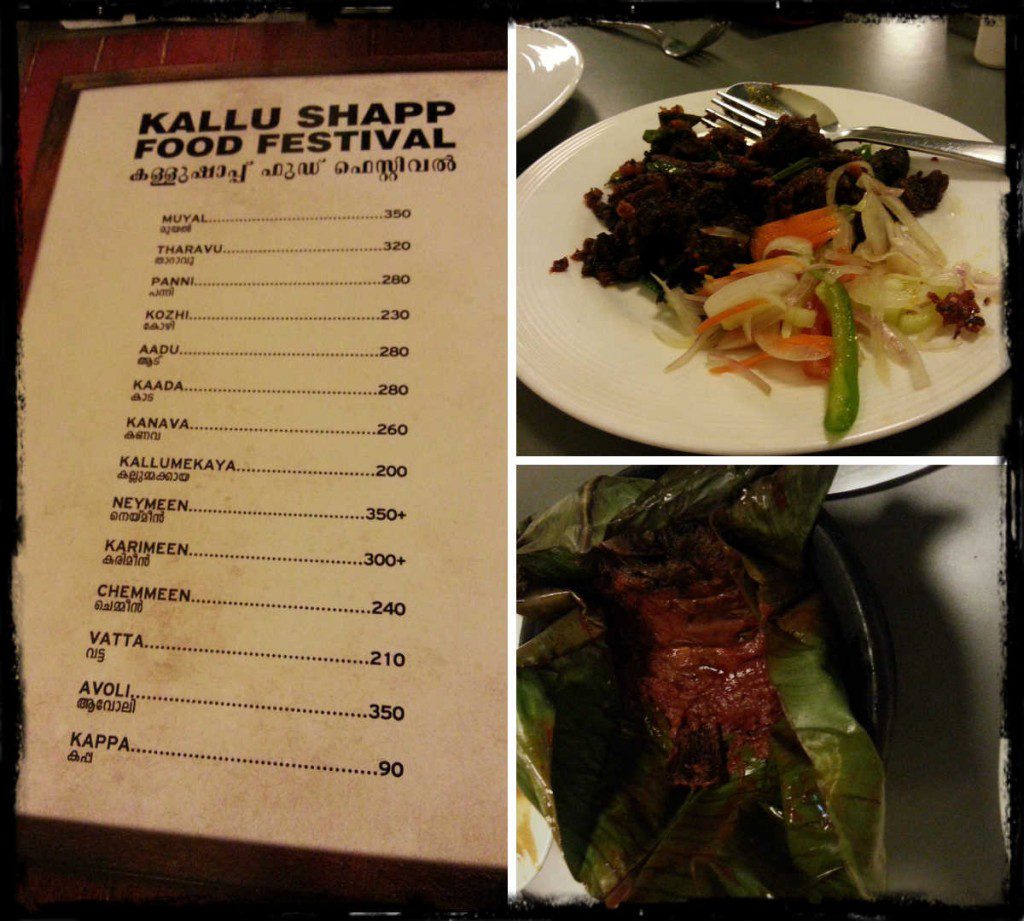
    The layout has been modified only slightly, if at all, but the menu seemed different. A few good Cochin photographs have been added too. The ‘connection’, thanks to Kochi being a major trading port, allows it to have a smattering of all kinds of cuisines – Chinese, Portugese, Dutch, and of course, British. But like all well brought up Malayalis, we first checked out what was available in beef. We also completely ignored everything but the Kerala cuisines – Malabar, Kochi and Syrian Christian. After much debate, the Achayan Pothularth (who makes these spellings man?!) was ordered. It sounds Sith, and is dark, but did an amazing job nevertheless – spicy, well cooked meat. They had a special Kallu Shop menu going, but unfortunately what we wanted from it was not available. We also tried the Karimeen Pollichathu, and while its masala was decent – spicy and a good texture, we have had better, and on healthier fish.

    collage1

    (more…)

  • @ Social Media Week 2014

    The role of content in a brand’s narrative is an oft appearing topic on this blog, so I was glad for the opportunity to discuss the subject with various entities who have a stake in this new ecosystem. I’ll be moderating a panel titled “The New Content Ecosystem – Evolution & Design” on Sep 25th, 2-3 PM during Social Media Week.

    A fantastic mix of folks makes up the panel – Asit Gupta, founder of Advocacy Asia, Abhishek Chatterjee, founder of Tookitaki, Arunabh Kumar, founder of  The Viral Fever, Akash Deep Batra, Regional Digital marketing & eCommerce Manager APAC at Nestle, and Kalyan Karmakar, food insights consultant, blogger and columnist – it’s bound to be an interesting chat.

    If you happen to be around, do drop in and participate in the discussion that follows. If you’d like me to ask questions on your behalf, use the comments section below, give me a shout out on Twitter.  #SMWMumbai

  • India In Slow Motion

     Mark Tully, Gillian Wright

    A book written a decade back, and yet, it is still relevant because as the cliche goes ‘the more things change, the more they remain the same’. India has changed in many ways, and yet remains the same in many other ways, and that’s exactly the theme of this book too. Mark Tully and Gillian Wright have tried to study the various forces that keep India ticking at its unique speed – forces that accelerate and forces that pull it back. Through 10 unique scenarios they have attempted to not just unravel the fundamentals, but even taken a shot at the nuances that define the ‘Indian experience’.

    The book begins on a day that has left an indelible mark on modern India’s psyche and society – 6th December 1992 – the Babri Masjid demolition. The first chapter is about the rise of Hindutva, the role of the BJP, VHP, RSS etc and perspectives of the common people who reside in Ayodhya and the nuances in their approach to religion and gods. The second chapter shifts the premise to carpet making, child labour, and the machinations of organisations, including NGOs to achieve the moral high ground even at the cost of truth. (more…)

  • Platform Principles

    Though not by design thus far, I have actually been expanding on the 4P (planning to add one more) framework I wrote about in Agile @ Scale. The attempt is to help me navigate the concept of brand in a rapidly changing landscape. The Change Imperative tried to showcase some of the possibilities of these dynamic shifts, and Revisiting Brand Purpose dwelt upon purpose in the framework. This post is on platforms. Though media platforms have been around for a while and have been utilised by brands, and the internet, mobile and different OS can also be treated as platforms, I’m choosing to focus on the brand/ organisation as a platform.

    Thus far, the organisation as a platform has been built to leverage scale for competitive advantage. But technology and open platforms are easily on their way to make scale matter much less. As this post  succinctly states, connections weigh more than efficiency now. So how can the organisation move towards connections?

    My thought process on this was probably started in Social’s Second Chance. Social tools and platforms have brought the brand into full contact with the user and have caused paradigm shifts in not just marketing but across the organisation. This deck makes an insightful point that traditional marketing structures are dialectic in nature while social platforms are dialogic. That explains why brands are using social mostly as media and trying to frack it, despite there being better ways to approach it, even in the context of marketing. Experience > exposure is a lesson yet to be learnt.

    Among other reasons, one of the big factors that are contributing to a resistance in truly embracing social in entirety is a fear – loss of control. This is a great read on designing for the loss of control and my biggest takeout from it is where it quotes from ‘The Power of Pull‘ – “shaping strategies” on the individual, institutional, and societal level.

    I think there’s tremendous scope in rethinking the brand/organisation as a platform. In the bid for competitive advantage through scale and efficiency @ scale, it is possible that the organisation/brand has chosen to see value very myopically – as a transaction. What if the organisation transformed itself around connections – connecting employees to a sense of purpose, partners to the kind of work they’d want to associate with and its own narratives with that of the consumer’s? Of course there’d be transactions involved too, but how about engaging each in a way that understands and works with the unique value in every interaction within the context of a shared purpose?

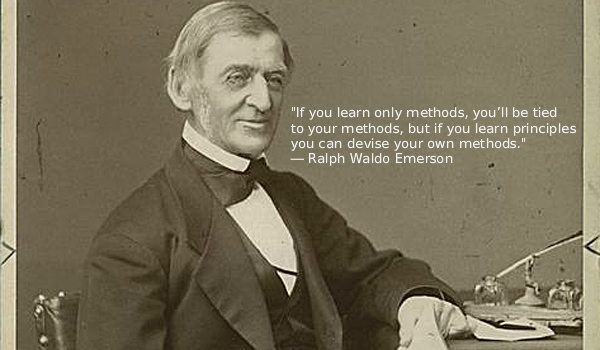
    (Arguable) I think efficiency lays more stress on methods, but engagement has the potential to focus on principles. Profitability at any cost vs value creation as a means to profitability. The choice might actually make the difference between survival and irrelevance.

    Emerson

  • Harry’s

    First published in Bangalore Mirror

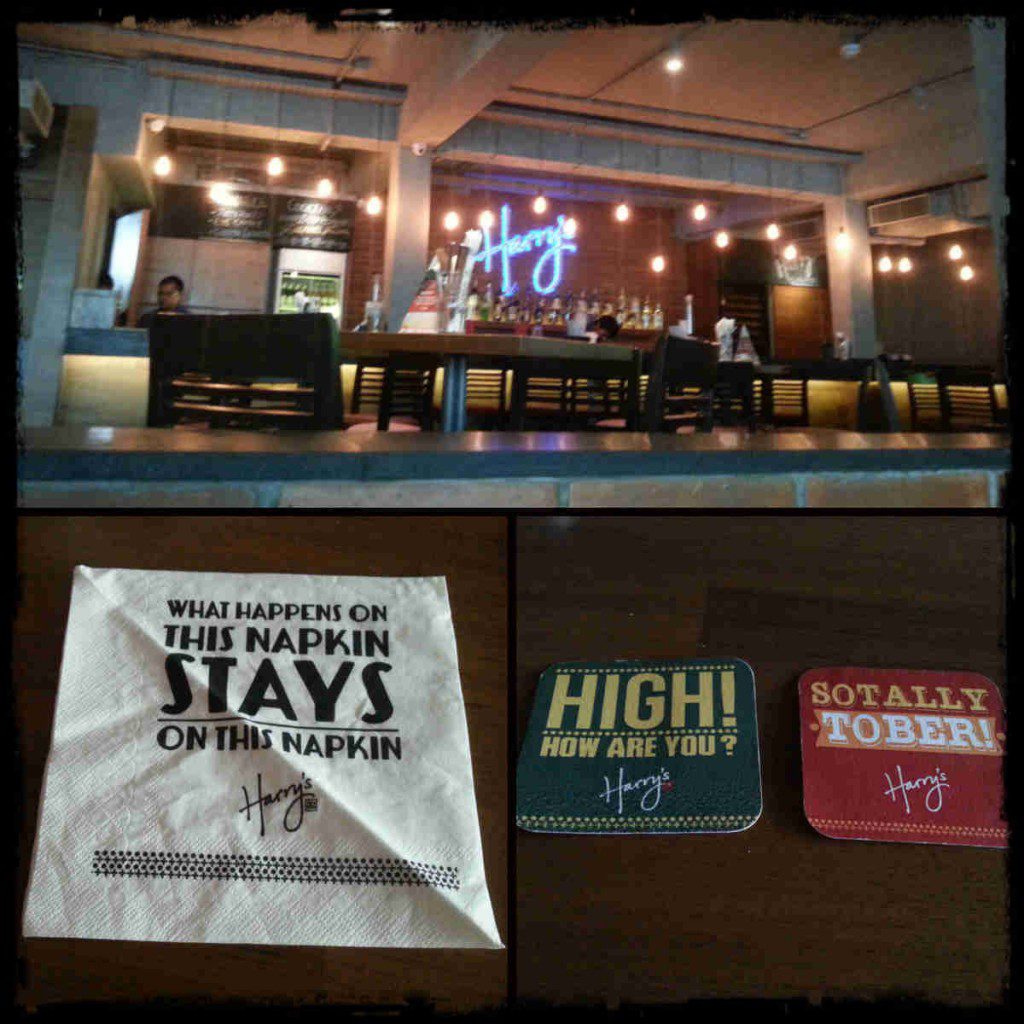
    When an iconic brand from Singapore lands up in your city, it’s only fair that you pay a visit at the earliest. I harried a few friends into doing exactly that on a lazy Sunday afternoon. From a single establishment at Boat Quay, Harry’s now has over thirty outlets across the globe, including one at our very own Indiranagar that started operations a month ago. This is right above Copper Chimney, (map) and yes, there’s valet parking. They haven’t really publicised it, so we weren’t surprised to find only a few other tables occupied. Harry’s, as a chain, bills itself as a sports bar but though the large flat televisions would corroborate that, it does seem more like something that just stepped out of an American sitcom – the one where friends catch up after a day’s work. Brick walls and comfortable seating, with a pool table in one corner, you get the picture. The props are probably standard at all the outlets, but they do make the entire ambience conversational – posters, coasters, napkins, all are an attempt at wit. My favourite was “High! How are you?” The music was a bit of a surprise and could be an educative experience for the kids who are the typical target audience at such outlets – ABBA, Boney M, The Whispers are not something they’d hear a lot. But I wouldn’t complain, especially because they played “That Thing You Do” when we were leaving! Now let’s stop pottering around and talk about the food and drinks!

    collage1

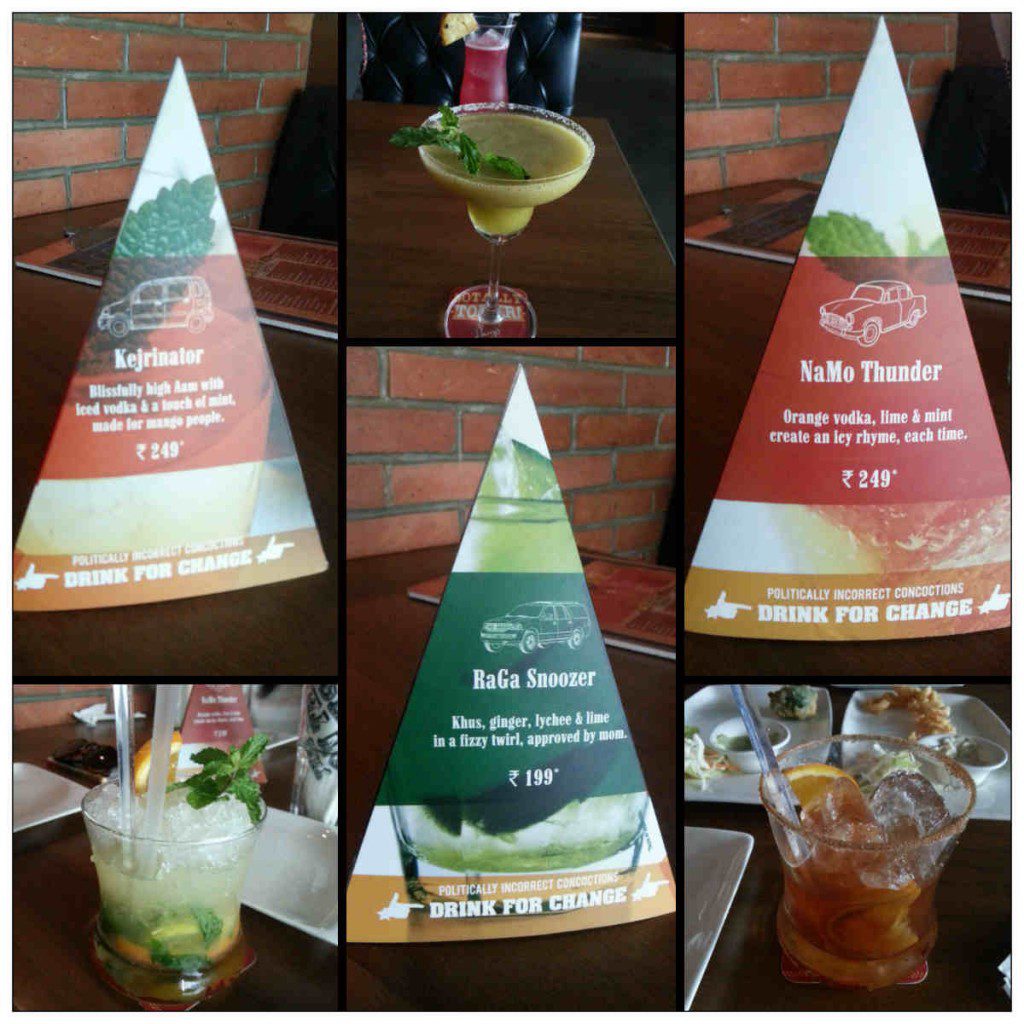
    The drinks menu gets both sides of a menu card (illustrated like a clipboard) just like its food counterpart and that’s an indication of the focus. They have several house specials from which we tried the Singapore Sling and Harry’s Old Fashioned. The cherry brandy pretty much overpowered the gin in the Sling, but it was a reasonably refreshing drink. The second drink (created at the original outlet) had Scotch in abundance though they went a bit overboard on the orange peels! But what we really liked were the ‘election specials’! (‘drink for change’) The mango and vodka based Kejrinator was fantastic, and the NaMo Thunder (orange vodka, lime and mint) matched it. We passed the RaGa snoozer though. I absolutely loved the creative play on the ingredients/descriptions in these- mango, orange, and RaGa being a mocktail ‘approved by mom’! An extra point only for that!

    collage2

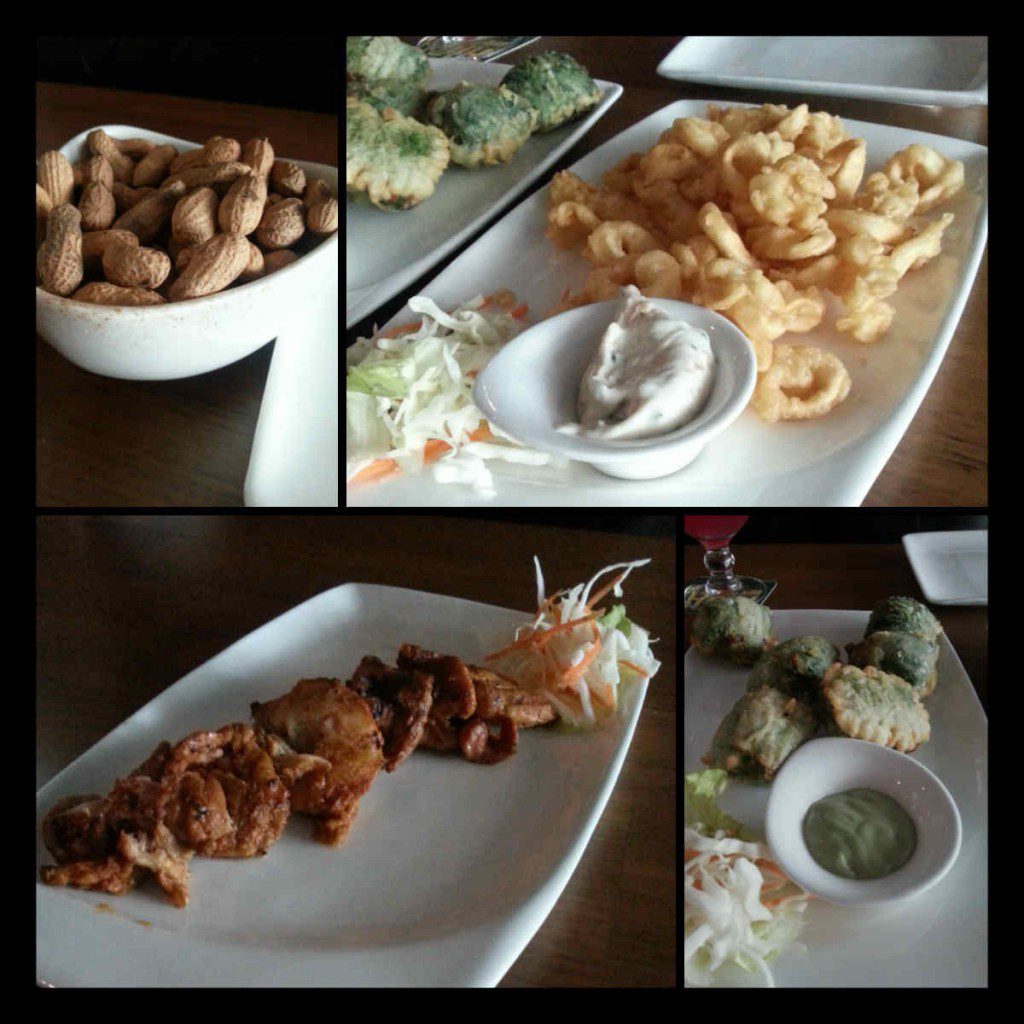
    The complimentary bowl of peanuts indicated that they had a good insight into our salaries! The ‘Wasabi Paneer’ sounded interesting, but turned out to be Paneer with a wasabi dip. Except for that expectation blip, the dish was quite good – fresh cottage cheese that was made just the right side of crispy.  The Crispy Calamari, on the other hand, was a disappointment as it was fried a little too much. We then tried the BBQ Pickled Chicken and discovered a potential rival to the Tunday Kabab for the melt-in-your-mouth quotient! Thanks to this, and its zesty flavours, this was our favourite dish. The Fried Lollypops and Pattaya Fish Fingers are house specials, and you could give them a shot as well.

    collage3

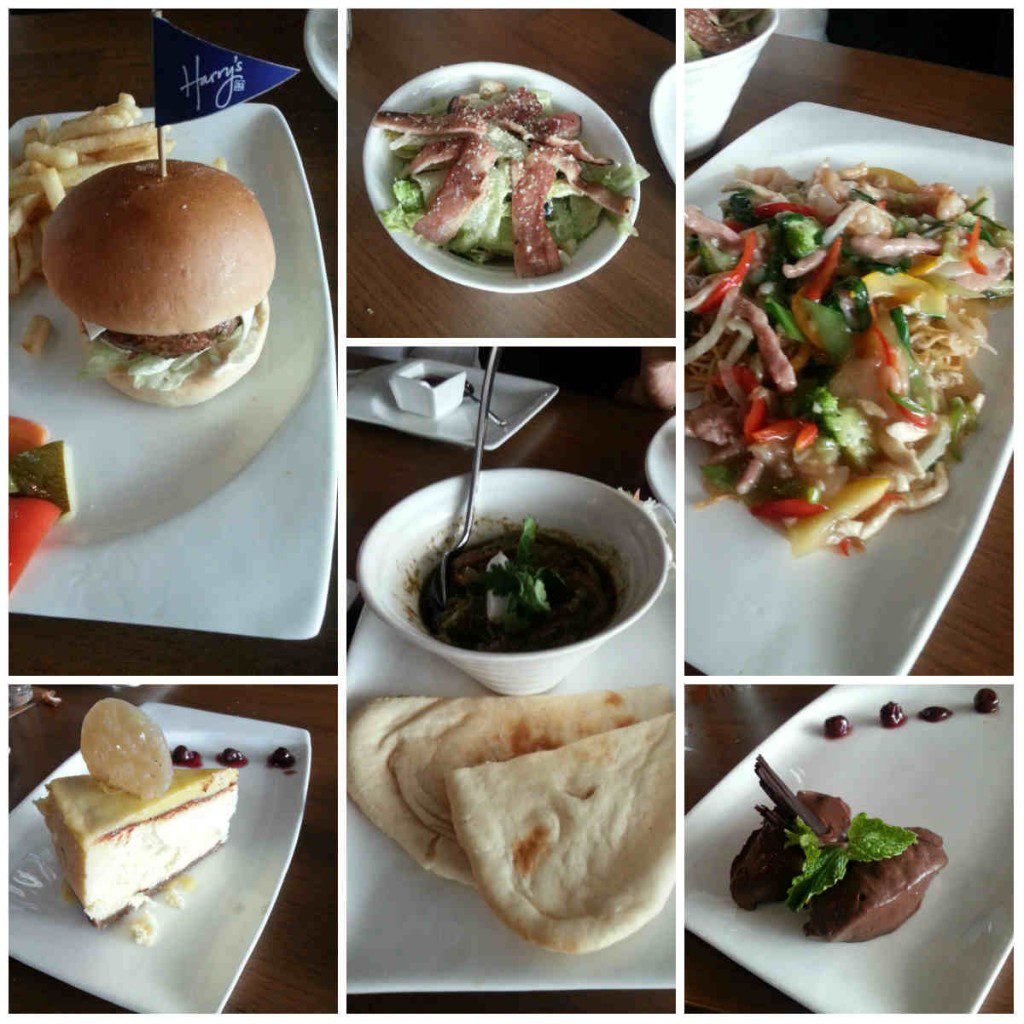
    In the main course, the Caesar Salad was more mundane than magnificent, and this was despite the bacon! The Harry’s Jazz Burger was good on paper, with mutton patty and bacon among its ingredients, but the patty could have done with better cooking. Ironically, the next dish was Harry’s Double Cooked Noodles and we asked for the Mixed Meat Butter Curry version. While fish sauce in everything is probably common in the generic geography that Harry’s originates from, I hadn’t anticipated prawns in the dish. Over several experiences, I have discovered that they’re allergic to me and seek to escape. This time was no different; I will spare you the graphic details. A mention in the menu would have been nice! The Kasoori Paneer Khurchan, with well cooked cottage cheese, a flavourful gravy and served with a curious version of naan was a surprise winner in this round.

    From the four dessert options available, we chose the Baked Vanilla Cheesecake and the Chocolate Mousse. The former, with the little lemon curd touch was easily the better dish. In addition to the taste itself, we didn’t like the plating of the latter much, because seeing a lot of empty space where chocolate could have been is not a pleasant feeling!

    collage4

    A meal for two would cost around Rs.1500 (Inclusive of taxes and service charge) – a couple of cocktails, a non veg starter, a main course dish and a dessert. The service staff is friendly and helpful. The ambiance and the pricing give it the potential to be a good hangout. However, in the crowded restaurant scene of Bangalore, consistently great food is a must for any Tom, Dick or Harry to survive!

    Harry’s, (Above Copper Chimney) Plot No: 2006, 100 feet Road, Indiranagar, HAL 2nd Stage, Ph: 080 41113500