
Month: November 2012

  • Spaghetti Kitchen (Koramangala)

    Though we asked for an EMI option at the Indiranagar version, we picked up the courage to try out the Koramangala version, thanks to Poshvine. Mostly for the awesome view of Hosur Road while we dined. Located right at the Forum junction, above Punjab Grill, there’s valet parking. There’s also a coffee shop in the same premises.

    The ambiance, which is bright and cheerful in daylight, gets an additional classiness at night, and suckers that we are for road facing views, this one was just awesome. We had a fair idea of what we wanted, courtesy the menu at Zomato, but added a Sangria for two to that list.

    The complimentary bread basket was excellent, and the bread was indeed fresh. We started with the Cappuccino of Four Mushroom soup (/2) and it turned out pretty and tasty, though I’d have liked a dash of pepper. Thankfully that’s available on the table easily. For the main course, we asked for a Fettuccine with Cream & Cheese and a Tutto Carne thin crust (Rs.50 extra) pizza. The all meat pizza arrived first and though we couldn’t complain about the meat presence – ham, lamb…, the crust was burnt a bit too much. Basically, pay Rs.50 extra for a burnt crust. The pasta though, was awesome. Don’t judge it by its skimpy appearance, it’s quite heavy and there’s no stinginess on the cream and the parmesan – pecorino sauce was just amazing.

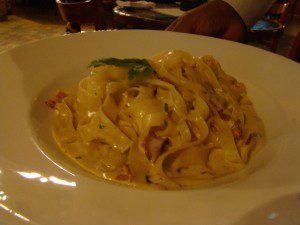
     

    The wallet felt lighter by about Rs.2350, after the Poshvine discount. Pricey, and probably the place to go to when you’re in the mood for celebrations. The lunch buffet on weekdays (<500 after tax) is something I’d very highly recommend though.

    Spaghetti Kitchen, 1, SJR Primus, 1st Floor, Adjacent To Raheja Arcade, Koramangala. Ph: 41160500

  • RentMyText.in

    RentMyText.in aims to make education more affordable and accessible with an online textbook rental service. In conversation with founder Vishesh Jayanth..

    [scribd id=112691900 key=key-1bgzu6i0g0nbntjvqaxh mode=scroll]

  • Branded Content.. Returns

    Branded content is making a comeback, I think. I call it a comeback because I noticed quite a few posts in the last few days, but this is something that has been discussed at least since 2009. (here and here) One of the posts I saw was this one which called branded content a game changer for brands. In terms of imagery, I prefer this version of the image, (note the year of posting 🙂 ) largely because the way it pictorially blurs the lines between paid, owned and earned media. In fact, given the way many bloggers accept payment and post no disclosure, the lines are blurred even within each sub-category!

    As you can see, precious little has changed. But the ‘little’ that has changed has made quite an impact – Facebook, Twitter and YouTube have made their way into ‘paid’ as well. In fact, they’re in all three kinds of media. What we call traditional media can at best be in two places at the same time – earned and paid, and that’s obviously why social has disrupted what we just knew as media.

    I wonder if during the dawn of traditional media, anyone would have thought of ‘owned media’ the way we understand it now. Its arrival has been recent but it’s busy delivering near-death blows to other forms of media, which are now forced to adapt. Brands are now scrambling to create a mix that will help them meet their strategic communication objectives, even as they deal with the challenges of multiple platforms, screens and technologies across which they have to deliver a seamless, cohesive stream. But increasingly social is also falling into the frameworks of its predecessors. Revolution is fading into evolution!

    What intrigues me is what happens next – after even this gets optimised. In the medium term, there will obviously be more channels, specially in ‘owned media’, but when this disruption becomes ‘traditional’, what is that new paradigm that will appear? Can you visualise beyond the current owned-earned-paid framework?

    Probably navigational media that will help us make sense of the other three! Also completes OPEN. 😉

    until next time, contend with that

  • Plan C

    This post has been pending for a while, the date of publishing of the article that inspired the post is evidence enough. It is about people who leave their jobs to follow their passion, but instead of the success stories we are used to, it focuses on the difficulties on that path. Even if you’ve not taken that path already, it’s quite possible that you have contemplated it. It’s romantic – the freedom, being your own boss and doing the thing you like – Plan B. But it’s not easy, and it begins as early as even identifying one’s passion. (must read)

    Interestingly, NYT themselves had an article almost a year later that asked “What Work is Really For” and answered that with an Aristotle quote “we work to have leisure, on which happiness depends.” Though I didn’t know about this quote until recently, this is a perspective that I have often used to debate with people who say those who do not like their jobs should quit. There are many reasons why people don’t, and one of them is consciously making a choice to work (possibly on things they don’t enjoy) for the 2 days (and vacations) when they are able to spend their resources – money, effort and time – on things they enjoy.

    The reasons people don’t scale up those 2 days could be many, including the difficulties involved in the early stages of setting up, and then maintaining a positive balance – of money and life. Money is after all an essential resource. It buys things, it opens doors. But when your passion becomes your work and your principal source of money, does it feel the same? Or does it become a job?

    I liked the second NYT article also for its last 3 paragraphs. It addresses the money conundrum. It talks about how right from when we are born, we are taught to be consumers, thanks to capitalism, which though calls itself an open market where we have the freedom to buy is actually a system unto itself.  The choices are not really independent. It points out that education should be meant to make us self determining agents. True freedom requires that we take part in the market as fully formed agents, with life goals determined not by advertising campaigns but by our own experience of and reflection on the various possibilities of human fulfillment. But that’s not an easy path either. It calls for independent thinking and a subjective view of fulfillment and happiness. And that brings us to the familiar “to each his own”

    until next time, work it out 🙂

    Bonus Read: Six Rules to guide your career

  • Between the assassinations

    Aravind Adiga

    Halfway between Calicut and Goa lies Kittur, the scene of Aravind Adiga’s collection of stories, set in the seven year period between the assassinations of Indira and Rajiv Gandhi. But then, despite some very 80s characteristics, the timeframe hardly matters, this could’ve been set in contemporary years too, for as a character says “Nothing ever changes. Nothing will ever change.” One instant comparison I could make was with Malgudi Days. That however ends with the similarity of multiple characters in the same town that is described in great detail – you can picture yourself in the town walking along its roads and identifying places and people.

    As the book summary says, the stories slowly bring out the moral biography of the town with its diverse set of characters – from the Dalit bookseller whose kosher relationship with the police is disrupted when he is caught selling ‘The Satanic Verses’ to the ‘sexologist’ who ends up supporting a boy with a venereal disease, and from the ‘mosquito man’ who tries to set limits for the relationship between a servant and his mistress to the mixed caste boy who detonates a bomb in his school.

    The book worked for me because the author has managed to flesh out his characters superbly across financial class, religion and schools of thought (political, philosophical) and use the friction between them to drive the stories. In that sense, each story is probably a different style, but the subtext of pent-up fury tinged with sadness cuts across.

    An excellent read both as an exploration of a microcosm of India as well as the different shades of human relationships and morality.