Month: August 2012

  • The masks we wear

    In TDKR, there is an interesting conversation between John Blake and Bruce Wayne, during which the former says that he knows Bruce is the Batman. He then talks of how he does not remember his mother’s death, but remembers his father’s murder well, and that the anger stayed with him. People understand, he says, but they don’t really know. They understand for a while, and they expected him to move on, to let go of the anger.  But he couldn’t do it, and when people realised that, he was sent to therapy and foster homes.

    He realised in time that for people to accept him, he would need to wear a mask that would hide his anger. He reveals that when Bruce visited the boys’ home he lived at years back, he immediately recognised that Bruce was Batman, because he himself wore a mask.

    Thanks to various experiences, I think all of us wear masks. Some of them are not because of experience, but for acceptance among others. Either ways, it works as a coping mechanism, and depending on our skills, at various levels of invisibility to those around us. Sometimes we are conscious of the mask and try to reach a place where we can live without them, by becoming strong enough to either face the past or deal with ‘acceptance’ on our own terms. Yet, despite those efforts, many a time, circumstances are such that the mask becomes the man, consciously or unconsciously. Whether or not that is a good thing is completely context dependent.

    But sometimes we are able to move on, just as Bruce was, embracing aspects of the Batman mask into his own personality. Or maybe it’s the other way – Bruce being a mask that the ‘true’ Batman personality wore. 🙂

    until next time, masker aid
  • Chianti

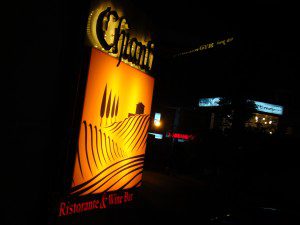
    D’s organisational duties and my laziness conspired to make sure that we had a ‘home’ match. Thanks to Zomato, we came to know about Chianti. It’s on the road that goes from Sukh Sagar on 100 feet Road in Koramangala towards Jyoti Nivas. (map) You can’t miss the orange sign on the left. This, I thought, is probably how Nepal feels like – India  (Sukh Sagar) towards its south and China to the north (Beijing Bites, Mainland China) They have valet parking and two-wheelers can go underground.

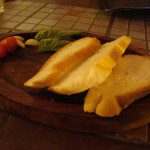
    You can either watch the world go by or enjoy air conditioning. We chose the former, though the brick wall and the chandeliers inside looked very inviting. We were given a DIY Bruschetta (no, it’s not Mallu) on arrival, even as we checked the menu. In that order, we rubbed (on the bread) garlic, basil, (fold first) tomatoes, and then added salt and pepper and the olive oil, but they won’t chuck you out if you tried any other order. 🙂


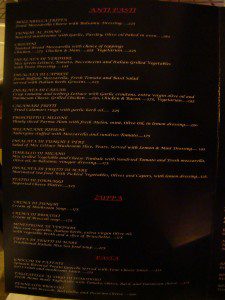
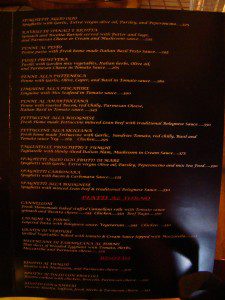
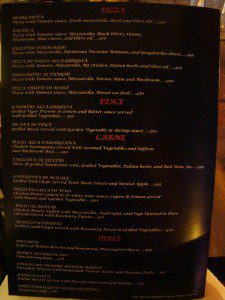
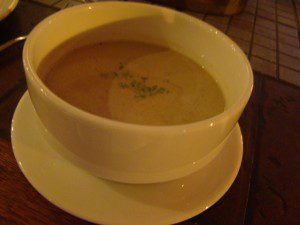
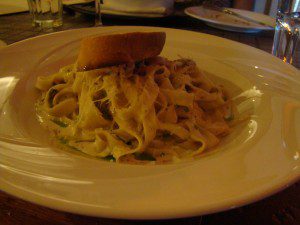
    On the paid part, we started with a Crema di Funghi and D used puppy eyes on the person who took the order, and asked for chicken to be added.  He seemed familiar, and it turned out that we had seen him at Fiorano. Same owner, apparently. Though we were told that the chicken would be added, the chicken didn’t get the memo. But the soup was thick and creamy and quite a good dish otherwise. A complimentary bread basket arrived too, and I quite liked the dip that they provided with it. For the main course, I tried to nudge D towards a thin crust pizza but she refused to bite. So we ended up with D’s Cannelloni (Beef Ragu version) and my Tagliatelle Prosciutto e Funghi. I ordered it partly because it reminded me of the Tattaglia family in The Godfather, who make attempts on Don Corleone’s life because he wouldn’t partner them in the heroin business, nor allow them to trade in it (hint hint) and partly because it had a creamy sauce and ham! D’s dish turned out to be a bit too tangy for her liking though she did like the Ricotta cheese and the overall taste. The other dish was heavy and a bit salty, though I loved the ham in it. We also had a Red Wine Sangria which we quite liked.


    The service is friendly, but are a bit over eager in asking for our opinions. (not the person who took our order) The meal cost us Rs. 1548 inclusive of charges and tax. Considering the location and the cuisine, I’d say it’s fair. It’s not the place you go to if you’re in a hurry. Sit back, enjoy the food and the wine, and watch the world go by.

    Chianti Ristorante & Wine Bar, #12, 5th A Block, Koramangala, Ph: 41132021/4

  • The path to mediocrity

    Seth Godin wrote a post on the masses vs great design, and how the brands we love refuse to become democracies. Yet, on an everyday basis, and across product offerings – from web design to entertainment, I see brands clearly pandering to the ‘masses’. And they’re not going to disappear in at least the medium term, because they spend resources in wooing and keeping consumers, though these consumers are hardly ‘loyal’. The undemocratic approach that Godin mentions is for the rare breed of confident, gritty, focused brands which have answered their why, what, how and when very well.

    On HBR Blogs, I found an article by Bill Taylor – “Bad Service can be good business” a very interesting read. It showed two different scenarios where the headline is applicable -companies who try to keep the costs down to the barest minimum and charge a premium for anything but the basic (the author quotes Ryanair as an example) and companies whose offerings are so compelling, and whose reach is so vast, that making the investments required to deliver high-touch service would be making a big strategic mistake. He cites new media companies like Facebook, Twitter etc as examples.

    Most of the companies I was referring to in the first paragraph are trying to be one of the above. But they play an in-between game, starting at some point and thinking that they’ll figure out a way to get to their destination. But IMO, it can’t happen that way, because once you set expectations, you fall into the ‘trap’ of fulfilling them, without really figuring what your brand stands for. You’re forced to play the reactive game, watching your competitive landscape and fencing with them. As you progress, you’re drawn further away from the active game of pursuing a goal with focus. The trap, hence, is mediocrity, and it is surprising to see it these days because the web and social platforms specifically are a great way to find that slice of audience which will give the brand a chance to deliver that focused product/service. I’m not talking of superficiality here, but the DNA of the brand, and the organisation, the strand around which everything is built. I’m also not saying that all mass brands are mediocre. In the purpose that they have defined for their brand, Ryanair is anything but mediocre. Despite the seeming difference in the two scenarios from earlier, they are bound by a commonality – clarity of thought, which inspires clarity in everything that the brand does.

    until next time, clear blue ocean

  • Naming exercise

    The alarm rang, as it did, usually. He snoozed, stretching his sleep time a bit. But he knew he would have to get up soon. He was already late for his other kind of stretching. That’s when he figured the alternate reason for the name of the new concept they had come up with – Yogalates!

    PS: Yes yes, pronunciation, I know!

  • A Silence of Desire

    Kamala Markandaya

    ‘A Silence of Desire’ is seemingly about the turmoils in the life of a government clerk, after his routine is shattered one day when he finds his wife missing when he returns home from work. Furthermore, he also realises later that the reason she had given for her absence was not the truth. He suspects his wife of infidelity. Much flustered, and not helped by the discussions happening in his office on the social mores of womenfolk, he follows her and finds out something, which to him becomes a more painful thing to bear than what he had initially suspected his wife of. His structured life then goes through a turbulence, as his personal problems begins to affect his work, and even his character undergoes a change.

    What makes the book interesting is how the author uses the family to show the upheaval that happened in Indian society after the British left. The spirituality and faith of the traditional Indian housewife collides with the scientific and rational mindset of her British trained husband. The father is disturbed that his teenaged daughter would go to the ‘milk bar’ with a male friend, even if its in a group. There is even some reference to the conflict between north and south indian civil servants because of their varying approach to problems and fellow workers.

    Even as the author manages to create a microcosm of the changes that were sweeping Indian society, her narrative and prose manage to bring out the human aspect in a very convincing manner.