Month: August 2011

  • Adept Us

    The blog (and its readers) have been victims of many a ‘baggage’ post, but this one is slightly different. The ‘insight’ must seem a no-brainer on hindsight, but because it isn’t a direction I’d thought in, it did seem a bit of a revelation.

    From my own experiences and from observing others, I realised that there was one thing that makes baggage shed itself at whatever pace is required at the moment – survival. And it works across all kinds, say physical eg.cleanliness, or emotional eg.hatred for a person and it looks like the subconscious has a way of dealing with it such that we don’t even realise it is happening. Maybe it doesn’t work the same way for everyone, but I know it does for me, at least to a certain extent.

    The other realisation was the paradox in adaption working both ways. There are many baggage items that started out as a sort of protection when dealing with others eg. the aggression that hides a timid character slowly eclipsing the latter completely. This then becomes a part of character till we don’t even realise that we weren’t always that way. Until the day something forces it to be dropped – not just for a few hours, but a longer stretch of time.

    We have been wired for survival but since it is not really possible to simulate situations that threaten it, I come back to the original square – of watching oneself, being really ‘aware’ of every instant, and guarding against baggage accumulation. Now that’s a how-to I am yet to crack.

    until next time, survival of the fib test

  • Moneysights

    Using technology, moneysights.com helps investors make smarter decisions and aims to be a one-stop shop for all financial planning. In conversation with co-founder, Santosh Navlani.

    [scribd id=63509034 key=key-94tcow5lptlpznjbu74 mode=list]

  • Barbeque Factory

    Remember El Tablao, the Spanish restaurant on 80 ft Road? Well, in case you have second thoughts about a new cuisine when you get to the building, climb to the next floor, and you reach Barbeque Factory, which serves Indian cuisine. Here’s the map, if you aren’t familiar with Koramangala. There’s basement parking, so you aren’t troubled much on that account.

    The ‘factory’ makes an appearance only in the name, and there is no specific theme to the restaurant. The kid area, not always found in Bangalore restaurants, is worth a mention. The interiors manage to exude warmth though, and  you could enjoy a view of the busy 80 feet Road below. There’s Buddha painting too, in case you need to feel even more elevated. 🙂

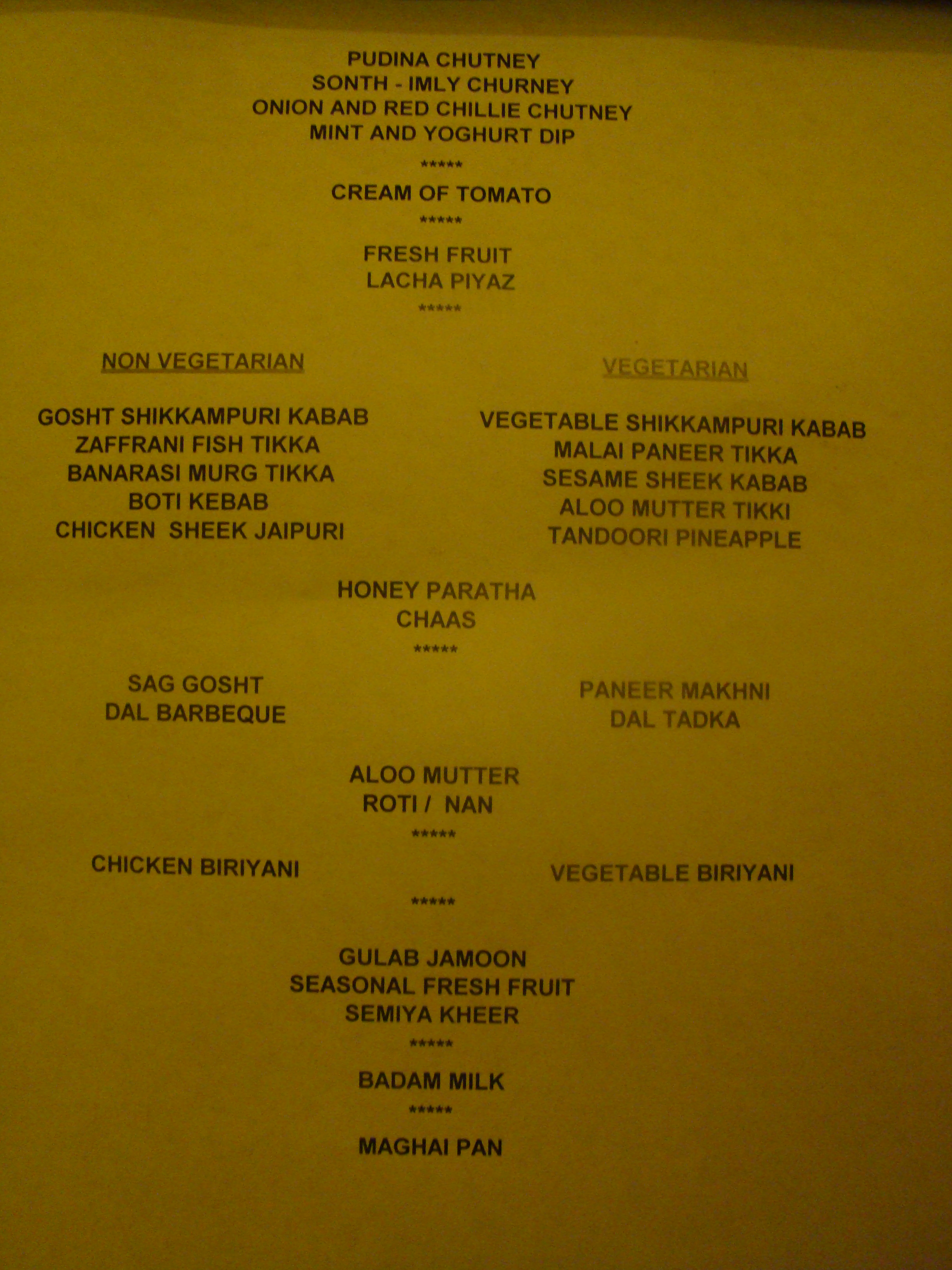
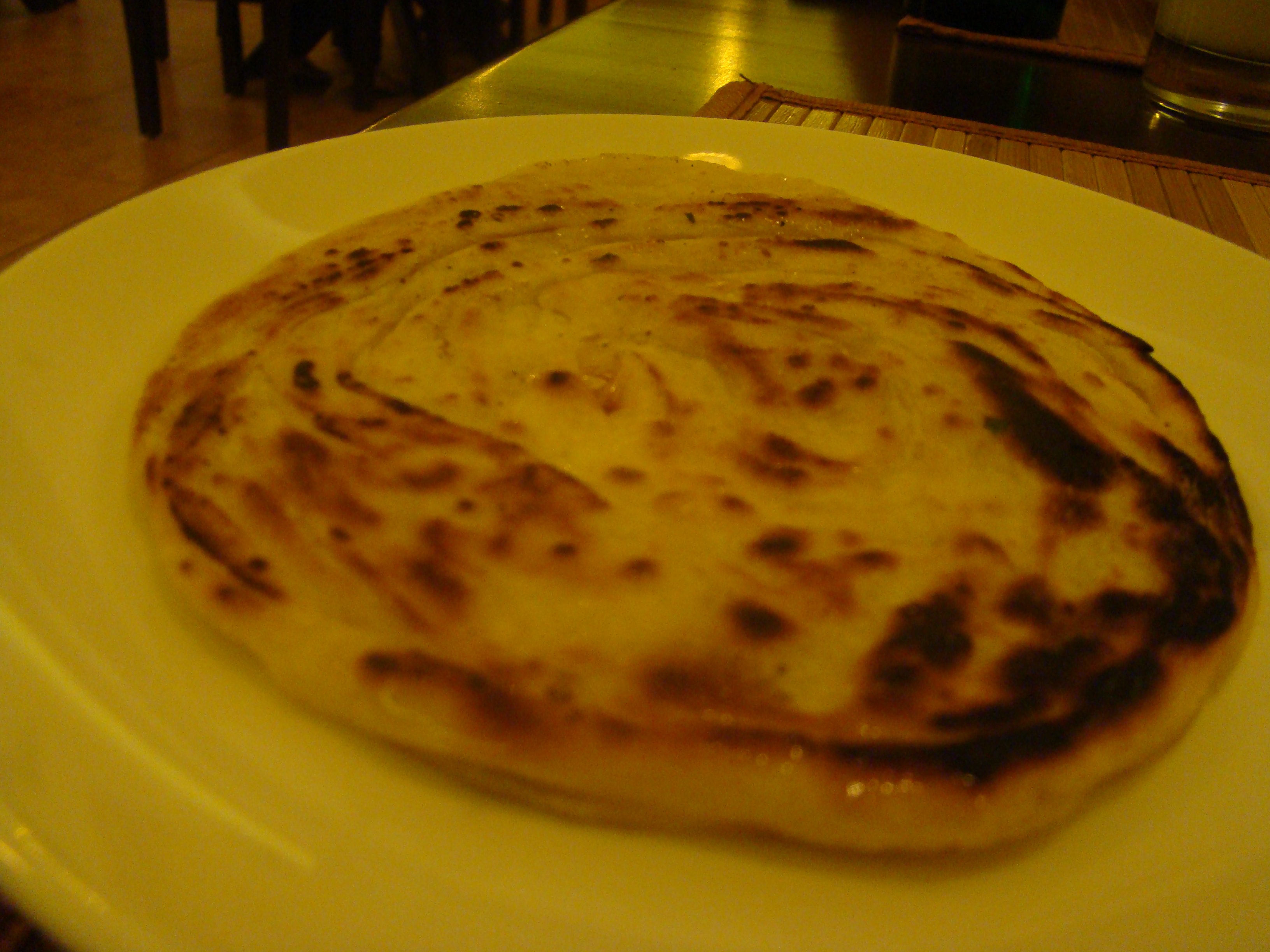
    The menu begins with a veg shorba and fresh fruits, and quickly moves into a collection of kababs – five each in veg and non veg. We began well with the Cream of Tomato soup, mildly spicy and flavourful. The boneless Fish Tikka, though not Zaffrani as indicated in the menu, was cooked to perfection, and the group’s favourite starter. The Mutton Seekh, again not part of the day’s menu, but seemingly a replacement for the Boti Kabab, was a close second. The Shikampuri kababs lacked the slightly crispy exterior, though the mutton version was slightly better than its veg counterpart. The Murg Tikkas were also not the best we’ve had. The obvious indicator of the kababs’ quality was that, despite the unlimited offering, only the fish tikka and the mutton seekh made it to the second round of kabab consumption. Chaas is served throughout the meal and before we enter the main course, there is a Honey Paratha interlude. The Honey Paratha was appreciated for a well managed sweet-salt combination.

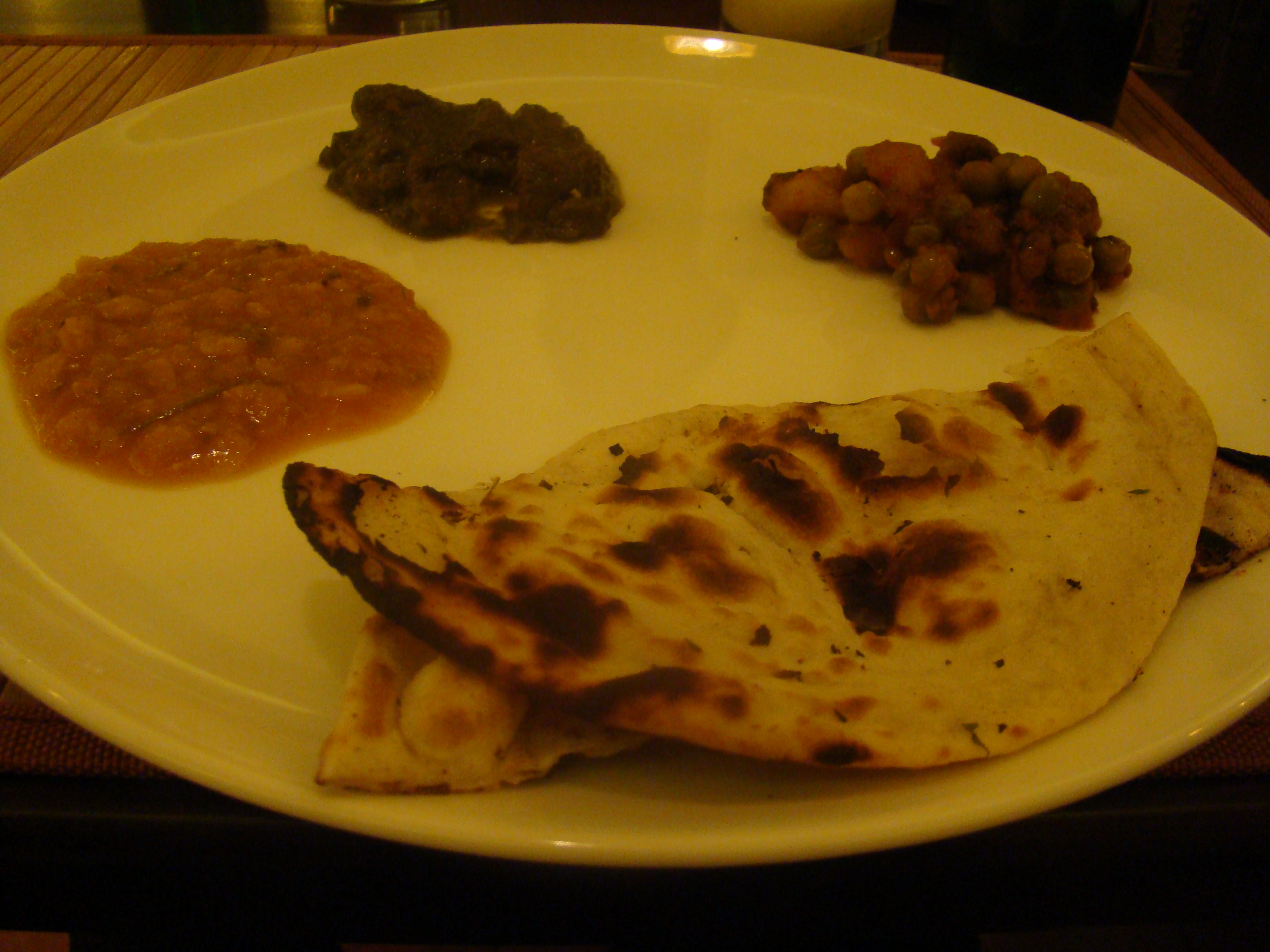
    The main course consists of rotis, a selection of veg curries and a non veg curry and a choice of veg/chicken biriyani. Neither the Aloo Mutter nor the Dal Tadka showed any inclination to enliven the meal. The Biriyani was totally ignored as it was quite dry and lacking in masala too. The finale was a collection of three desserts and Badam Milk. Thankfully, though commonly found fare, the Gulab Jamun, Semiya Kheer and even the Badam Milk ensured that the desserts section was well represented. The meal ended well with slices of mango presented, for a change, in a cocktail glass and an excellent maghai paan.

    Friendly staff, but they were quite clueless about what they were serving. They also needed a couple of reminders for getting us a kabab refill. The owner was around though, and he could be seen going to every table and courteously soliciting feedback.

    The prix fixe (set menu) has the vegetarian version priced at Rs. 399 and the non vegetarian at Rs. 499, both inclusive of tax, and introductory. Alcohol is available only in the form of wine. The selection of kababs varies on a daily basis. While this might seem value-for-money and Barbeque Factory does have a few things going for it, the location has no dearth of gastronomic choices. The restaurant should probably focus a bit more on the food if they want to ensure that people baar baar barbeque.

    Barbeque Factory, Lotus 612/1, 80 feet Road, 4th Block, Koramangala, Bangalore 560034, 41505325

  • Social Media Fatigue – an opportunity?

    One of the interesting conversations happening on the web these days is on ‘social media fatigue’. As a user of many platforms, I can admit to having experienced this many a time in the near past. But it’s strange – fatigue for the networks we created. So I asked myself – what really causes it? Is it the overwhelming ‘pressure’ to be on top of everything that happens in one’s ‘social circles’? Or is it the other end -the boredom of seeing the same people having the same kind of discussions day after day?

    As we first explore new networks, I have noticed that we often hunt for familiarity – either in terms of features, or people. For the purpose of this post, let’s stick to the latter. From personal experience, I have always wondered whether people (including me), in their efforts to be ‘always on’ and across multiple platforms miss out on broadening their world view, and exploring content beyond their natural haunts. A direct result of this is the paucity of topics beyond the day’s hot topic or #outrage or say, a done to death humour hashtag. All of the above are generalisations, since I’ve also been part of several interesting discussions on Facebook/Twitter/LinkedIn. Google+ actually works better for me these days, probably because it’s a new flavour. However, none of the networks have really nailed it in terms of connecting the user to new people who might be able to broaden our ‘scope’. On the contrary, most networks try to use a ‘people like you’ approach. And then probably, familiarity breeds contempt.

    Also, as I’d mentioned earlier in the context of Google+ usage, people rarely make the effort to produce or even share different or differently packaged content for various networks. This means that, especially in new platforms, where networks start small, you are hit by the same content. After a while, familiar content can also breed contempt, I guess.

    To minimise the fatigue, the hard work for now, given platform limitations, has to be carried out by the users – in production, distribution and consumption. It’s only recently that I started defining my relationship with the platforms – by answering the basic why, what, who, where, when questions. That has resulted in a comfort relationship, but I’ll be the first one to say that it’s not really optimised, which would also explain my continued experiments with various platforms.

    For some time, I thought Google+ Circles, used in conjunction with Sparks, would make excellent ‘interest based’ communities, but then realised it was difficult to scale because Circles aren’t opt in i.e. someone has to add you to a circle, you cannot add yourself. Which leads me to the final point.

    Thanks to this line of thought, I wondered whether brands could play a role in diminishing social media fatigue. The ‘constantly on top of news’ would require platform solutions, but there are two other opportunities. One, connecting users whose only link to each other would be the ‘stories’ associated with their brand/category. This link could then spawn new layers and associations between them. Two, sharing content that provides the user more perspective in his domain of interest. Obviously, the users to target here are the ones whose interest area overlaps with the brand’s own category. In both cases, there is a lot of data to be unearthed before working out a specific content/community strategy. So, if brands can ply their trade a little more smartly, life on on social networks could probably be a lot better. What say?

    until next time, post fatigue? 😉

  • Weekly Top 5

    [scribd id=63163987 key=key-2gmsm723bjn14s72vfrz mode=list]