
One of the interview questions that brand managers get asked early in their careers is 'What is a brand?' Some of my favourite answers have been 'a promise to the consumer' and 'a thought in the consumer's mind'. But changing landscapes in technology and consumption mean that the definition remains an evolving one. I found a few interesting perspectives last week in this context.
The first is this seemingly simple, but excellent post at HBR titled 'A Logo is Not a Brand' which (to really summarise) explains how the brand is its strategy, the stories that its products tell, its calls to action, its customer service, its tone, attitude, its people, communication tools and its logo and visuals are all part of the brand. And he asks a very pertinent question in the end
Whether you know it or not, whether you have a swanky logo or not, you do have a brand. The question is whether or not it's the brand you really want.
With social platforms and user voices that become more effective than the brand's own, the likelihood of different perceptions is indeed high, but the good news is these very same tools also offer brands the opportunity to bridge the chasm.
The second post titled 'Brand Building: Is Function the new Emotion' builds on the view (that I also subscribe to) that the best advertisement for a brand is its product. But the twist in the end is that “the functional integration into a consumer's life creates an emotional bond” and sustaining it requires “superior performance and meaningful, empathetic innovation”. Completely agree, because it does tie into the idea of social business and identifying a workforce and processes that will help build and sustain it.
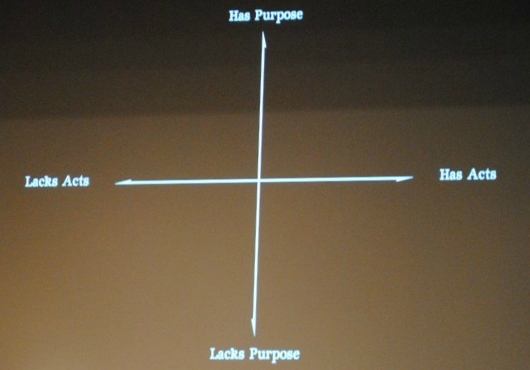 A brand's purpose is something I have written about many times earlier on this blog. I found a very elegant brand framework – part of Leo Burnett's Human Brands concept – in one of the Cannes 2011
Comments
One response to “A brand is”
and on the blog “A brand is..” http://www.manuprasad.com/blog/2011/07/a-brand-is/