Month: March 2011

  • Designs on Data

    In the last post, I’d written about the massive amounts of data that is already being generated and will grow, whether or not organisations track/capture/use it. The question then becomes one of ‘ownership’, within the organisation’s structure.

    The consumer, irrespective of his touch point, will expect a consistent and probably even a customised experience,  basis preferences communicated earlier, and transactions which can only happen if the functions talk to each other. And it is in that context that I found this (slightly dated) post by Dave Gray very interesting.

    He cites a talk by John Hagel, in which it was mentioned that “the average life expectancy of a company in the S&P 500 has dropped precipitously, from 75 years (in 1937) to 15 years in a more recent study.” In this context, he then goes on to dissect the design of companies – from a machine like structure with focus on control, maintenance and leading to eventual wearing out… to a design based on organisms or complex structures built by humans, like cities where there exist flexible ecosystems, a shared identity and an early seizing of opportunities to grow.

    Within the same analogy, he also then shows how a ‘machine’ design also brings in a “design by division”, resulting ultimately in function based silos. The alternative is “design by connection” which goes on to the Social Business Design concept and includes crucial elements like culture, starting small and scaling and so on.

    There is another interesting angle to this – the way much of this data (I have only social platforms to rely on now) seems to be flowing, it does not necessarily have to be the organisation that uses it best. It could be any of the middlemen – from retailers armed with sensors to a platform like Facebook/Foursquare/Twitter/Groupon (the last entity is talking to cash register manufacturers to have their button pre-installed at retail cash registers!) to super users. So perhaps it is time for brands to take a more structured view of data and its custodians. I have a feeling that it will have to be a hybrid model of design by division and connection.


    until next time, data open
  • Comics and moral signs

    Though many claim that most comic book – movie adaptations completely spoil the original work, I still find them fascinating, simply because of discovery. Many a time, I have realised that comics are an amazing representation of culture, whether it’s popular, alternate, counter or even imaginary (eg. different renditions of myths, accommodating the changing ethos), either overtly or through subtext. So they work like a time portal for me, giving me a vicarious experience of a different era. (just like some books, music, cooking, smells etc)

    I’d never have known about Watchmen if not for the movie. Since I don’t want to miss out on references and subtext, I always try to read up on the characters and original work before watching the movie. And that’s how I came across the concept of moral absolutism, while reading about Rorschach, an amazing character, made more so by a class performance by Jackie Earle Haley. Wikipedia defines moral absolutism as the ethical view that certain actions are absolutely right or wrong, regardless of other contexts such as their consequences or the intentions behind them.

    I’ve wondered many a time about the concept, without knowing about the existence of a term, so it’s good to find it and read up more. With morality in a constant state of flux, who would be objective enough to give an absolute perspective, and would it matter at all? I guess not. So maybe, in some later rendition of Rorschach, his moral absolutism might shift to consequentialism, (holds that the morality of an act depends on the consequences or the context of the act) and a future reader would get a sense of how the times have changed.

    Late night. Red Signal. No vehicle or human in sight. Stop or Proceed? 🙂

    until next time, moral abdication

  • Dalma

    The Oriya cook is quite good, but the side-effect is that we kept shifting our ‘odyssey’ to Dalma, despite it being only a short walk away from home. Dalma specialises in Eastern India cuisine, and is located on the Intermediate Ring Road, at the junction with 8th Main. Zomato has the map as well as the menu. They have some parking in front of the restaurant, but that’s minimal. You should probably park on one of the side lanes nearby, especially if you have a 4 wheeler.

    Though it has a bright setting, comfortable seating and other such necessary ingredients necessary to make it a functional restaurant, there’s something about the place that  makes it a ‘home away from home’. I confess to not having any knowledge of Oriya homes, despite this boy and this girl being among my best buddies, but for those who’re familiar with the erstwhile “Ravi’s Kitchen”, perhaps you’ll get an idea. The smiling and helpful staff only add to this.

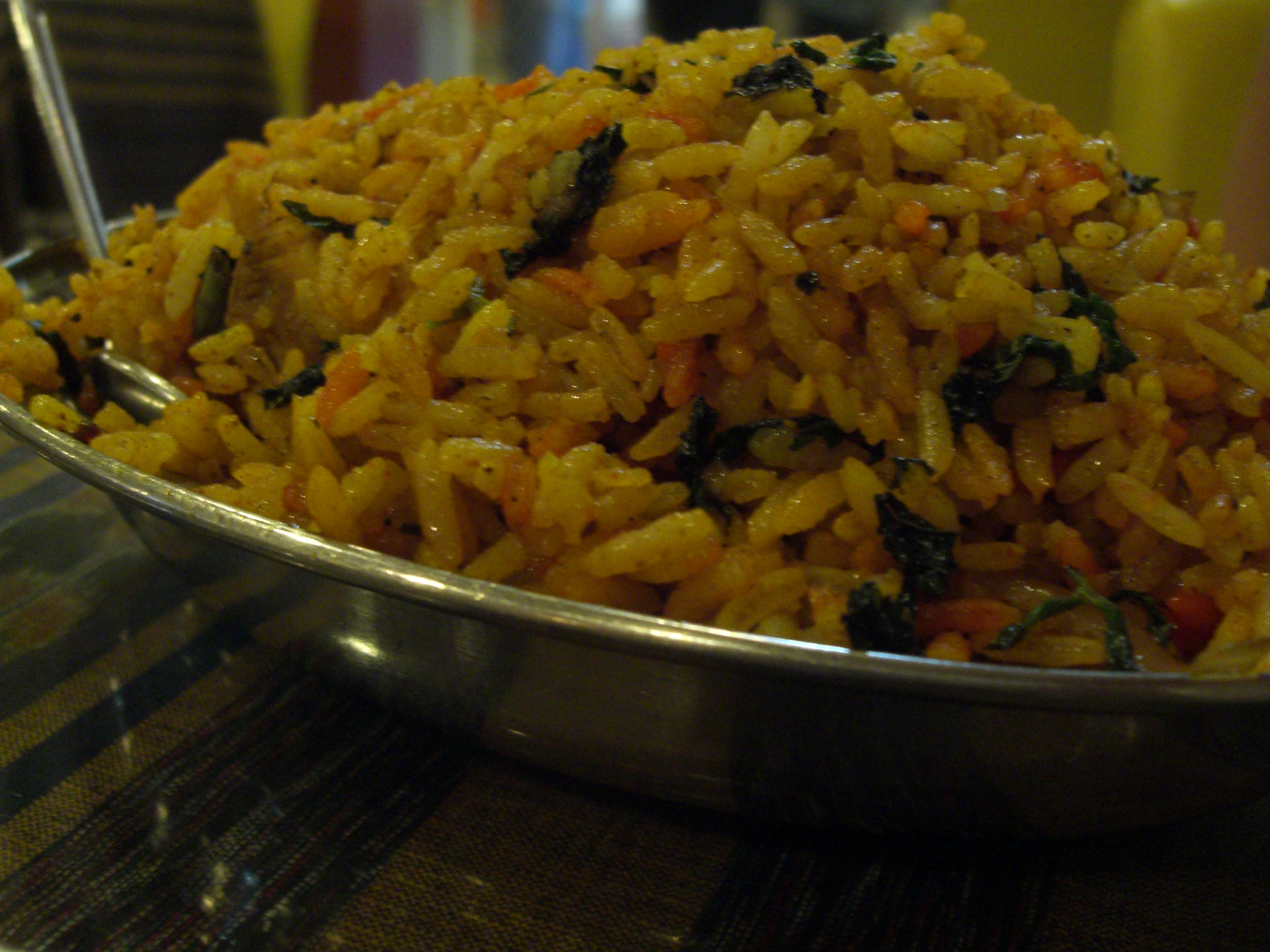
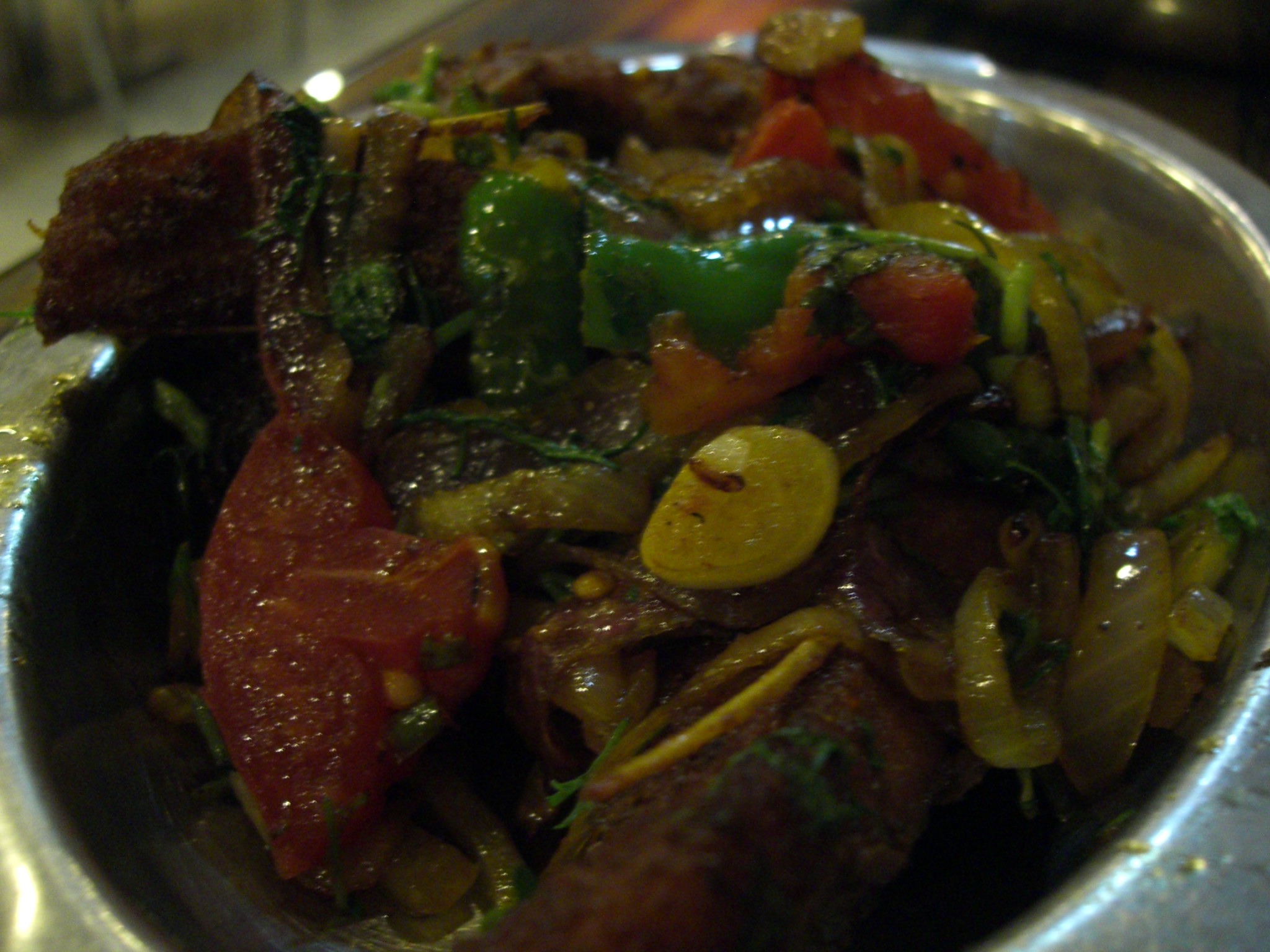
    We started with a Chicken Pakoda, which didn’t turn out great. It got the pakoda part right, but the bones spoiled the dish. For the main course, we ordered a Chicken Kasha with Luchis. The luchis were thicker and I felt it was better than the Bengali versions I’ve had. It also went very well with the thick chicken gravy. We also ordered a ‘Saguati Khechudi – Chicken’ and a fish fry. The former is a rice dish, reminiscent of the Biriyani, but only in basic form and the latter turned out to be Rohu, cooked very well. And then the real main course – Pahala Rasgulla, and Chhenapoda. I liked the former much more than the familiar sponge rasgullas and the latter, with its burnt crust and made from cottage cheese was also awesome!

    All of the above cost us just over Rs.450. A visit is highly recommended, for a simple yet different cuisine experience.

    Dalma, #37, 100ft Ring Road, Koramangala Ph: 41660921

  • Weekly Top 5

    [scribd id=53237300 key=key-z0b9vdls0irff5hgust mode=list]

  • Data beyond social

    A couple of weeks back, when I wrote about location based interactions, I’d said that the limits of my imagination prevent me from thinking of anything beyond brand ‘controlled’ interactive sensors in individual products as a way for non-retail brands to directly connect with their consumers – at the point of consumption.

    Thanks to RWW, I found this extremely interesting presentation which gives perspectives on the future of social media analysis and how brands will capture and use the data to increase business value – for itself and hopefully consumers too. I also remembered a McKinsey “Internet of things’ report from last year in this context.

    “social media is still viewed by many as just a tool rather than as an immersive environment.” Must admit I hadn’t thought about it that way. Meanwhile, there is indeed a lot of focus on the data we can get from social networks. But that’s only one source of data. There are many others too, including those which don’t even involve a consumer’s active communication. One look at the RFID wiki page will give you a perspective on the possibilities.

    If brands can take cognizance of the rapid advancements in technology, and work on how they can capture, analyse and apply data, then the contexts and ways they can interact with their consumers will substantially increase. Perhaps their dependency on existing communication platforms will decrease too, especially if they consciously build their own platforms. One old but still relevant example, which I have used earlier too, is Nike+, which uses popular social tools to augment the fundamental data capture.

    until next time, data entry barriers?