Year: 2010

  • Coincide

    A friend of mine, Soubhagya, is an avid photographer, who, despite my best efforts, still shies away from running his own photoblog. So when he asked me to take part in a writing experiment, I thought it would be a relatively painless way of introducing him to blogging, and hopefully, he’ll like it enough to do it on his own. The idea’s pretty simple – he’s given me a couple of pictures he has shot recently, and wants me to write a few words on each. Here goes
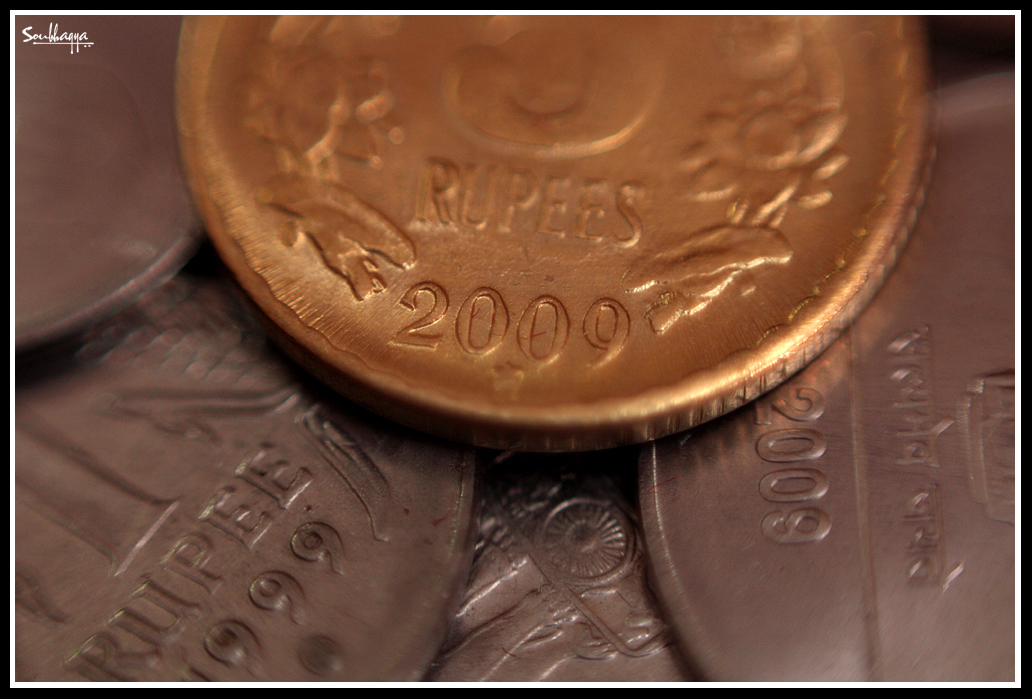
    the face of money‘The face of money’ is what Soubhagya calls it.

    What’s my value? To a politician, I’m a vote that will help him in his quest for power. To my employer, I am a worker who gets paid for the job I do. To the places I eat out in, to the shops I buy things from, I am a source of revenue. To the people who care for me as an individual, these are perhaps not the parameters of calculating their value for me. It’s a different currency. So the question is complete only if I ask “What’s my value to …. ?”  Now, what if I were to pose the question to myself? Do I measure myself by my financial status, or the lack of it? Is it the ‘Likes’ on Facebook or the followers on Twitter? Or is it by the number of lives I have touched, in one way or another? Is it a combination? Is it what I deem as my potential? How much is that dependent on externalities? And doesn’t that change with time? Which brings me to..
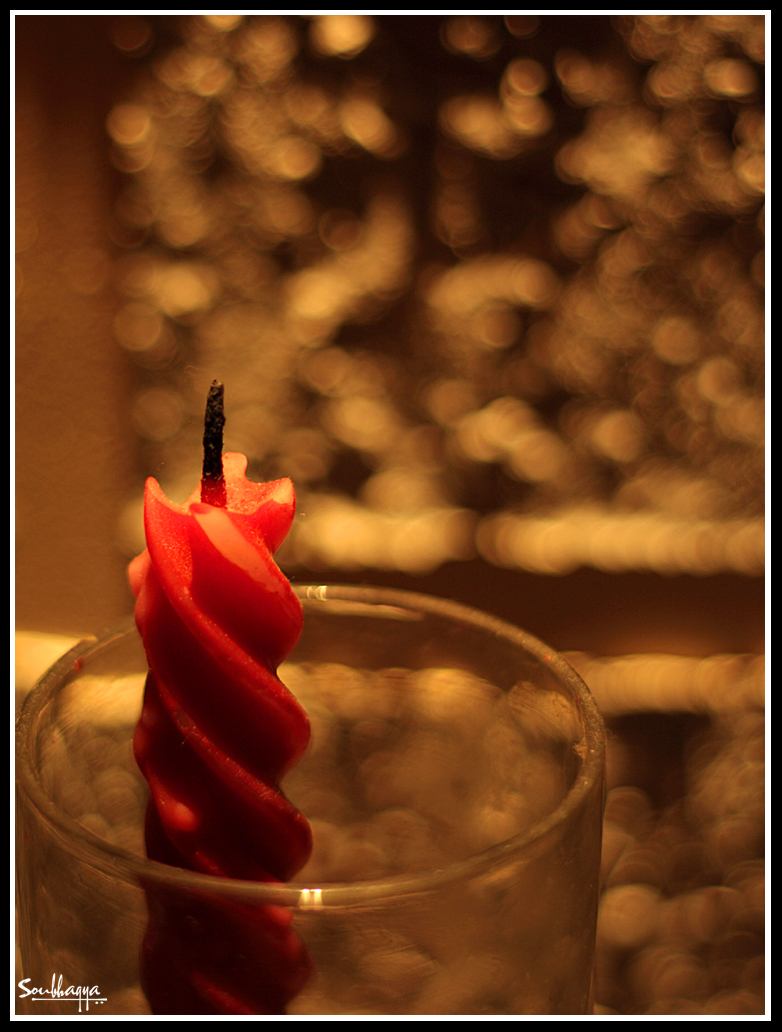
    Burnt out ‘Burnt Out’

    Purpose. I have always been interested in the purpose of our lives. All life forms in general, and of course, specifically us, humans. Generally, at different stages in life, we get stuck with different routines, sometimes by choice, sometimes not – school, college, work and so on. There is a short term purpose to it all, so we rarely look for something beyond. By my definition, ‘purpose’ gives a meaning to what we do, something beyond the money that it brings in, something that really makes us happy just by doing it, as though we are destined to do it. One could rationalise and say that the money then becomes a tool to ‘buy’ the things that give happiness, but that’s arguable.. We prioritise according to our baggage, some are okay with trading an amazing weekend and regular holidays for mind numbing work, some wouldn’t be able to manage it at all, and there are tons of options in between. The candle reminds me of the passion that we bring into what we do, and I believe that depends on our approach to ‘purpose’. Burn brightly or be a shallow flame? In both cases, there is a finite lifetime in which it has to be done. For me, even the task of finding a purpose is a tough one. Whichever way one sees it, there is always the possibility of a burnout. Such is life. So burn you must, and light up the place as much as you can. 🙂

    until next time, wax eloquent 😉

    PS: Now split ‘coin-cide’ and you might figure out a new possibility
  • 1984

    George Orwell

    Winston Smith thinks it is 1984, but it could be 2050, for all you know, for all you know is controlled by Big Brother. For as the book constantly reminds us “He who controls the present, controls the past. He who controls the past, controls the future.” An amazing dystopian novel that explores how an oligarchical society can completely control the minds and actions of large masses of humanity over a seemingly endless period of time.

    Winston Smith, the protagonist, is a bureaucrat working in the ‘Ministry of Truth’ in London, chief city of Airstrip One, a province of Oceania. Winston’s bob in the Records Department is to revise historical records to match the Party’s current stance on people, events etc. As he edits the past to match the present, he also maintains a secret diary in which he records his dissent against the party and its policies. This, according to the party is ThoughtCrime, and if he’s caught by the Thought Police, he would be executed. As he himself notes, ‘ThoughtCrime IS death.’. In a world where telescreens watch every movement and children are trained to spy on everyone, including their parents, to detect ThoughtCrime, Winston lives dangerously.

    Winston’s life changes when he falls in love with Julia, they carry on a clandestine love affair (that’s a crime too) in their love nest in a ‘prole’ (proletarian) neighbourhood, where they believe telescreens are not watching them. They then come into contact with an inner party official, who they believe belongs to The Brotherhood, which works against Big Brother.

    The novel is dystopian, and there’s no happy ending. It works on at least two levels levels – the obvious dangers of totalitarian societies, and the working of the human mind and its perception of reality.

    An amazing book, and well deserving of its classic status.

  • Banking on data

    There was an article recently at PSFK, which, in addition to the impending data explosion, also talks of the need for brands to invest in technology to mine, analyse and identify changing consumer needs and opportunities. Though probably, at a later stage, the automatic ‘sensors’ mentioned in the article would beat the self-expression media services as the largest data source, at this stage, the latter seem to be the biggest contributors.

    So what is the data that’s getting generated? As social networks evolve, the role that they play in the individual’s life is also evolving. While flow of information, and communication seem to find social networks as natural conduits, the networks are also now sources of entertainment for many. (study by Edelman) What does this entail for brands, their communication and the content they generate?

    Amidst the social network revolution, brands have been trying hard to eke out a place for themselves – to slide in easily into the conversations, and lives of individual users. Some have been successful, and some have not, the latter mostly when they try to use these as distribution channels for other media content alone. I read a few days back that the two official sponsors for the World Cup – Adidas and Coke, had been trumped by their competitors – Nike, and Pepsi, as far as WOM goes. Not surprising, both tell excellent stories. It makes us feel.

    httpv://www.youtube.com/watch?v=idLG6jh23yE

    httpv://www.youtube.com/watch?v=eQmu48sZohc

    There’s this excellent presentation by Rory Sutherland about intangible, and perceived value that brands create. A bit dated, but I happened to see it recently. It made me think about Maslow’s Hierarchy of needs and the tangibility of various levels.

    As civilisation advances and scarcities and abundance are rapidly traded, and as brands progress, don’t the lower levels of Maslow’s needs hierarchy become hygiene? So, would users prefer brands that help them in the esteem and self actualisation areas? It perhaps might be an example of ‘seeing the subtext you want to see’, but the Nike ad – ‘Write the Future’ seemed to be all about self actualisation and the Pepsi’s ‘Oh Africa’ seemed to be all about an ever-changing crowd that seems to be impossible to keep pace with. To quote Clay Shirky, “The category of ‘consumer’ is now a temporary behavior rather than a permanent identity.”

    Which brings me back to the data explosion. The challenge, I guess, is an old one. Finding motivations, sensing patterns out of all the data to understand why we ‘Like’, why we ‘share’, and so on, and then give us a value proposition. With rapidly evolving technologies, even the value needs to adapt much faster than before, because if the brand is late, there’ll be another that delivers. But then again, at higher need levels, when the individuality/uniqueness quotient increases, will the manifestation of needs show a collective pattern? Or will the individual’s behaviour pattern become more important for brands? Multiple data sets, multiple patterns, multiple challenges. Interesting times indeed 🙂

    Meanwhile, here’s one closer home. (via Gaurav) A very interesting project by Tithiya Sharma – The 100 Heroes Project. I’m sure it’ll be a wonderful story and if I were an airline brand or even a MakeMyTrip/Cleartrip or anything to do with travel, I’d take a look at the project.

    until next time, tripping on data

  • Facet

    Facebook’s policy changes a while back meant that suddenly,  the average user (as opposed to the technophile and conspiracy theorist) is raising an eyebrow, or both, depending on knowledge levels, at what it means to his privacy. This is not an indication of whether someone is below or above average, let’s not go there. Meanwhile, K and I have been discussing David Bond (Erasing David), which has to do with online privacy (though not in a Facebook context)  – how one man challenges experts from a security firm to track him down using information they can gain about him from the public domain, while he tries to outrun them.

    K noted that in the olden days, this notion of privacy didn’t exist, as everything was known to everybody. I agreed that in the new age, our connections are more, we include a lot more people in our lives, even indirectly, by just sharing our data online. Our work, lifestyle and advances in technology mean that we communicate more, meet more people, and yes, ‘friend’ them.

    It does good too, no taking away from that. Ironically, K and I know each other from work, from quite a few years back. We never interacted much then, and I was more pally with others in her team. I still remember, a couple of years back, when I met K and another colleague of hers in a shop, I chatted away with him, and rewarded K with a lousy smile. 😀  But these days, we have amazing conversations online, and I’m hardly in touch with her colleagues. Thank you Facebook 🙂

    As perhaps the first generation of Facebook users, we are in an interesting place (and time). I read “Chasing the Monk’s shadow” recently, a book in which the author retraces Xuanzang’s journey (we knew him as Hieun Tsang in our history text books) and it made me appreciate the value of the written word – especially when it resurfaces in a  different era.   It was in this context that I considered what really appears in our profiles on Facebook.

    (Generalising) We friend erm friends, but we also friend parents, siblings, relatives, acquaintances, and even random animals. We display our likes, dislikes, interests, information, and through our conversations, we add layers to this. But its amazing how, sometimes, when I ‘like’ something that someone has posted, and glance at the others who have liked it, I realise that I don’t know them. We’re connected by one common friend.

    The common friend, who I might know from college, and the other person might know from work. How much of mining would it require to unearth the nuances in the relationships between ‘friends’? Would it be possible to mine the fact that while I might make a smart alec comment on a person’s status, I might never have met him/her in real life? Would it be possible to mine the different persons we are, to different people, in different contexts. The worries, the fears, the quirks, whims and yes, likes, that we never express, the things that probably make us human – they exist in our minds. We only share a part of ourselves online. We are still strangers, sometimes even to ourselves.

    So yes, while all sorts of data from browsing history to buying habits are out there, maybe, in this hugely connected world, without the ‘real metadata’, in a way we are still disconnected from most of our ‘friends’… and the information gatherers? Since its slightly difficult to be like Schmidt (Google CEO), who infamously said “If you have something that you don’t want anyone to know, maybe you shouldn’t be doing it in the first place”,  I believe that we should be responsible about what we share (even if that’s in the form of a ‘Like’) online.

    So all I’m saying is, you can press that little ‘Like’ button below, and nothing catastrophic is going to happen… yet 🙂

    until next time, face off

  • Kobe Sizzlers – Koramangala

    And just as the summer ended its job for the year in Bangalore, and the monsoons set in, Koramangala found another way to sizzle. Kobe Sizzlers, which already has an outlet in Garuda Mall, has now opened shop in Koramangala. Its the building almost immediately after Java City. (map) Parking isn’t much of a problem. Maybe it was the weather, or the newness, or the brand name, but guessing from the crowd yesterday, you should either land early (like we did, at 7.30 pm) or reserve in advance. The other good part about being early was that we got the road facing seating option.

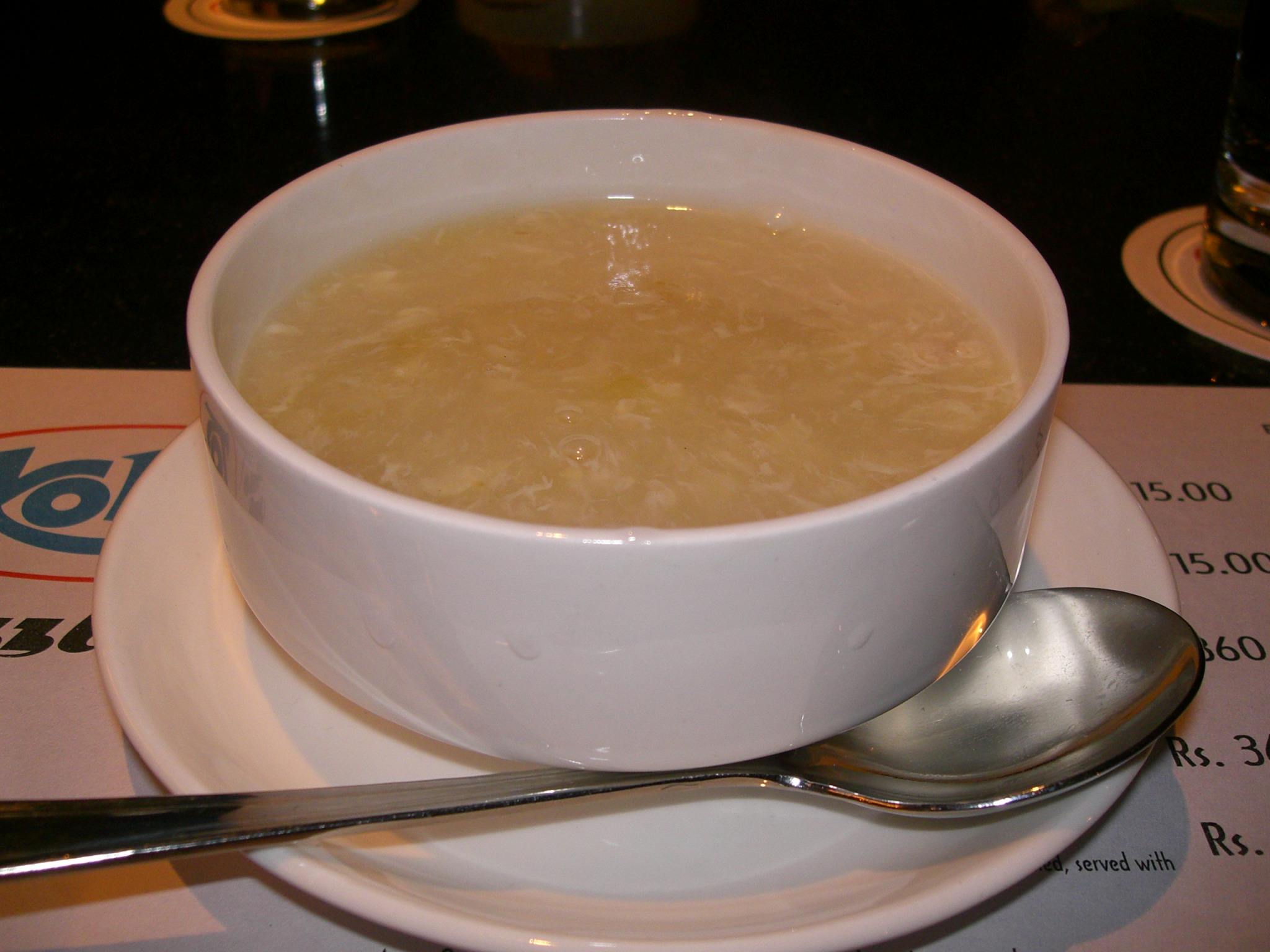
    Very comfortable seating and a pleasant ambiance. You can take a look at the entire menu here. Unlike my previous Kobe visit, I was well prepared this time (no heavy lunch). We also remembered we had brought the camera. We thought we’d start with a Scotch Broth, but were told it was mutton based, so settled for a Chicken Corn soup.

    CIMG1210

    It isn’t as brown as it looks in the image, but after I added the pepper and the tomato chilly sauce, this color would’ve been justified. By itself, the corn flavour is dominant, hence the additions. A decent start.

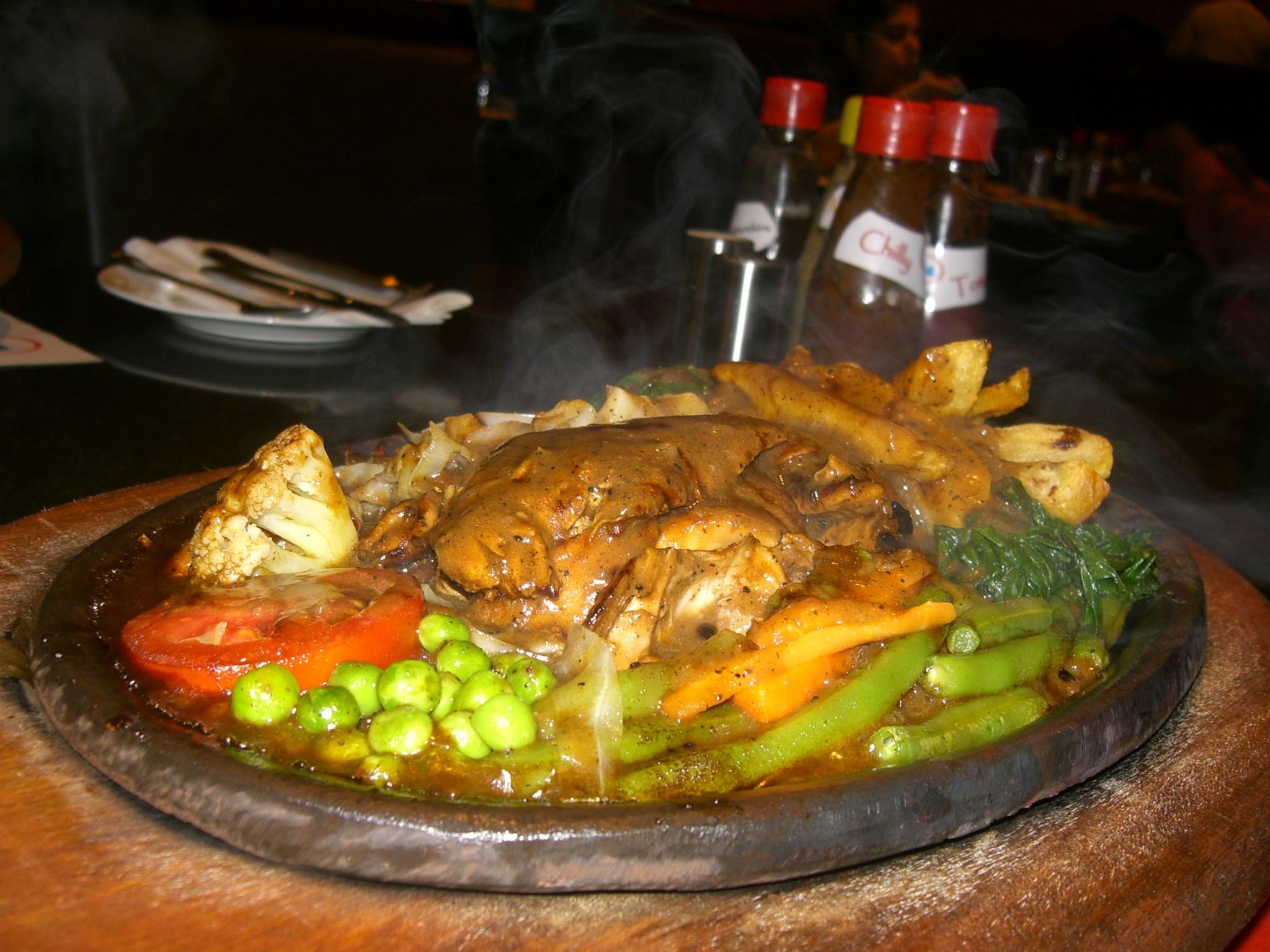
    Though the number of sizzler options is high enough, the uniqueness quotient is lesser than our favourite sizzler joint in town – Tangerine, or even Yoko. But hey, so long as they serve it well. The vegetarians might have more options here, though. So D ordered a ‘Sizzling Chicken with pepper sauce’ and I opted for a Mixed Grill. D’s dish looked ‘prettier’, I thought.

    CIMG1214

    I also thought the mixed grill scored on functionality though, helped by the fried egg.

    CIMG1217

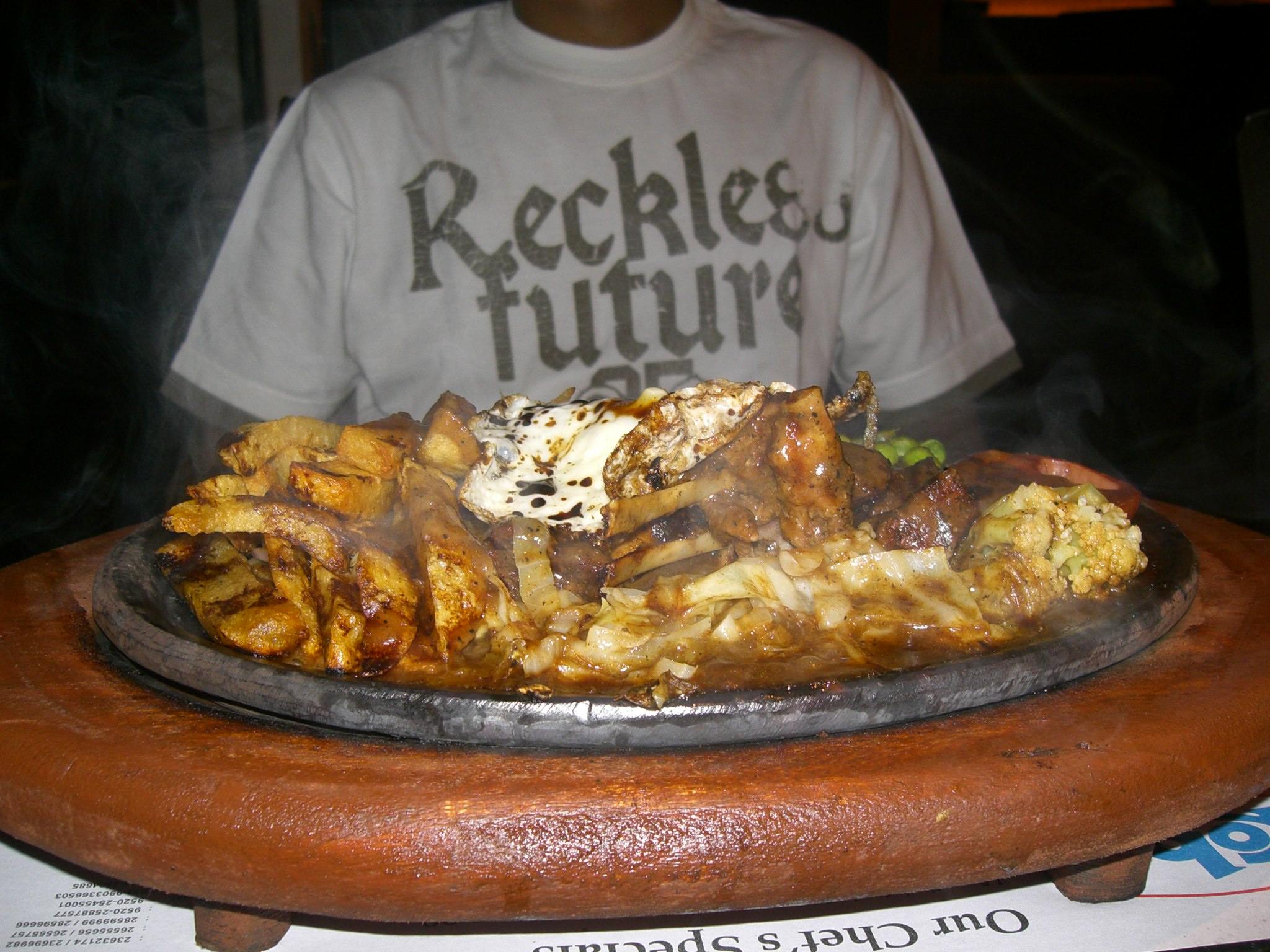
    The Mixed Grill has, in addition to the vegetable space wasters, lamb pieces, kidney, liver, mutton chop, sausages, and my tee served as excellent subtext, said D. 😐

    CIMG1218

    The chicken dish was done well, and the pepper sauce complemented it well. The Mixed Grill required some help from the Worcestershire sauce, and I felt the original sauce’ consistency (in terms of the flavour) could’ve been better. It came out strongly in some places (and that was good) and barely made an impact in other places. Kidney, liver, its difficult to go wrong with those 😀  The meat was tender in the case of mutton chops as well as lamb pieces, which was a relief – I hate fighting for it. The French Fries (in both) deserve a special mention, very good stuff.

    Dessert options are the usual suspects, though they range from kulfis to apple pie. 🙂

    The service is quite prompt. All of the above cost us about Rs.850. So, I’d say, its definitely worth a visit, especially if you’re in Koramangala, where there are hardly any sizzler options.

    Kobe Sizzlers, 1st Cross, 5th Block, Koramangala, Ph: 41705608