
Month: March 2010

  • Whereabouts : The next social play

    Like I mentioned in the last post on the subject, ‘Location’ is back in a social avatar. A few days back, Foursquare celebrated its first year of existence, and now has more than 500000 users, 1.4 million venues, and $1.35 million in VC funding. I celebrated it with only my fourth mayorship. 😉 But there are a few more reasons why I decided to do a post. Both Foursquare and Gowalla had been launched at SXSW last year, and this year, location based services (LBS from now) are expected to be the talking point, much like Twitter 3 years back. 🙂

    In my last post, I had mentioned the specific competition in the space – Loopt, MyTown, Gowalla, Yelp, developments happening there, as well as the tie ups that Foursquare has managed with HBO, Warner, Zagat. Since Foursquare is arguably the poster child of LBS, and since there haven’t been any dramatic game changing developments from other players, I’ll focus on Foursquare and a couple of players you would know from earlier.

    Foursquare recently announced that it was launching a few business tools, which include basic statistics like total check ins, unique visitors, sharing to Twitter/ Facebook, gender split, time breakdown etc.  More importantly, it gives business establishments real time information that can help them plan promotions, take care of customer complaints, keep track of customer loyalty etc. There’s also a page where staff can interact with customers.  Though these might seem basic now, more detailing is bound to happen very soon, which will perhaps allow quick polls on menu items, service, allow optimisation that will cut things like waiting time etc. Indeed, Starbucks, which has been very active in the ‘social’ space, is now linking Foursquare to its rewards program, for instance, allowing users to earn a ‘Barista’ badge when they check in to 5 separate Starbucks outlets.

    According to Alexa, India contributes to 2.4% of Foursquare’s traffic, and is the 8th largest contributor. Maybe not the surest of sources, but its an indicator nevertheless. With rapidly increasing mobile penetration, net access costs are likely to come down, and this could mean good news for players like Foursquare. Imagine the implications on the CCD controversy if the Foursquare implementation had been done. 🙂

    (Interesting Read in context : Why “Where Are You Doing It?” Trumps “What Are You Doing?”)

    But wait, there have been other developments too. Twitter, still my favourite service out there, has turned on geo location. The API has been around for a while now, but it wasn’t really anything that anyone seemed to be taking an interest in. The first time I saw the implementation, was on a tweet from LBhat. Check out that tiny pin at the end, and you’ll see where he tweeted from. With the kind of development that happens with Twitter’s open API, there are bound to be some interesting apps very soon. Not to mention that Foursquare is already integrated with Twitter. (All this reminds me of an app called CitySense that I wrote about almost a couple of years back)

    Meanwhile, it has also been pretty clear that Facebook would make a play for local very soon. There was speculation recently that Facebook was showing an interest in Loopt, but nothing has been confirmed yet. What has been revealed is that it will unveil its location based features in April at its developer conference, f8. (location is shown on a Google Map 😉 ) Facebook has been pushing its mobile interface a lot recently, check out your logout page, or the ads on the right side of your home page telling you how many friends are using it. The article states that its more a play for local advertising (against Google) than against services like Foursquare. Business pages + location features for users + tools built from API will be interesting.  But it will also be interesting to see what they do about privacy. Something that remains a challenge for Google too, especially when Buzz and Latitude are integrated.

    Meanwhile, there are other interesting players emerging. Check out Miso, a Foursquare style app for TV and movies, RateItAll, that now wants to help businesses build their own Foursquare, Pelago’s Whrrl, which tries to connect social networking with real social activity – real places where ‘regulars’ meet up. Location based services are interesting because they integrate the real and virtual worlds. When I look at these and other  interesting developments like say, Google Street View (have you seen Hong Kong yet?!), and Augmented Reality experiments, the ‘Internet of Things‘ I think we haven’t even scratched the surface of the possibilities.

    until next time, now for vocation based services 😉

    Update: Just read that we now have a check in Aggregator – Rummble. Read about it here.
  • Bad Tease?

    battees

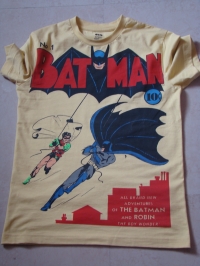
    The Riddler presents…. I was asked whether I’ve stopped writing 55s. Maybe I was waiting for an occasion. Actually, look at the occasion in another way, and you’ll find it adds up. If you didn’t get it, maybe this is just another bat tees post. If you did, don’t make a joke of it, okay?

    until next time, add your 32 bits 🙂

  • Bhojohori Manna

    I’ve always felt that the biggest threat to the Mallu plans of world domination would come from the Bongs. Though they have been less organised in their approach, recent activities would indicate that all that is changing. Take, for example, Koramangala. There are no less than half a dozen restaurants on record now that serve Bengali cuisine. Not to mention, ‘Heritage of Bengal’ that has replaced the heritage Mallu joint Ravi’s Kitchen in Koramangala. The threat is on other fronts too. I was not really a big fan of mustard oil, until I realised that our Oriya cook  had slowly corrupted our (D’s and mine) taste buds over the period of two months he’s been with us!!

    And that’s how I thought it was about time that we undertook a third reconnaissance mission. (after Kolkata and The Esplanade). Bhojohori Manna is on the same road as Anupam’s Coast II Coast, Imperial etc. The map is here, Bhojohori Manna is a couple of buildings from Anupam’s. Parking for 2 wheelers is easy, and since there are many side lanes around, larger machines should be able to manage too.

    BM is spread across two floors. Well, spread is perhaps the wrong word, but they have used the space well to create a cosy, pleasant ambiance. The decor would be just like any other fine dining place, but the music, lamp shades and the cushions with Kantha work (oh don’t worry, guys, I am on your side, I had no clue what this was until D pointed it out. Still haven’t deciphered it either) gives the place the character its name demands.

    We didn’t start out really well. We went to the 2nd level for the view to the road outside, but weren’t allowed to sit at any table with that view, because they were all 4-seaters. So we went back down and thankfully got a good seat, which offered  a view, without the erm, high ground. This was at about 7.30 and by 8, there was quite a crowd. Thankfully, the person who took our order turned out to be a pleasant guy who  made things better with all the help he gave us in choosing the dishes. The menu is not as exhaustive as the one provided on their site, but still managed to give us enough options.

    We started with a Pora Bhetki, which is fried fillets of the Bhetki fish (red snapper?). Though it was tasty, with a good masala coating, and a chutney that complemented it well, Rs.180 was quite too much, especially considering the prices of the rest of the menu items. Would advise you to try out something else from the many options available. It didn’t help that they brought all the main course items before we completed it.

    So, for the main course, we started with Luchi and Chicken Dakbangla. (liked the Ramsay Brothers style name of the latter)  The luchis were quite good, and not very greasy. The Chicken Dakbangla was excellent, though the pieces were more bone than flesh. The question remains unanswered too, as there’s an egg in the dish. Recommended, in spite of the bones. Since 2 luchis each weren’t really enough, we also had a Koraishutir (peas) Kochuri. Turned out to be a good choice, and thanks to the staff for pointing out that our original choice Bakarkhani Roti wouldn’t go well with the chicken dish. Bheesh it was next. 😀 So we had Pabda Shorshe with steamed rice. Thanks to our ‘tampered’ taste buds, we enjoyed the mustard based fish curry. Somewhere in between, D also tried out an Ampora Shorbot which was reasonably good.

    The portions are just sufficient for two people, and when you’re not really hungry. The good part is that it allows you to try out various things, and still leave space enough for dessert!! Except for roshogulla and sandesh, the usual suspects including the mishti doi were not available. The guy who helped us out insisted on us trying out an ice cream. Since I wanted to hedge it, we asked for one of those ice creams and a roshogolla. The roshogolla was just okay, but the ice cream was absolutely fantastic. So I ended up ordering one more of that all for myself. Later research established that it was a ‘Natun Gurer ice cream’ (made of date palm jaggery). Gurest, sorry, best dessert I’ve had in a while, though the consistency is more ‘mishti doi towards mousse’ than ice cream.

    All of the above cost us just over Rs.600, which I thought was good bong for the buck. (though I really don’t know enough to comment on authenticity).

    Bhojohori Manna, 668/B, 6th Block, Koramangala Club Road, Ph: 080 25503666

    PS: Erm, meanwhile, any Bong reader here who can forget petty world domination plans and share the ice cream recipe? 😉

    Menu and Photos at Zomato

  • Wide Labels

    I ended last week’s post with the view that removal of labels and building in the intent and components of these labels into an organisation’s processes might result in structure better than one obtained by a piecemeal approach. I’m still thinking about Surekha’s last comment – on corporate governance, and wondering whether it does indeed encompass (enough) the social facet. Social, both in terms of implication on the larger society, as well as the social used in the context of say, social media.

    While I’m not expert enough to look at the first part comprehensively and offer the soundest of opinions, I think the latter is everyone’s playground 🙂 On that front, I don’t think corporate governance quite makes the cut. And that led me to keep searching for various models being discussed. I also brought into this search the perspective I’d shared earlier on a Dunbar’s number for brands/organisations, retaining the ‘soul of the brand’ (courtesy Chris Brogan) and scalability issues.

    And that’s how I came across the ‘Platform Organisation’ concept. The presentation below approaches the need for this from a communication perspective

    The larger organisational imperative can be read here. This worked for me because I thought it matched business and social needs.  The community would ensure the soul of the brand is intact and would also allow a ‘scaling up’ of the brand’s Dunbar number. But I did wonder whether this would work for large organisations that  have a legacy of systems and processes. Deciphering that would perhaps be the next logical step.

    As I’ve always maintained, the business structures we have built have a huge impact on how we live and consume as a society, and the lives we lead as individuals,(an old and favourite read discovered via Dina) and hence the extended interest on this topic stream. 🙂

    until next time, life’s work 🙂

    PS: While on the subject, a related good read via @vijaysankaran “The Definitive Guide to Scaling Social Enterprise

  • Relative..reality

    For some strange reason, I’ve read Pankaj Mishra’s books in reverse order..well, almost. I read The Romantics first, a long time before, and it remains a book I’m very attached to. Its a good book, but I’ve never figured out the exact reason for this strange bond, in spite of making a rare exception and reading it a second time. Maybe it was the time I first read it (a stage of life) or its characters or its title, someday I hope to know, it will tell me a bit more about myself, perhaps. But meanwhile, from The Romantics, I was lured straight to ‘Temptations of the West‘. A few months later, I read ‘An End to Suffering‘, which served as a kind of introduction to Buddhism for me, as Mishra mapped it on to his own spiritual evolution. I finally completed his first book, ‘Butter Chicken in Ludhiana: Travels in small town India’ more recently. Though its title would indicate so, calling it a travelogue would be a gross injustice, as it also manages to recreate the India of the 90’s. So, yes, it is a travelogue, but like many of its ilk, it works in space and time. No, this is not really a review. 🙂

    I’m quite glad that I read his books in the order I did. If I read it earlier, I might have been irritated by the cynicism in the book. But having read his later books, I felt almost as though I was with him, as his thoughts and personality evolved. The book gives you loads of nostalgia triggers – from Baba Sehgal’s ‘Main bhi Madonna’ (i still remember the Magnasound casette cover :D) to mentions of Nonie and Mamta Kulkarni, it draws upon tiny incidents of those forgotten days.

    Many of you may not be able to associate at all with those three people mentioned above, for me, they bring back an era, their importance is relative. I even wondered whether, in future, we will have nostalgia townships, like we have the amusement parks now. The 70s, 80s, 90s re-created in terms of people, music, movies, fashion and all the elements of pop culture that can be attributed to an era. So, when you have those nostalgia pangs, you can call a few friends and take a vacation to bring back a period in your life. 🙂

    A common theme struck me as I ‘moved’ through the book’s pages. Mishra mentions Murshidabad looking towards Calcutta in hope, for job prospects and a better life in general. In many people’s perception, Kolkata is perhaps the worst of the metros on those terms. He writes about the ‘immense cultural vacuum of North india’, and ‘looking towards Bengal for instruction’, and the decline of Allahabad and Benaras. But I realised that for me, those two places were perhaps teeming with culture and history. Again, in Murshidabad, he talks to a person who considers the Babri Masjid as just another mosque, while a nation still burns at regular intervals – the repercussions of an act long ago. The common theme is the relative nature of these things – they means different things to different people, all relative versions of the same thing equally real, when considered from each point of view.

    I remember thinking about progress during my Andaman visit. I saw it in its current state, and can visualise it in the years to come, as tourism becomes a larger factor in the scheme of things, and the changes it will invariably bring in, into a way of life. To quote from the book we’ve been discussing

    Civilisation, however, is on the move, and as E.M.Cioran remarks, nothing more characterises the civilised man than the zeal to impose his discontents on those so far exempt from them.

    When the tourist money flows into the system, it will help the locals afford many things that they perhaps didn’t have access to. But even those who do not wish to change might be sucked into this new way of life because it would be a question of survival. Were they better off and happier before all this happens to them? I don’t know, because after all, even happiness is so relative now.

    Objectivity –  based on observable phenomena and uninfluenced by emotions or personal prejudices, and not the result of any judgments made by a conscious entity. But everything is relative. Things not seen from one’s own perspective don’t seem to matter, and objectivity’s definition would suggest “no one’s perspective”. Maybe that’s why we don’t care for it much anymore?

    until next time, time, space and relativism