Category: Life Ordinary

  • Emotion as a Service

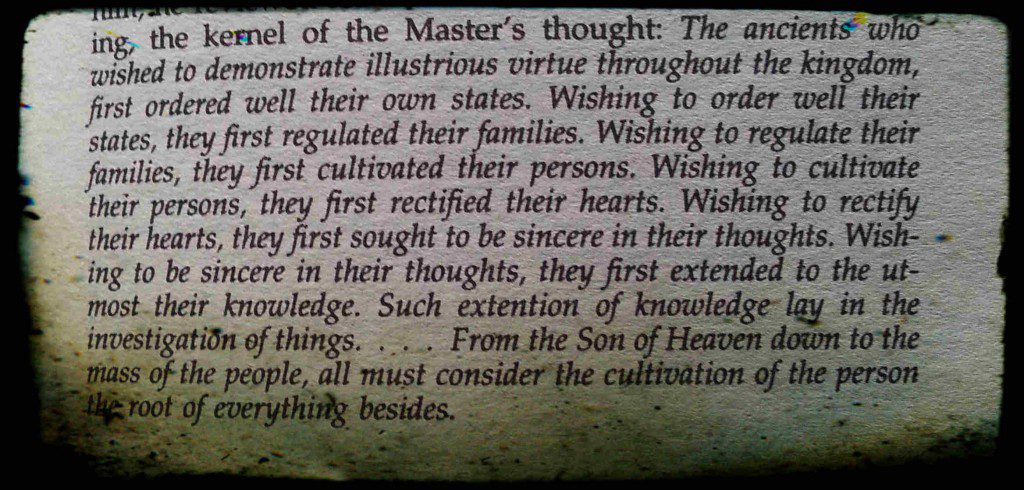
    More than a year back, I had written about institutional realignment and had briefly mentioned the institutions of marriage and parenting. ‘The currency of relationships‘ made me think of this, and family – immediate and extended – as a societal construct/contract/ institution, and probably even as a tradition. Where we are born, and whom we are born to, are apparently out of control, but we do have an illusion of control courtesy the choices we make as we go along. Thanks to these choices, our lifestyle and our perspectives may follow a trajectory that is totally different from the circumstances and people we grew up with/in. This is not just about the people from our childhood/youth, but is a continuous process through life. Each of us find our own ways to deal with the constant flow of people through our lives. These are again choices, and like most choices involves some amount of sacrifice and bring with them their own set of consequences.
    Clipboard02

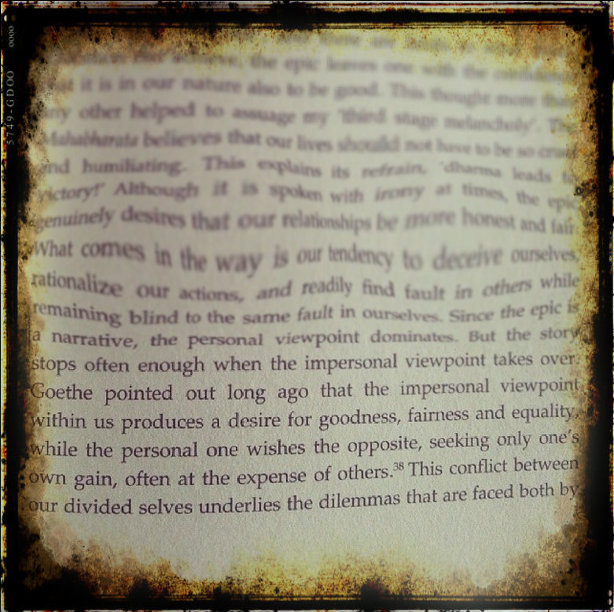
    I loved that Goethe paraphrase, because I think it sums up our relationships very well. At the risk of sounding cynical, (or receiving a ‘speak for yourself’ comment) I’d say that we’re increasingly becoming selfish as a species. I have always had the notion that most relationships are contextual, and it would be difficult to scale our emotions/feelings for others for an indefinite time frame. Yes, I do acknowledge there are exceptions, but that’s what they are – exceptions. Do a quick test and find out how many people across your life you’re still in touch with – bouts of nostalgia not included?

    It is with all this as the backdrop that I read Scott Adams’ “The Future of Marriage“. It articulates very well a thought that had crossed my mind earlier. (Of course, he obviously explores it way better than I could have) He deconstructs the institution of marriage and argues that marriage made sense “when the world was inefficient. You married a person nearby who could provide most of your important needs while hoping your lesser needs could also somehow be met.” Now, he says, the internet has allowed us to have a barter economy of relationships. In other words, a virtual spouse comprised of a dozen separate relationships. He tempers everything by saying that in the future, marriage may be one of the many options available. By sheer coincidence, and in a different context, I came across this quote attributed to Steve Macone “A tradition is a habit whose logic has faded“.

    I thought about this in the context of the expectations I had mentioned in the ‘currency of relationships’ post. If the institution of marriage can have a barter economy, why not other relationships? After all, isn’t every relationship a barter at its core? It’s just that we are rarely comfortable with voicing our expectations in the case of an emotional ‘transaction’, quantitatively or qualitatively. (generalising) Parents expect their children to look after them when they are old, in return for bringing you up; relatives expect you to return the favours they once did for you, and so on.

    So who knows, maybe our pace of life and our need to be (seen as) fair in all our relationships will conspire to form a barter ecosystem that offers emotion as a service. It is possible that an alternate path to prosperity might take us in a different direction, but in the era of the quantified self and the augmented human, when we slowly transition our selves into the cloud, maybe ‘Emotion as a Service’ (like)  is not an impossibility. What do you think?

    until next time, a qualified self
  • The currency of relationships

    Clipboard02

    Some people know me way too well! 🙂

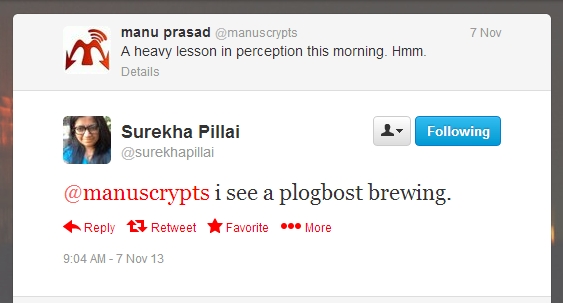
    A few days ago, I received a message that gave a jolt to my perception of how I deal with other people and what they make of it. I had written this post sometime back on taking friends for granted, and while that was in the specific context of friendship, this is an approach I extend to all relationships, be it transactional or emotional. I like to think that I’m fair in my approach and try to give back more than I get. But apparently, at least according to one person, I am not, and am “Mr.Use and Throw”. It hurt because I have always acknowledged the help that I’d received, to that person and others. I have not had an opportunity to repay it in kind, but whenever I have felt that my presence would bring happiness, I have made it a point to be there. I did reply with my perspective on the accusation, but it led me to think of the subject and how our actions are perceived by others.

    In this case, for instance, there were possibly expectations from me that I had not known of – not of a monetary kind, I think, but some other kind of help or acknowledgement. (Generalising) We live in an increasingly transactional world, where we are able to quantify all sorts of things and are also able to throw money at issues/problems/situations to resolve them. In scenarios where that is not applicable, we use our judgment to repay a gesture of kindness/affection/love. Over a period of time, I have dealt with the latter by acknowledgment and thanks in word and deed, and by paying it forward. But there is no standard currency in relationships, and my lesson from this experience is to not to take for granted that my approach is the one that works for people at the receiving end. I should spend some time first in understanding expectations, and then meeting them. When the price and currency are not agreed upon at the outset, you will need to keep paying until both parties have agreed that there are no dues.

    20131117_163614

    until next time, emotional monthly installments

    P.S. and a happy Thanksgiving 😉

  • Guided by fear

    live1

    I have this habit of adding a bookmark fold at the bottom of the page when I want to refer to it again. It is quite a task when I have to figure out much later what line in the page I’d originally bookmarked for! These days, Instagram solves it. At some point, I’m sure I can search my feed with a #quote hashtag and retrieve all the ‘bookmarks’ easily. Yay!

    “And the Mountains Echoed” had many such bookmarks. (still an unconscious habit despite the Instagram method) But this one has to be my favourite – “..but most people have it backward. They think they live by what they want. But really what guides them is what they are afraid of. What they don’t want.” I can easily confess that a large share of my actions is to preclude some dystopian version of my old age. (one) Many a time, this leads me to choose cautious paths over (what I think might be) more emotionally fulfilling ones, and even ones that I think might be leading me to my purpose.

    But when I thought about it a bit more, I realised that it can be read positively too – after all I am afraid of being switched off without knowing why I was here, and that’s what makes it an obsession! Also, the ‘afraid-don’t want’ factor often drives me to do things that are out of my comfort zone, so it’s possibly even pushing me towards my purpose, albeit from a different direction. Just a form of reduction? 🙂 It’s probably not a coincidence that my second favourite quote from the book is “When you have lived as long as I have, you find that cruelty and benevolence are but shades of the same colour

    until next time, fear off

  • Time Vault

    bottle3

    This was my ‘water bottle’ at Myntra, and the victim of many of my colleagues’ jokes, mostly thanks to its size. It is really tiny, and you could finish all the water in it in one gulp. It has been disfigured many a time, courtesy its battles with hot water. But it bears its scars with dignity, even though it wobbles a bit. It also seems to have a fair amount of stature, since at least three of my colleagues asked me if they could take the bottle after I left. I refused, but now that I’m ready to join the new workplace, I don’t know if I should use it anymore. But I don’t want to throw it away either, since it holds a lot of memories and in future, will probably be the only unchanged remnant of some good times. I wish I could store it somewhere, but I’m also trying to get rid of my hoarding habit!

    That’s what led me to think of this concept – since we’re in the era of 3D scanning and 3D printing, theoretically it should be possible to construct a 3D scan of the bottle with its basic dimensions, exact contours, texture of material etc and store it. I should then be able to print out an exact replica using a 3D printer. These technologies are not yet mainstream, but I’m wondering if this could be a way of storing memories. We can store images, text, sounds easily now but not smell, taste and touch. This could at least take care of the touch aspect.

    At some point in the future, I’m hoping if it’ll be possible to store such treasures as a file and print them out whenever I feel like it. An entire folder full of memories – of different times in my lives, that I can easily bring to life. It would be like a time vault. Vault as a noun -storehouse – and vault as a verb – leaping, in this case across time thanks to ‘physical’ memories. Maybe, in the future, we could live in the past for a day, and come back.

    until next time, the future of memories

  • Social @ Myntra – Part 2

    continued from Part 1

    Creating, correcting and maintaining brand perception and resolving customer issues were fundamentally the objectives when operating in the customer care and brand domains respectively. But this was not an end in itself. The end objective of the business is revenue, and that makes up the remaining story.

    3. Product: In this context, it includes the website itself, and the various features/enhancements/new products (eg. gift cards) that get introduced on a regular basis. Including social buttons on the home page and product pages were a given, though getting them above the fold was a mission I lost! The first major change was switching from FB Connect to the Open Graph. The potential applications, using social and interest graphs, are phenomenal, but we never progressed that far. At a basic level, I had slotted activities in this domain under acquisition and retention, and we have only implemented a small portion of the former. The easiest application of the social graph was using it for social proof. Kuliza’s Echo made that job relatively easy for us. It not only helped seamlessly amplify word-of-mouth, but also gave us a lot of data on consumption. One of the plans was to integrate this with Elevate, another Kuliza app – but inside Facebook, to try and beat FB’s throttling of organic reach. 🙂 Another application of Echo, which should soon see the light of day, is a Fab-like social feed. If a user has registered on Myntra using Facebook, he/she would see the actions (Likes, Purchases, Wishlist additions) of his/her friends on a separate feed inside Myntra. Our expectation is that this would prompt more social actions inside Myntra and accelerate word-of-mouth inside FB further. This was actually a Phase 1 of a larger plan I had in mind. Let me explain.

    While brand and customer connect can provide a strategic advantage on social, I’ve always felt that it was in the product domain that social could provide a sustainable strategic advantage. This came from my notion that ‘loyalty’ existed when the exit barrier for a customer to leave Myntra was high enough to beat any sustainable offering from a competitor. ‘Brand’ is one standard way to achieve it, but it is relatively less tangible, and in a commoditised marketplace, it would take more time. Generic discounting is not sustainable. I think, in this context, ‘Product’ can reach this ‘barrier’ in lesser time, and at lower costs. An ideal in my mind was using the social, intent and interest graphs of users from across various platforms to build a personalised experience, and through that, a gamified customer acquisition and retention architecture inside Myntra, (thereby minimising dependencies on other platforms) and then using social media to amplify relevant actions to further drive acquisition. But this approach has a high dependency on changes in the existing product and every new product/feature having relevant social features baked in (or at have it in the vicinity on its roadmap) to contribute to the larger agenda of the architecture. It also takes a mindset and backing. I did have a rough blueprint, but at this point in the e-commerce wars, this approach probably seemed a nice-to-have. 🙂

    4. Sales: Conventional notions claim that social media should not be used for sales pitches, but from my humble experience, I’d beg to differ. It’s just a matter of what-when-how, and how much. From generic product pitches on the Facebook Page as part of the larger content strategy, to custom links on Twitter, we have consistently shown and tracked revenue from social channels. Even Pinterest and Google+ are contributors! I must admit that in the larger scheme of Myntra’s monthly revenue, these are insignificant, but let’s just say that the total contribution are in double digit lakhs every month. In fact, it reached a point where we were given a budget to see if we could scale it. In this context, I have to mention this brilliant idea by S – she used customer generated product images from our Pinterest ‘Shopped from Us’ board every week to make sales pitches on Facebook! Works like a charm. 🙂

    The area where there were a few attempts, but didn’t really pick up was enterprise collaboration. We managed to build a fairly large community on Yammer, but what I’ve realised is that it needs champions at the highest level in all parts of the organisation using it on a consistent basis for it to be sustainable. I also had this grandiose vision of using Google+ and circles to connect customers, Customer Connect teams, Partner brands and employees in general, but this one was limited to a word document! This is an area that I believe to be a must-have as we evolve towards social business, but in the larger list of priorities, is still a few steps away.

    That gives a broad view of what I’ve been up to for two years. The generic point I’m trying to make through the two posts is that from basic business outcomes like customer satisfaction and sales to more nuanced ones like brand perception and sustainable strategic advantage, social can and should play an integral part. There will be differences in terms of scale, strategy, resources etc depending on the domain, maturity of the industry/organisation, target audience and so on, but the important part is to begin because the brand/organisation needs to evolve as well. Social media has shortcuts, I’m inclined to think that social does not. These are days of nascence, and social will continue to evolve – enterprise social networks, social business, big data, the Internet of Things (add buzzwords to taste) and more will all have their hype cycles and age of maturity. By all means, measure ROI, but remember, we spend on movie tickets, we invest in mutual funds. I think we’re clear on the expected time frame of returns in both cases.

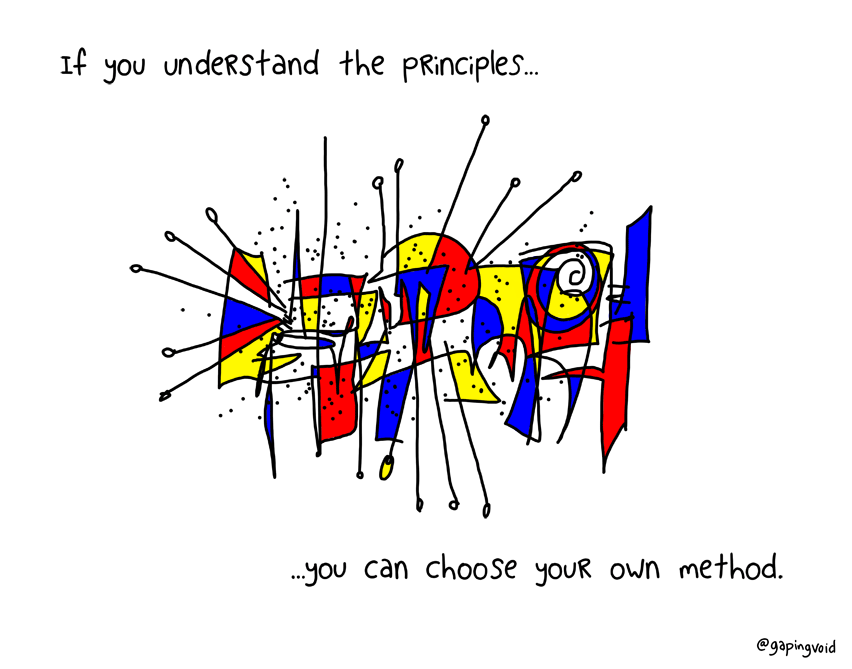
    understand_the_principles

    (via)

    Myntra will remain dear to me, like all the other brands I have worked on, but it will probably have a more lasting signature, because not since my days at GIM have I experienced such a rewiring of my worldview. This stint has given me oodles of confidence, friends whom I hope will last a lifetime, and relationships of trust that I will cherish.

    Before I end, the last hat tip – to the super S, who joined the team mid last year and has since then, proven time and again that she’s the best social ‘investment’ we made, and made this little social adventure a total joy! “I used to believe that we are here to teach what we know. Now I know that we are here to teach what we are meant to discover

    until next time, </ head – social media> 🙂