Category: Life Ordinary

  • One off a kind rating

    (‘off’ is intentional. Thanks)

    A while back, in ‘The Currency of Relationships‘, I’d written this – But there is no standard currency in relationships, and my lesson from this experience is to not to take for granted that my approach is the one that works for people at the receiving end. I should spend some time first in understanding expectations, and then meeting them. Recently, a little incident on Facebook reminded me of this. But first, a step back.

    Don’t laugh, but I think of myself as a kind person. This is a recent phenomenon, and one that finds a parallel in my struggles with being judgmental, though I have had more success on that front. Together, a reasonable (and sarcastic) wit, a tendency to see things from a skewed perspective and more often than not, the propensity to see humour in the worst of (others’) circumstances, have made being kind a very difficult task.  I rib people all the while, and am probably the poster guy for “People who don’t know me think I’m quiet, people who do wish I was.” It is very rarely that my intent is to hurt, I try to be mindful of all my words and actions, and that is what has probably created my own perception of the self as a kind one.
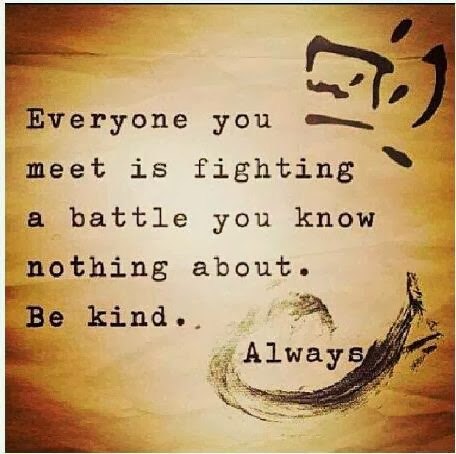
    kindnessAs with all perceptions, this one too built on itself. Maybe that is why I was quite surprised when a share on Facebook (the message being the same as what you see on the left – via)  – something I believe in and try to practice – elicited one response that I was in no place to ‘preach’ this. It made me think about my self perception, and reminded me of currencies. I also gained a few perspectives – common, yet usually forgotten. (Thanks N)

    One is that my words and actions have effects that I might be completely unaware of. This is not a new understanding. In fact, for a while – a couple of years ago probably- when I became aware that my words could hurt, I willfully restrained myself from saying a lot of things I came up with! I realised that it might get laughs and LOLs but I might hurt someone too. (even if that may not have been my intent) But then I realised I was just being miserable and at least with friends, I let go, thinking that I didn’t have to prove the lack of malice. The fact that I was ribbed back by many only reinforced this. My credo since then has been based on “how would I feel if I were at the receiving end?”  But maybe that is a flawed approach. After all, what gives me the right to say when a person should feel hurt and when not. I plan to be a little more careful, and if you’re a friend and reading this, give me a heads up when you think I’m going overboard. 🙂

    The second perspective was that it is probably my ego that wants others to perceive me as kind. If I trust the objectivity of my own moral compass, I wouldn’t need a reinforcement. I should also maybe realise that I can’t have the laughs and the label.

    The third perspective came from looking at kindness itself. You might say it’s semantics but I noticed that there is a difference between kindness and compassion. Arguably, compassion is about how you feel, and kindness is about what you do. I can instinctively see that on a relative scale, I am more compassionate than kind. No, this is not me asking for a new label. Both deal with empathy and understanding, but maybe compassion is only the first step to kindness.

    Meanwhile, my new ‘social’ plaything ‘Secret‘ is a good reminder. Its prompt when I have to comment on a post is ‘Say something kind’. Sometimes I can, and at other times, I keep quiet. 🙂

    until next time, a different kind
  • The IP Man

    Disambiguation: This is about the Infinitely Patient Man. For the original, see Ip Man.

    In the last post, and a few before that, (Brand &  the personal API, The path to Immortality) I’d written about our increasing ability to log and monitor our various activities (food consumption, exercise, sleep, location, to name a few) as well as apply them – for example, to measure and  course correct – manually, machine-led or using a combination. The idea of the quantified self, I’d think, is to make a better human being at least in the physiological sense to begin with.

    In another line of thought, I’d also explored whether, as we proceed along this evolution, we could also create a more mindful version of ourselves – what I called a qualified self. This surfaced again a few weeks ago, as I analysed my own behaviour in a certain situation. I have been trying to be non judgmental, but it’s not easy to let go of some baggage, especially deep rooted ones that have existed for a long time. As I became grumpier (also) thanks to my irritation at not resolving my battle with inner demons and the other person’s behaviour remaining unchanged, the person at the receiving end remained his calm self. As always, I had conflicting emotions later – on one hand, guilt, for treating him thus, and on the other, a justification based on many events past and present. I also tried to put myself in his shoes and imagine how he must have felt.

    That’s when I realised that the process of creating a qualified self is much more challenging because there is no objective measure of right and wrong. i.e. one can objectively quantify the input/burning of calories based on BMI, gender, age and other factors which are subjective, but on what objective scale does one decide whether one’s action/decision/thinking is right in a particular context?

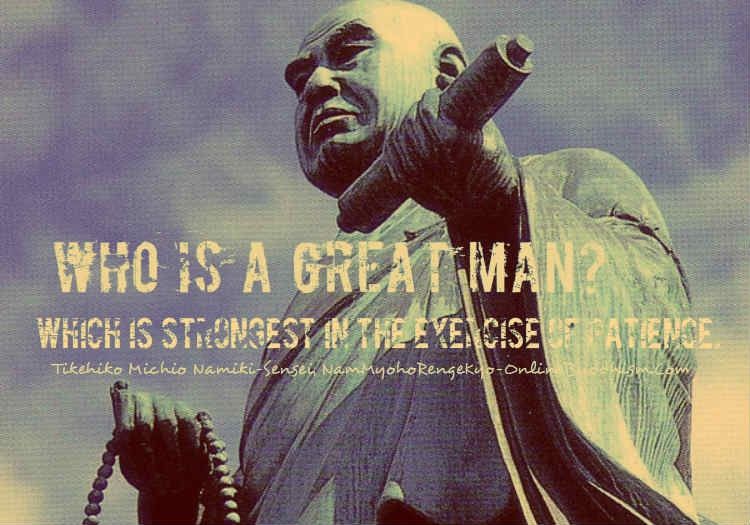
    What must have gone on in his head – did he face and win against the same struggles I had, or was he detached from it? Either way, it seemed to me that he was less anguished than I was. Is it his considerably larger experience of life that makes him so? It made me think – are such people, the infinitely patient ones, a key to cracking the qualified self? Is it even possible to monitor let alone apply their path? Or is it the kind of IP that refuses to bow to objectivity, and plays a part in making us what we are – human?

    until next time, intellectual propriety 🙂

    Bonus read: Achieving Apatheia

    patience

    (via)


  • The era of wearables

    In the post on the Internet of Things last month, I’d mentioned two narratives on social products that I considered were working in tandem to shape the future of marketing, consumption, and living itself. Both using sensors – one on things (IoT), and the other on humans (Wearables, though I stubbornly use Techsessories!)  This post is on the latter.

    Why I think it matters: Though nowhere remotely close to Chris Dancy levels, I have been interested in this for a while. As I mentioned in my Personal API post, I see it as an evolution of my lifelogging pursuit – from logging in experiences to sensors automatically picking up data – and something that is highly relevant to my area of work – brands. In the big picture, I also see this domain as a key player in the evolution of our species – from our persistent movement towards immortality (physical) as well as, what I hope will be, a more gradual steps towards mindfulness. (mental, emotional)

    What is it? Smartwatches are just the beginning, and at a broad level, wearables can already be categorised into

    (Some statistics, a primer, and a good classification to broaden your perspectives)

    Where is all this going? For the scope of this post, let’s briefly look at the impact/deliverables from three points of view

    Consumer: There are quite a number of views (read concerns) that wearables are probably the first step towards turning us into cyborgs. (what I refer to as the augmented human here) There is another line of thought that wonders if all of this is taking us closer to ‘sofalarity‘. I can argue the Hug Shirt both ways! I wonder if, as we race towards singularity, there is an unconscious adaptation that our species is going through to survive, or continue to thrive. Personally, I like to think that technology is giving me the means to first quantify, and then use that data (converted to information and then to insights) to consistently work towards being a better human. ( a qualified self, so to speak)  I have already taken the first step with Goqii. While there is no dearth of trackers, I found their ecosystem approach interesting. I also envision creation of personal APIs becoming easier in the next few years, allowing us to store, analyse and transmit data and information to others.

    Ecosystem: At one level, there is going to be some effort in making wearables really mainstream. There is definitely going to be resistance. The answer, as always, is in using wearables as a means to address human needs. On another level, while devices are expanding in scope, quality and sheer numbers, as Chris Dancy mentions in the interview (linked earlier) interoperability is still a concern. (just as in the case of IoT) It’s not just wearables talking to each other, but talking to a larger universe of the IoT.

    Brands: This domain has seen its share of brands – standalone ones as well as majors like Apple, Google and Samsung who want in on the action. There are fashion brands too, and I can imagine a near future when technology will be a hygiene factor in many kinds of apparel. While this happens on the device side, the data generated finds application across spheres – think, for example, how this can be applied in the health domain, (from medication to insurance) employment, sports and so on. Thus, there are many roles for brands – a standalone device and ecosystem with minimum connectivity, or devices and/or ecosystems that work in a complementary manner with another set and provide a product/service. As privacy concerns escalate, I believe the role of the consumer will be the key one to watch. This is the opportunity for brands to connect its business purpose to the consumer’s narrative. Brands should work towards gaining the trust of consumers early on and create seamless platforms for connecting devices, data, and users, working towards a common shared purpose.

    Wearables

    (via)

    From not believing that the world needed more than five computers (1943), we have reached more than 1.8 billion smartphones (source) that arguably do more than what a ‘computer’ can. So, a wearable (or a set of them) soon superseding a mobile is very much in the realms of possibility. As functions evolve, form factors will change – that’s inevitable, and on shorter cycles. The last decade in particular  has seen a massive technological evolution, but I think this is just the beginning – we’re at the cusp of a sea change in the way we live and work – about to push beyond the known boundaries of the body and mind. In the context of this evolution, Carl Jung’s profound statement would be a good one to remember – “Who looks outside, dreams. Who looks inside, awakens.

    until next time, wearabouts!

    P.S.  If the subject interest you, do follow my Techsessories and Health boards

    P.P.S. Need a #lulz worthy wearable strategy – Check this out!

  • Home, virtually

    The idea of home has made its presence felt many times on this blog – personal perspectives, as well as its evolution based on the institutional realignment line of thought. In fact, this is one of those topics  which I continue to have many thought wrestling matches on. While home begins as a physical place, as one steps out of it and moves out into the larger world, one realises that it becomes as much a place that is created in the mind.

    Clipboard01

    To quote Pico Iyer, “For more and more of us, home has really less to do with a piece of soil than, you could say, with a piece of soul.” The ‘piece of soul’ changes with circumstances and choices – from childhood, landmarks, experiences and so on to a different set of people and places, and a different sense of purpose, for instance. All of this continue to change over time, until probably, at a certain point, you realise the set of places, people and props you’d want around in your final years. But let’s not get morbid ahead of time! 🙂

    To quote Pico again, “Home is not just the place where you happen to be born. It’s the place where you become yourself.” And sometimes it can be both. It also explains why I did not recognise a future home when I saw one – 11 years back, on a screen not very different from this one. That’s what this post is about – to acknowledge the day it all began – 11 years ago. It is also a hat tip to Rediff, where I began my blogging journey (when I spoke at BlogAdda recently, most people didn’t know Rediff used to have blogs) and a nod of thanks to my 25 year old self who had no idea what he was getting into and wrote some horrible verse to start it all off.

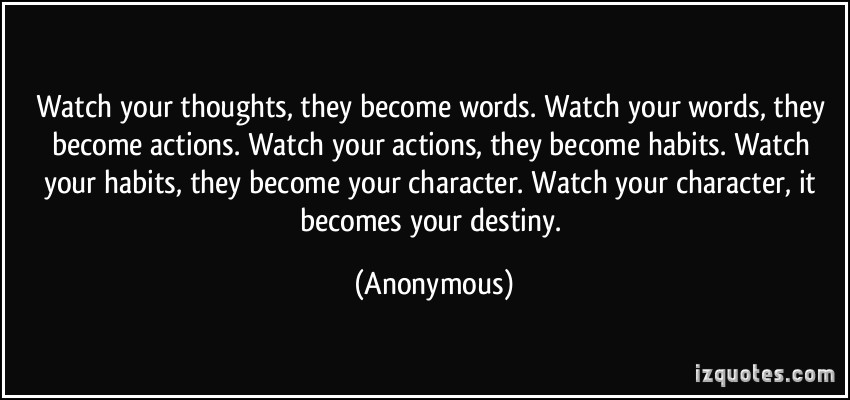
    A place that, in a click, helps me travel back in time and shows me people, perspectives and pages, some of whom/which I have outgrown, but have influenced what I am today. Experiences that have shaped the course of my life. A journal of the past which continues to help me shape my narrative – thoughts, to words, to actions, and beyond. A place where I continue to become myself.

    thoughts

    A piece of my soul that is my consciousness and on many occasions, even my conscience. A homepage that I consider home. 🙂

    until next time, thanks for reading!

  • Mentoring Startups @ Microsoft Ventures’ Accelerator Program

    When I come to think of it, my sales/brand jobs have all been on startup mode, though the organisations themselves were quite established – Dishnet DSL in 2002, WorldSpace in 2003, MidDay Bangalore in 2006, Bangalore Mirror in 2007. Myntra was still a startup when I joined in 2011. I really can’t remember when I first became interested in startups – perhaps Bangalore’s culture of entrepreneurship affected me soon as a landed here – in 2003. But it really started manifesting itself only during my stint at The Times Group. Muziboo was probably among the first I actually interacted with (in 2008) and I still remember sending feedback to Deap for Burrp’s mobile site in 2009.

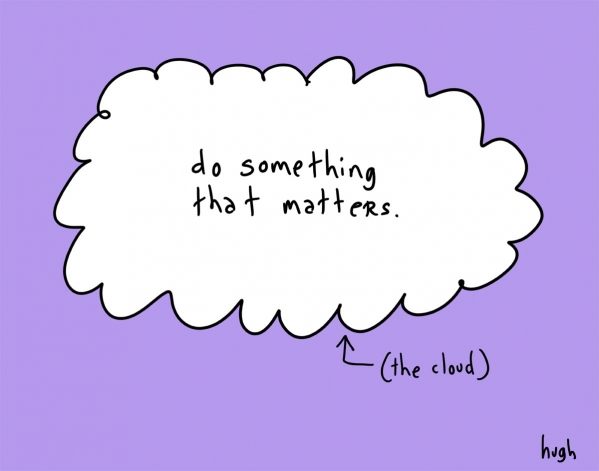
    It was in 2010, when I started writing the startup column for Bangalore Mirror that I understood why I probably had such a fondness for startups – in them I see individuals who have in some way connected to their purpose in life. That gives them a passion and energy that is amazingly infectious. After the column’s run ended in 2013 (at 97 Bangalore based startups!) I had no official reason to associate with them any longer, though the connections I’d made early on – Zomato, for example – gave me an occasional opportunity to indulge my interest.

    do-something-that-matters-2

    (via)

    All of this would explain my immense happiness when I was invited to be one of the mentors at the Accelerator Program of Microsoft Ventures last year. The Accelerator is part of a global establishment and helps entrepreneurs launch/scale their startup through a 4 month intense program that begins in January and July every year. At the accelerator, the entrepreneurs get access to quite a few things – a pool of mentors with expertise across various domains, (design, brand, technology, to name a few) office space to work from, and a ton of connections to help them gain funding and scaling opportunities. (FAQ) The other crucial factor they get, and I’ve seen it not getting the attention it deserves, is the Accelerator team itself. I have seen their diligence and their interactions, and they add an enormous amount of value in shaping ideas into executable plans.

    I’ve now been part of the last two batches, mentoring a couple of startups in each batch – TommyJams and Tookitaki in the previous batch, and Imly and Voonik in the current. Respectively operating in the domains of entertainment, advertising, food and fashion, these four by themselves are enough to give you an idea of the diverse kind of startups that make up each batch. Though I’ve worked closely with these, I’ve also had multiple conversations with other startups and have been impressed by the sheer quality of ideas behind many of them, their willingness to learn and reinvent if necessary, and the tenacity with which they execute their plans.

    My role may be that of a mentor, but I’ve learned quite a bit too. My learning has been in many forms – watching the startups in action, understanding at least a part of the intricacies of the domain they operate in, their approach to the challenges they solve, and most importantly, conversations with other mentors. Many of the mentors belong to the investor community and bring with them fantastic perspectives on a wide variety of things.

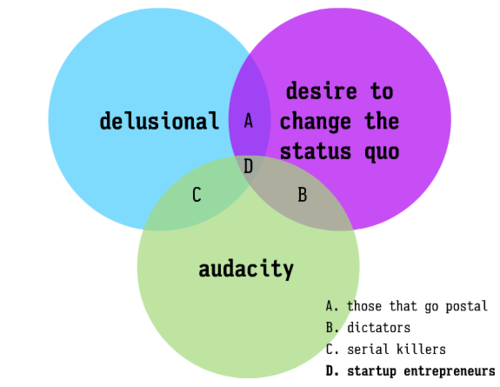
    It has been an exciting experience for me thus far, and I’ve been planning to write about it for a while now. The immediate trigger came last week  in the form of an invite for the Demo Day of the current batch. I also learned that the Accelerator had started taking applications for the next batch. In my own selfish interest, I’d like to play a role in the life of some entrepreneur out there. If you think you are ‘D’ in the figure below, apply away!

    tumblr_lo1pofU25f1qjg2hr

    (via. Check the superb original deck here. Thanks @m3sweatt for p0inting out )

    Disclosure: In case you’re wondering, mentors don’t get paid, not even to write this! 🙂